Check for an emergency first
Contact the water supplier when a marked pressure loss begins after city maintenance. Do not make a household bypass or several minutes of full-flow flushing a prerequisite. The work timing, outage notice and original observations are useful even before any gauge is installed.
Useful details to record
- Work date, location and supplier restoration or advisory information.
- Which ordinary fixtures were weak and whether hot/cold were both involved.
- Any sputter, color, leak, alert or readings already available.
What the pattern can tell you
- The supplier says service is still being restored. Follow its actual directions and restrictions rather than operating utility valves.
- The supplier confirms supply status but one home remains weak. Ask the household provider to assess the actual service and control path.
- Flow looks clear again. That does not establish normal pressure or drinking-water clearance.
What to do next
- Report the change promptly to the supplier and ask about ongoing work and restoration guidance. Report active leakage or severe loss without waiting for a neighbor to confirm it.
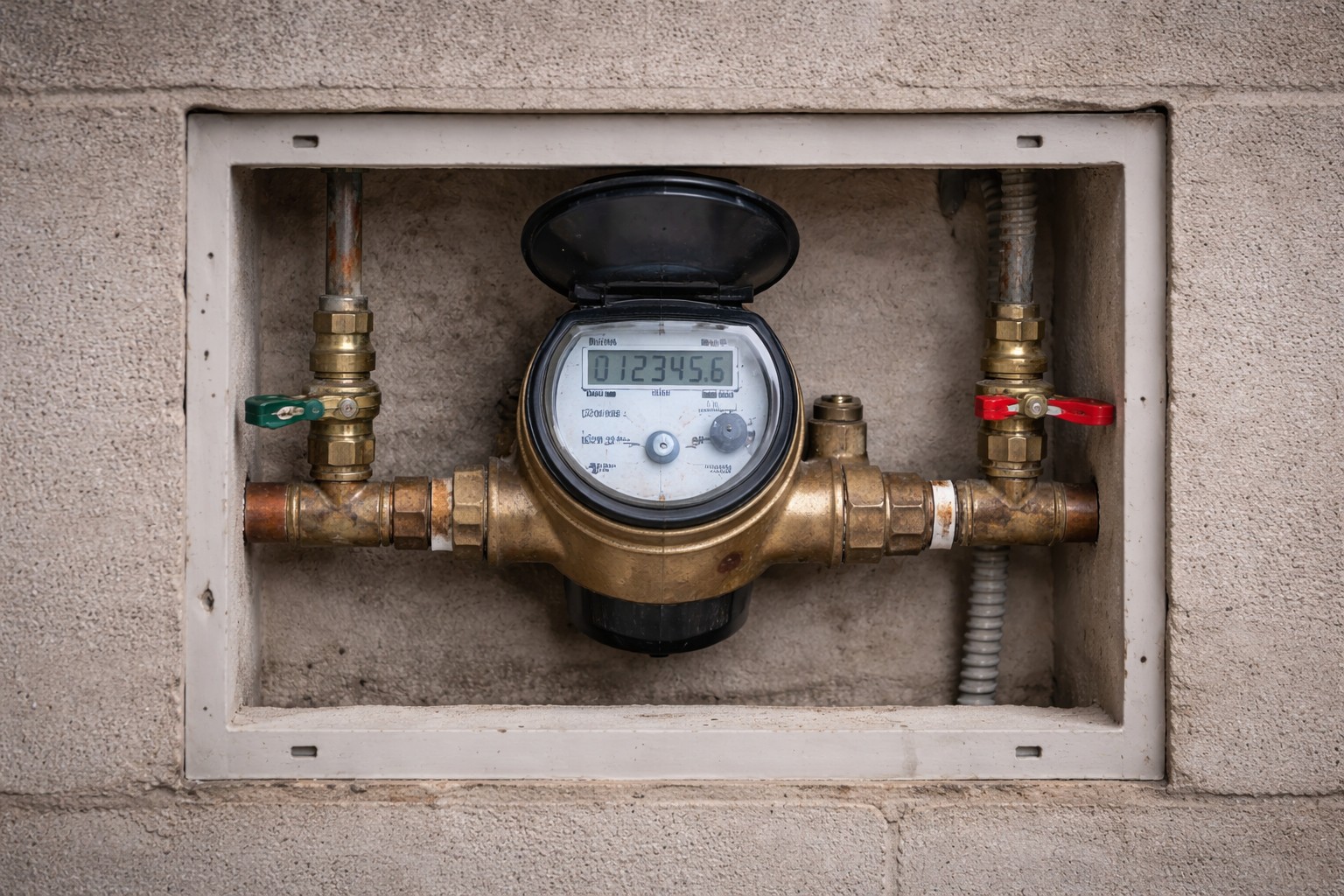
- Check only an identified owner-operated shutoff whose normal position and operating method are known, without force or repeated cycling. Do not manipulate curb stops, meter valves, utility fittings, backflow test cocks or an unknown valve. Contact the supplier for its equipment and the installer or plumber for household equipment.
- For an optional cold-water measurement, use only an intact, safely accessible owner test connection whose location in the system is known, with a compatible gauge rated for the actual pressure and temperature. Follow its connection and pressure-release instructions; never loosen a pressurized fitting or use a backflow test cock as a household gauge port. Do not create a new connection to perform this check. A plumber can install or verify the measurement instead.
- Record the gauge location, time, units and whether water was already flowing elsewhere. Static pressure describes a no-flow condition; a running reading describes that specific demand. A hose outlet closest to the street is not necessarily upstream of the regulator or representative of the meter. Compare with the actual equipment limits and local supply requirements rather than a universal household target.
- Do not bypass a pressure regulator, backflow preventer or other protective control to see whether the symptom disappears. A different result after changing the supply arrangement does not prove the removed device was faulty. Approved protected arrangements and qualified device-specific tests are different from an improvised bypass.
- If a new unexplained color, odor or other water-quality change accompanies the event, do not taste it or boil unknown water as a general remedy. Use a known-safe consumption source and contact the supplier for the actual restrictions and restoration directions. Clear flow does not lift an advisory.
- Do not make whole-house flushing, hot-water purging or filter bypass the default repair. Follow the actual supplier restoration directions and the actual product service instructions if debris is suspected. Keep drains able to accept the discharge; stop for leakage, backup or severe noise. Do not open several outlets to force a problem clear.
- Use a plumber for unresolved household loss or leaks and the supplier for its meter or service equipment. Do not isolate the heater or open multiple taps simply to push air or sediment through the system.
Will running all my taps usually fix post-maintenance pressure loss?
Do not assume so. A supplier may prescribe controlled cold-water restoration steps for its particular event. Follow those directions with a suitable discharge route; avoid creating flooding, scalding or extra demand while an unknown restriction or outage remains.