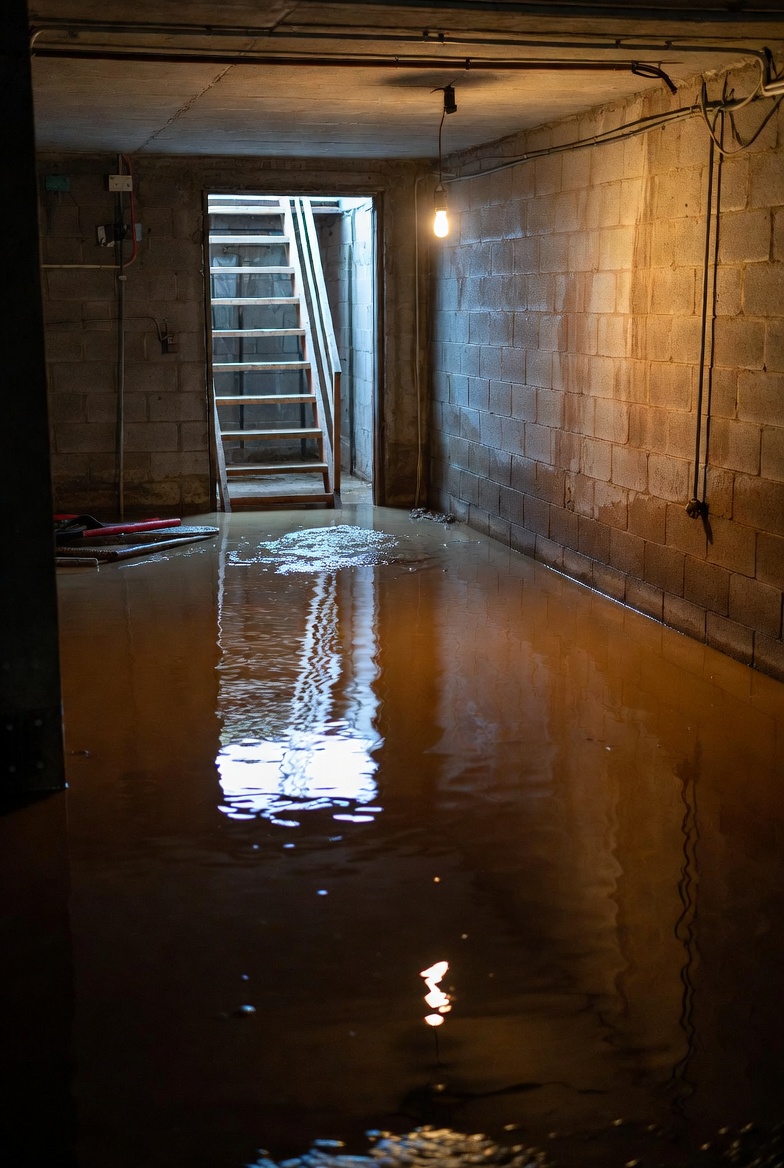
A recurring or worsening basement-drain problem deserves assessment using existing observations and service records. Do not wait weeks, add heavier bucket loads or repeatedly sniff the area to prove deterioration. A worsening symptom can occur without establishing a particular structural failure or the need for replacement.
Respond to hazards before collecting more evidence
For strong, widespread or unexplained gas-like fumes, exposure symptoms or suspected concentrated sewer gas, leave the building and call emergency services from outside. If fuel gas is suspected, leave even if the smell is faint; do not operate switches, plugs, valves or phones there. Do not stay to ventilate or sniff for a source. A fading smell does not establish safe re-entry; follow responder clearance.
Stay out of water near electrical equipment. Do not touch wet plugs, switches or appliances, or move wet electronics. Isolate only from safe dry access when no gas emergency is suspected, or obtain utility/electrician help. For wastewater return, stop added household discharge through safe controls, avoid contact, keep others away and notify the appropriate plumber, sewer provider or building manager. A household shutoff cannot stop every external inflow.
Compare evidence while keeping material and condition separate
- The symptom changed over time: Keep dated safe observations and the original use, storm and repair history. Active leakage, backflow, unsafe electrics, structural concern or gas symptoms need action now, not another period of trend collection.
- Material is known: Metal corrosion and ceramic pipe fracture or joint problems are different mechanisms. Cast iron can corrode; clay should not be described as rusting metal. Modern vitrified clay and older clay installations also differ. Age or material alone cannot establish the present defect.
- There were earlier repairs or nearby trees: Keep the actual records. A qualified spot repair can be appropriate, and neither patch history, wet-dry cycles, ordinary flow turbulence nor nearby trees alone proves progressive failure.
- A camera is suggested: Ask what question it can answer, which length will be accessible and what the video can actually show. Standing water, blockage or limited coverage may obscure defects; grade, inaccessible joints and hidden leakage may need other assessment. Keep the location and limitations with the report.
Does an older pipe mean I should replace the whole line?
No. The actual defect, extent, service condition and repair suitability govern the decision. Ask why maintenance, a supported spot repair, lining or replacement is proposed and how completion will be verified. Do not choose trenchless work or excavation from symptom timing alone, and do not mask recurrence with repeated chemicals. Appropriate help is justified before another failure occurs.
Keep the record without reproducing the fault
Use the original event, accessible service records and safely visible conditions. Do not run fixtures, release a full basin, add dye or pour buckets to locate a possible backup. Keep cleanouts and unknown sealed covers closed; do not enter pits, tanks, manholes or excavations. A grate, service cap, backwater-valve lid and pump cover are different components.
Identify every cleaner or winterizing product already used and tell the provider. Follow its actual label; do not mix another treatment or improvise neutralization. Unknown hazardous residue must be addressed before tools, opening or cleanup; waiting or a guessed rinse is not clearance. Photographs and notes are useful only where access is safe. Do not postpone urgent help to finish a log.
Related guides
Sources and limits
- Wisconsin DHS: sewer gas, exposure and leaving an unsafe area
- Con Edison: suspected fuel-gas leak response
- CDC: electrical hazards near water
- Madison Metropolitan Sewerage District: stop discharge and report backup
- Example drain-opener label: remaining-product restrictions
- National Clay Pipe Institute: ceramic material and historical joint differences
- Seattle Public Utilities: repair choices and sewer-camera limits
Examples and regional guidance do not identify your installed system or establish local responsibility. Independent professional review and household field testing have not been obtained.