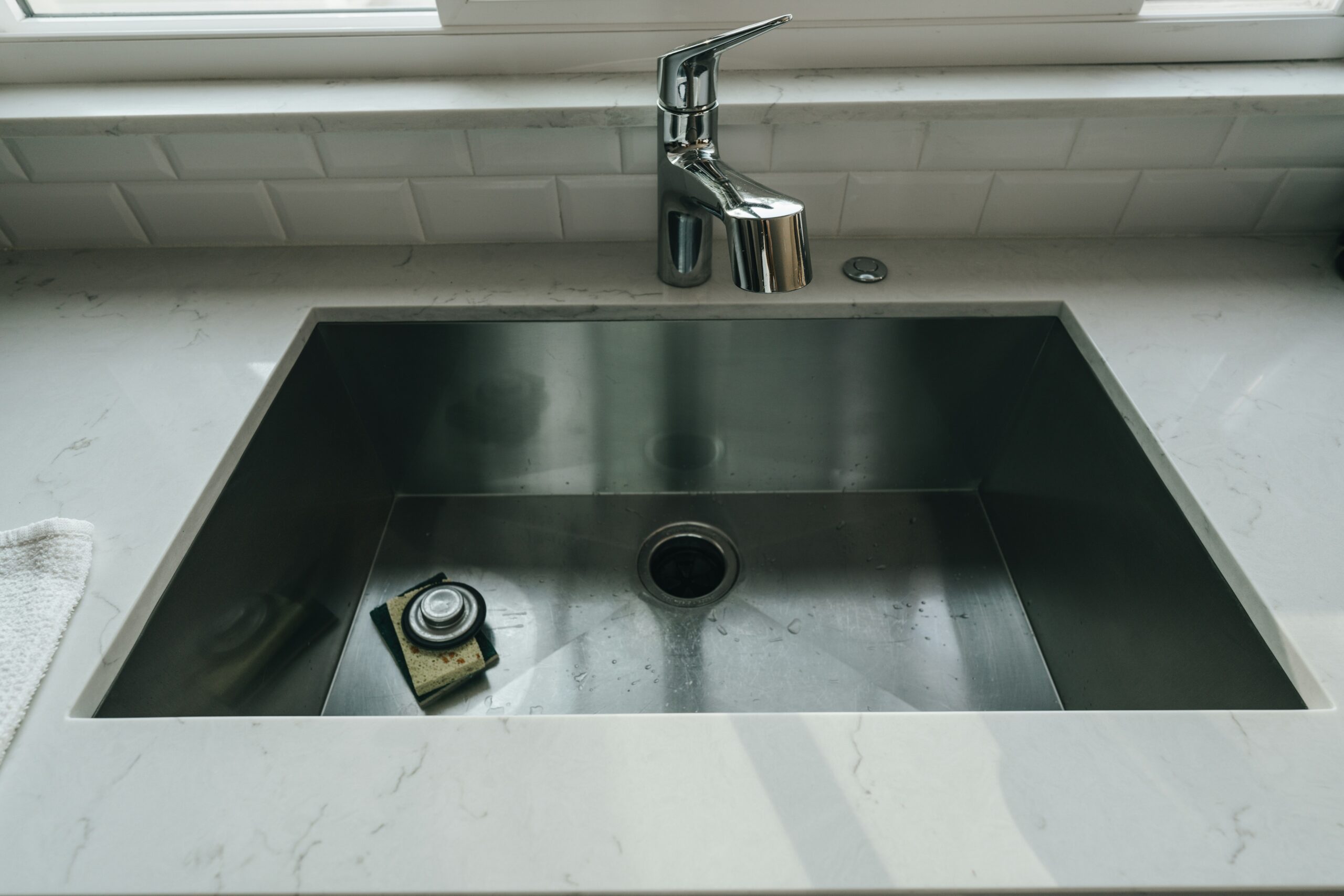
This hub covers double-bowl kitchen sinks where water moves into the opposite bowl—like one side filling when the other drains, or the clean bowl backing up. Cross-flow is often tied to shared drain restrictions, trap/tee setup, or how water is vented. Patterns like hot-only cross-flow, peak-hour behavior, or dishwasher/disposal triggers can help narrow it down. Use the groups below to match your sink setup and when the cross-flow happens, then open the closest article title.
For broader kitchen sink and food-waste plumbing topics, see the sub-category hub: Kitchen Sink & Food Waste Plumbing.
Basic cross-flow between bowls
Common scenarios where one bowl affects the other during normal use.
-
One sink fills when other drains
Describes causes when draining one side forces water into the opposite bowl, often from a shared tailpiece or partial blockage.
-
Water flows into opposite bowl
Looks at routing and venting issues that let draining water travel sideways into the other basin instead of down the branch drain.
-
Left bowl backs up when right drains
Focuses on asymmetric setups where one side consistently backs up, including check of trap orientation and tailpiece alignment.
-
Sink backs up into clean bowl
Covers situations where the clean bowl receives wastewater when the other side is used, with troubleshooting steps for clogs and vents.
When it happens (hot-only, peak hours, intermittent)
Patterns tied to timing or water temperature that help identify the underlying problem.
-
Cross-flow only when hot water used
Explains how hot-water pressure, water heater backflow, or temperature-specific valve behavior can produce cross-flow only with hot water.
-
Water jumps bowls during peak hours
Addresses municipal pressure changes or shared building drains that trigger cross-flow during high-demand periods.
-
Cross-flow occurs intermittently
Notes causes for sporadic behavior, such as partial blockages, shifting debris, or intermittent appliance backflow.
-
Water moves between bowls randomly
Offers checks for air-locks, loose fittings, and other conditions that let flow change unpredictably.
Dishwasher and disposal interactions
How appliances can introduce flow changes or overload the sink drain.
-
Sink fills only when dishwasher runs
Explains backflow from the dishwasher or a missing/high loop that lets discharge into the sink bowl.
-
Cross-flow after installing disposal
Discusses changes in flow dynamics and trap connections after adding a disposal that can reveal or cause cross-flow.
-
Cross-flow when grinding food
Looks at how heavy loading or grinding solids can obstruct the line temporarily and redirect water between bowls.
After repairs, remodels, or trap changes
Problems that appear after work on drains, traps, or sink replacements.
-
Cross-flow after plumbing repair
Reviews common installation mistakes or misaligned fittings introduced during repairs that can cause new cross-flow.
-
Cross-flow after remodel
Considers rerouted drains, changed venting, or altered slopes from remodels that may produce cross-flow symptoms.
-
Cross-flow after replacing trap
Focuses on trap type, height, and connection errors when a new trap causes bowls to communicate undesirably.
After outages or winter events
Events that disrupt plumbing and can leave deposits or altered pressures behind.
-
Cross-flow after city outage
Examines pressure drops, debris ingress, or partial blockages following municipal outages that can lead to cross-flow.
-
Cross-flow after winterization
Notes issues from seasonally drained lines, temporary caps, or reconnected vents that may not be restored correctly.
Blocked-bowl scenario
Signs that one bowl is intentionally or accidentally blocked and how that affects the other bowl.
-
Sink fills when other bowl blocked
Describes how an obstructed basin forces flow into the adjacent bowl and what to inspect first.
-
Opposite bowl gurgles
Explains gurgling as an indicator of trapped air, partial blockages, or venting problems between the bowls.
All Articles in This Cluster
- One sink fills when other drains
- Water flows into opposite bowl
- Left bowl backs up when right drains
- Sink backs up into clean bowl
- Cross-flow only when hot water used
- Water jumps bowls during peak hours
- Cross-flow occurs intermittently
- Water moves between bowls randomly
- Sink fills only when dishwasher runs
- Cross-flow after installing disposal
- Cross-flow when grinding food
- Cross-flow after plumbing repair
- Cross-flow after remodel
- Cross-flow after replacing trap
- Cross-flow after city outage
- Cross-flow after winterization
- Sink fills when other bowl blocked
- Opposite bowl gurgles