Quick Answer:
If draining one bowl causes the other to fill, the two bowls share a drain path and that path is partially blocked or vented poorly. Check the plumbing under the sink—especially the shared trap and branch connection—for a partial blockage and remove any debris or buildup. If the problem continues or you see sewage odor or leaks, call a plumber.
Why This Happens
Most double-bowl sinks connect to a single drain line. When you run water down one side, the flow follows the easiest path. If the shared line or trap is partially blocked, the water can be forced into the other bowl instead of flowing freely down the drain. You may notice bubbles, slow draining, or that the water level in the opposite bowl rises during use. If the pattern only happens with specific water types or temperatures, consider reading about Cross-flow only when hot water used for more detail. For the common symptom where water exits one bowl and appears in the other, see Water flows into opposite bowl.
Step-by-Step What to Do
1. Stop using the sink and clear standing water
Remove dishes and towels. Use a cup or small container to bail out most of the water so you can work under the sink without a mess.
2. Inspect visible plumbing
Open the cabinet doors and look under the sink. You’re looking for leaks, disconnected pipes, and obvious clogs. Smells, standing water, or sludge are signs of buildup.
3. Inspect the shared trap and branch connection
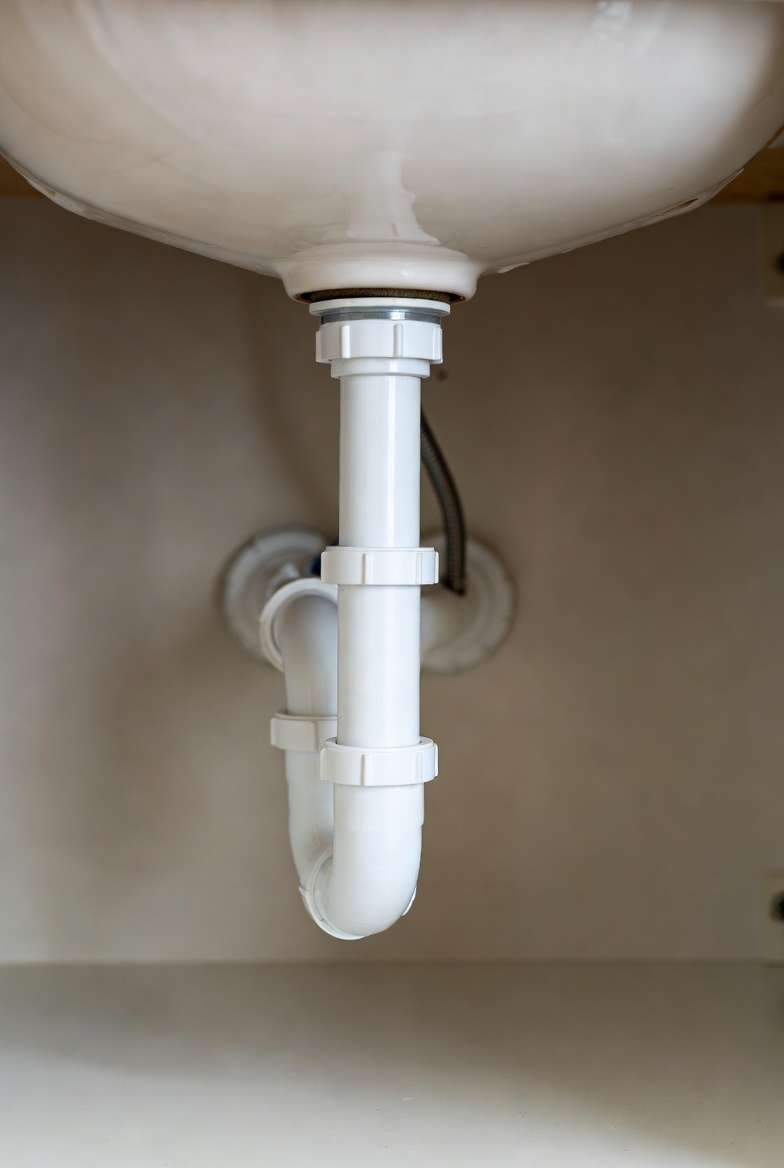
Inspect the shared trap and branch connection under the sink for partial blockage. Place a bucket under the trap, loosen the slip nuts, and remove the trap to check for hair, grease, or foreign objects. Clean the trap and the short branch pipes feeding into it.
4. Check the tailpieces and basket strainers
Remove the basket strainers from each bowl and inspect the tailpieces for blockage. Clean any gaskets or screens and reassemble loosely to test drain flow before tightening fully.
5. Test the drain
Run water in each bowl separately and watch for proper flow. If cleaning the trap and tailpieces fixed it, reassemble and run a longer test. If flow is still diverted to the other bowl, the blockage may be farther down the branch line.
6. Try a hand auger only if comfortable
If the clog is past the trap and you’re comfortable with tools, use a small hand auger designed for sinks. Feed it gently into the drain and rotate to break up the clog. Do not force the auger hard—if it meets resistance that doesn’t give, stop and call a pro.
What Not to Do
- Do not assume each bowl has its own independent drain.
- Do not pour strong chemical drain cleaners into a trap you’ve already opened—chemicals can splash or damage seals.
- Do not force plumbing fittings with excessive wrenching; you can strip threads or crack plastic piping.
When to Call a Professional
- Persistent backups after you clean the trap and tailpieces.
- Water backing up with a sewage smell or into other fixtures.
- Leaking pipes, corroded fittings, or when the clog is beyond the P-trap and you don’t have the tools or confidence to proceed.
- Concerns about venting or repeated clogs—these may require camera inspection and professional clearing.
Safety Notes
- Turn off water at the shutoff valves under the sink before disassembling plumbing if a major leak occurs.
- Wear gloves and eye protection when handling dirty water or debris.
- Avoid mixing chemical cleaners with mechanical clearing; residual chemicals can splash and cause burns or damage.
Common Homeowner Questions
-
Why did this start suddenly?
Small buildup of grease, hair, or debris can slowly reduce capacity until the flow is redirected into the other bowl.
-
Will pouring boiling water help?
Occasional hot water can help dissolve grease, but it won’t fix solid blockages and can damage some plastic parts if very hot; use with caution.
-
Is this an indication of a vent problem?
Often it’s a simple blockage, but poor venting can contribute. If clearing the trap doesn’t help, have a plumber check the venting and drain line.
For more related articles, see the Double-Bowl Sink Cross-Flow Issues hub.