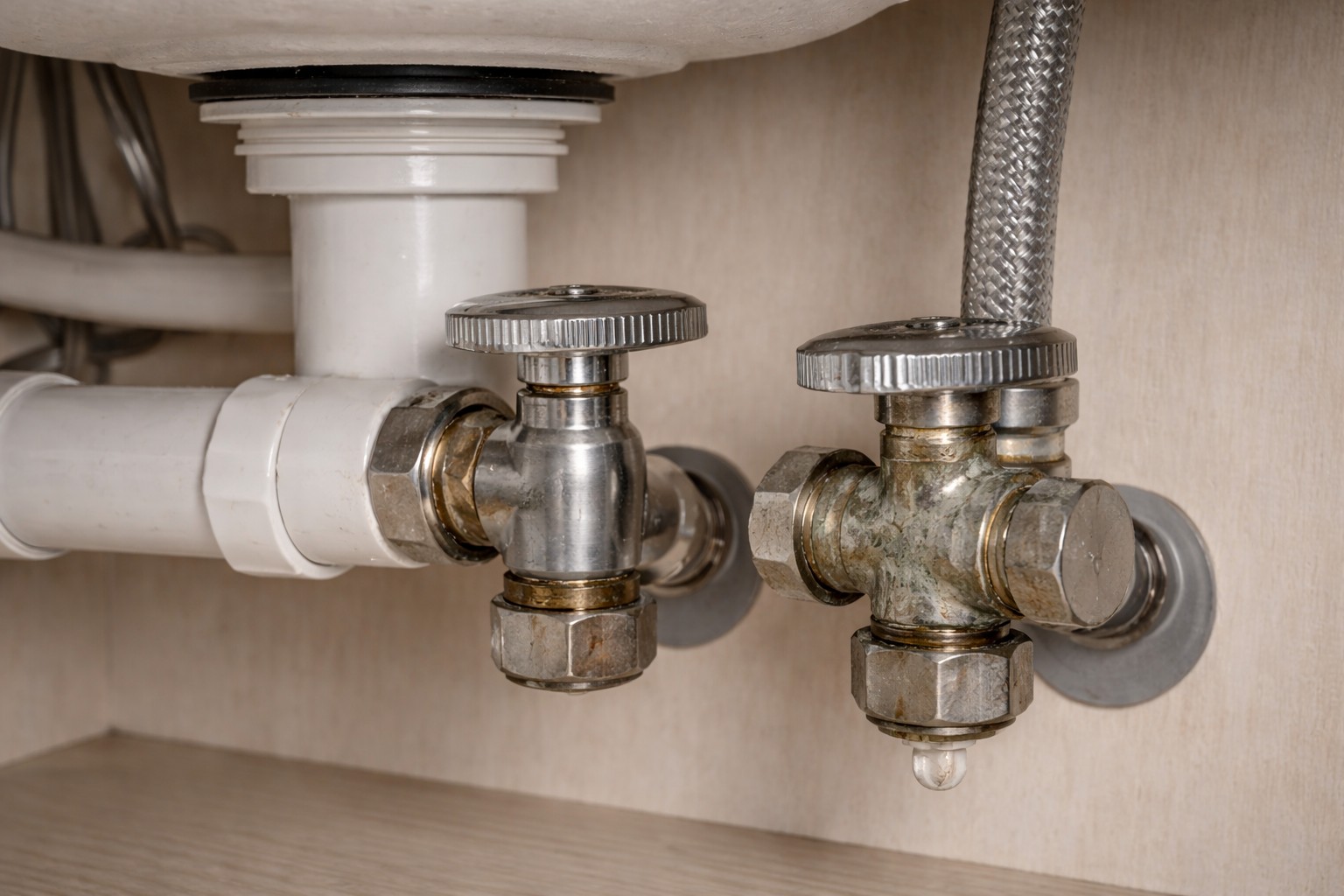
Sputtering after a fixture shutoff was replaced may reflect air released during restoration, but a persistent symptom needs the actual installation checked. Do not diagnose air trapped behind cartridge screens, straighten a damaged pressurized hose by force or remove internal parts without isolation.
Useful details to record
- New stop and fixture model, installation date and commissioning directions.
- Whether the sputter began immediately and which outlets were already affected.
- Leaking joints, damaged routing, unusual temperature and any supply-quality notice.
What the pattern can tell you
- Sputtering stops under appropriate normal restoration. That describes the visible result; it does not independently certify water quality or the installation.
- Only the worked-on fixture is affected. Give the installer the scope; valve position, routing and fixture components may need checking.
- Several fixtures are affected. Check the actual supply restoration guidance rather than prescribing a larger whole-house purge.
What to do next
- Check only an identified owner-operated shutoff whose normal position and operating method are known, without force or repeated cycling. Do not manipulate curb stops, meter valves, utility fittings, backflow test cocks or an unknown valve. Contact the supplier for its equipment and the installer or plumber for household equipment.
- Inspect routing visually from a safe position. Do not bend, twist or pull a connected hose to “remove air”; damaged or kinked parts need correct isolation and suitable replacement.
- With water off and parts cool, inspect or clean only an intended owner-removable aerator or screen under the actual faucet instructions, using the proper tool and orientation. Do not force a hidden aerator, assume every cartridge can be soaked in vinegar, or remove retained internal parts as ordinary outlet cleaning.
- Before any internal service or fitting removal, identify and isolate every supply that can pressurize the section, release trapped pressure through the appropriate controlled outlet and verify depressurization. Account for hot water and possible alternate feeds. Lowering a PRV setting, reducing flow or wearing gloves does not make a pressurized assembly safe to open. If isolation cannot be established, leave it assembled and obtain qualified help.
- Keep the supply isolated while the valve, bonnet, filter cover or supply connection is open. Fully reassemble the actual rated components before restoring pressure under the product instructions. Do not briefly reopen upstream water into an exposed pipe, removed valve or unretained assembly while aiming at a bucket; towels and eye protection do not establish discharge control. Any required construction flushing needs an appropriate secured arrangement and the actual procedure.
- Keep cartridge-screen work separate from owner outlet cleaning. Use the actual fixture method, correct retained parts and temperature/operation checks after full reassembly. Do not prescribe hand-tight plus a generic wrench turn for every aerator or hose.
- If a new unexplained color, odor or other water-quality change accompanies the event, do not taste it or boil unknown water as a general remedy. Use a known-safe consumption source and contact the supplier for the actual restrictions and restoration directions. Clear flow does not lift an advisory.
- Follow the installer or supplier’s actual restoration method and suitable cold-water discharge instructions. Do not inject compressed air, use a fixed purge timer as proof or run hot water as the default.
Can I take out cartridge screens without turning off the main?
The relevant supplies still need effective isolation and verified pressure release; functioning local stops may provide that under the actual procedure. If they are absent or unreliable, arrange another effective upstream isolation. Having towels does not make isolation optional.
Related guides
- Air blasts from faucet after water restored
- Air sputters after main shutoff used
- How to Shut Off Water to Your House (With and Without a Main Valve)
- How to Turn Water Back On After Shutting It Off (Safely)
- Air in Pipes After Shutoff