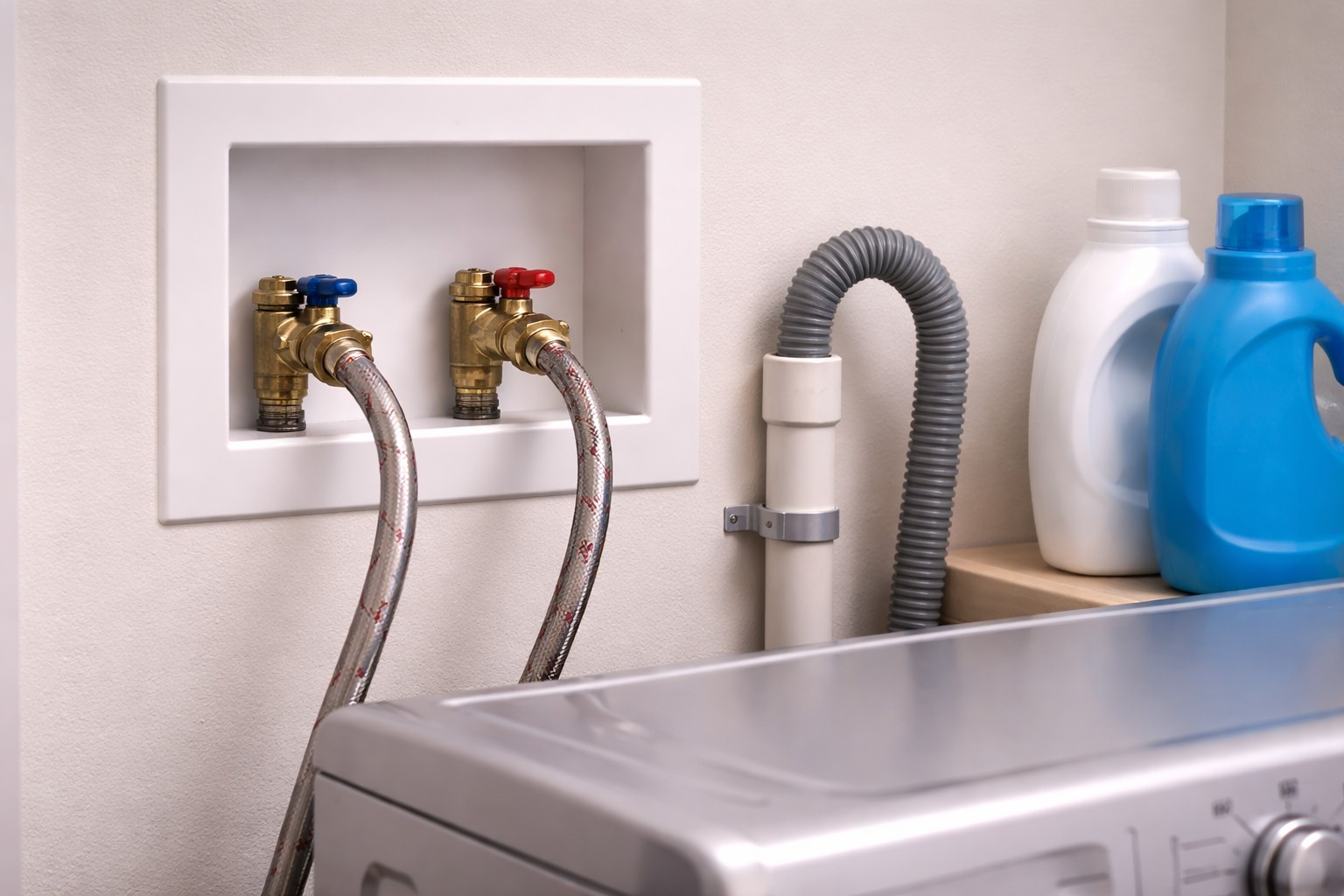
Check for an emergency first
If you smell fuel gas or suspect a gas leak, leave the building or affected area immediately and take others with you. Do not operate switches, plugs, phones, appliances, thermostats or valves in the affected area, light flames, or stay to ventilate or investigate. From a safe location well away, call the local gas emergency service or emergency services. Do not re-enter until responders say it is safe. Plumbing checks and normal maintenance must wait.
Keep away from wet electrical equipment. Do not touch wet appliances, plugs or switches, or enter water to reach a breaker. When no gas leak is suspected, power may be isolated only from a safely accessible dry location; otherwise call an electrician or emergency help. Wet equipment needs qualified assessment before it is used again.
Sputtering or banging during a washer fill is not automatically trapped air, and a braided hose is not a universal cure. Record whether the noise occurs as filling starts, continues or stops. Keep a leaking, damaged or violently shaking installation out of use until it is assessed; do not run repeated fills to diagnose it.
Useful details to record
- Washer model and the phase of the cycle associated with the noise.
- Any recent supply interruption, hose change or appliance installation, and whether other outlets were already affected.
- Visible hose bulging, corrosion, leakage or contact with the cabinet observed from a safe, dry position. Do not reach behind a running machine.
What the pattern can tell you
- A hose is leaking, bulging or damaged. Stop using the washer and arrange replacement with a compatible maker-approved hose and connection method.
- The noise is during filling rather than spin. Give that timing to the installer or plumber. Whirlpool’s example guidance notes that inlet or drain hoses can contact the cabinet, but this does not identify every noise.
- Other outlets sputter after an outage. Check the supplier’s notice and the wider supply event. Do not use the washer as the device that purges unknown water.
What to do next
- Handle gas and wet-electrical hazards before touching switches, plugs or valves. Isolate power only through a safely accessible dry method when no gas leak is suspected.
- Identify the actual washer valves and hose requirements. Do not force stuck stops or throttle them by an arbitrary quarter turn as a noise remedy.
- For permitted hose or screen service, follow the actual installation instructions, including water isolation, pressure relief, energy isolation, compatible seals and tightening. A generic hand-tight-plus-quarter-turn rule does not fit every connection.
- After correct reassembly and safe leak checks, use the prescribed restart procedure. Persistent hammering, pipe movement or leaks needs a plumber; cabinet or installation vibration may need appliance service.
Should I keep filling until the air clears?
Not if the installation is leaking, damaged or showing severe hammering, or the water-use status is uncertain. A few quiet seconds afterward do not prove what caused the noise. Preserve the observed phase and have the relevant supply or appliance condition checked.
Related guides
- Air blasts from faucet after water restored
- Air sputters after main shutoff used
- Why Your Washing Machine Isn’t Filling With Water After a Shutoff
- Air in Pipes After Shutoff