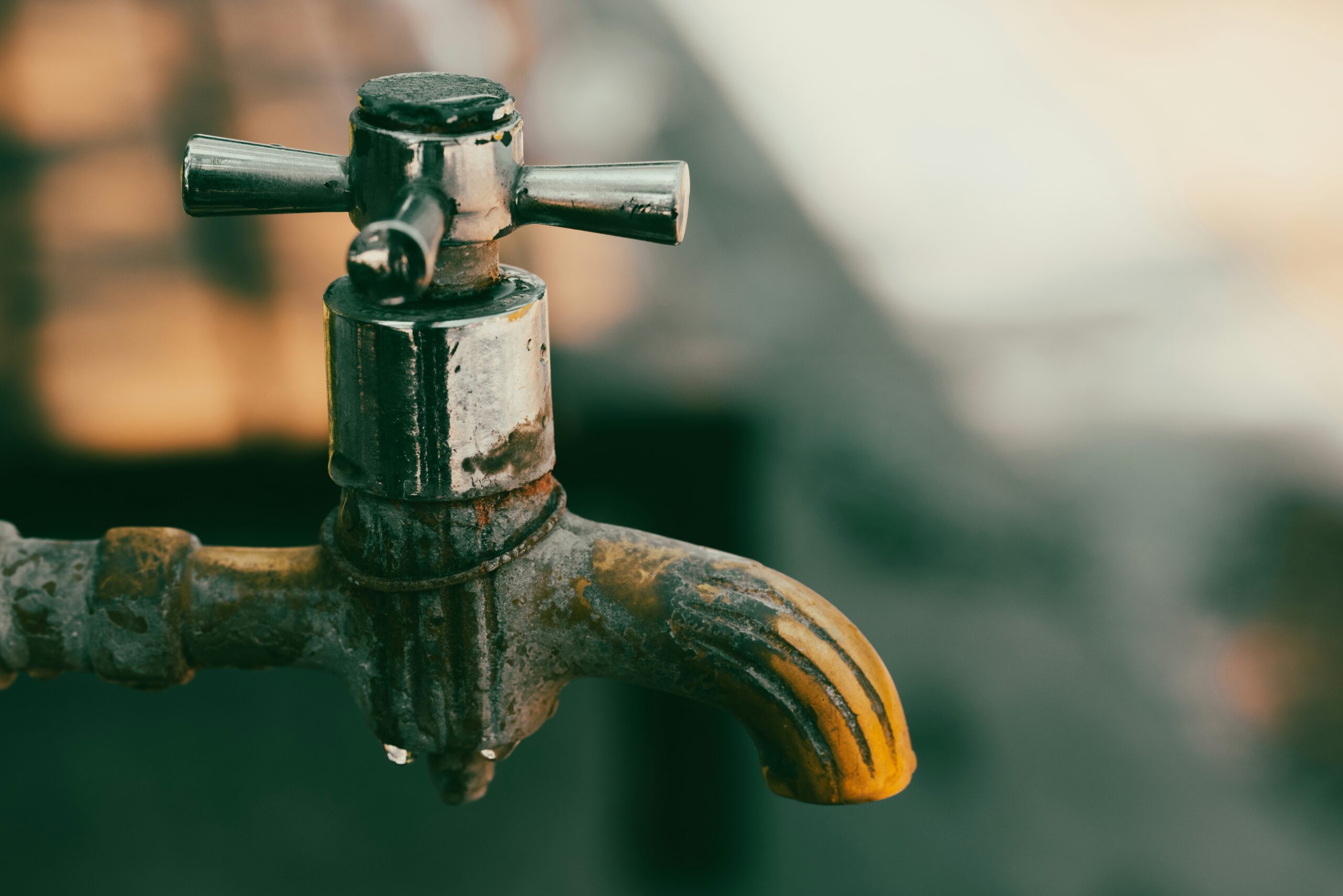
A freely spinning handle can mean it has lost its connection to the operating stem. It does not establish that the internal valve is open, that the branch has supply, or that an apparently dry faucet is depressurized.
Keep away from wet electrical equipment. Do not touch wet appliances, plugs or switches, or enter water to reach a breaker. When no gas leak is suspected, power may be isolated only from a safely accessible dry location; otherwise call an electrician or emergency help. Wet equipment needs qualified assessment before it is used again.
Record the coupling and source state
- Identify maker/model, handle attachment and whether the screw, spline or hub is visibly worn after an appropriate safe trim inspection.
- Record the existing no-flow event, seasonal isolation and freeze history. Turning a stem while the supply is off cannot prove normal live flow.
- Do not force an unknown stem with a wrench or use the handle as a lever. A gentle model-approved operation is different from freeing a seized mechanism by force.
Handle trim versus retained water parts
Use the actual instructions to identify an owner-removable cosmetic handle and its correct screw or spline fit. If only that coupling is damaged and service is otherwise suitable, the specified handle may restore actuation. Do not assume a bonnet or packing retainer is trim. Stop for a seized fastener, cracked body or uncertain part identity. A penetrant or lubricant must be expressly suitable for that part, finish, potable-water contact and nearby hazards; do not spray a generic product into the valve.
Internal service
Before removing a bonnet, packing, operating rod, cartridge or pressure-retaining breaker part, identify the exact model and its approved service procedure. Close a known effective homeowner supply control for every feed, control other connected inputs, and relieve and verify pressure at the actual serviced segment. A different indoor tap may not relieve an isolated outdoor branch. Stop if flow continues, the control is uncertain or parts bind. Use compatible approved parts and fully secure all pressure-retaining and protective components before an attended restoration. Re-isolate and verify relief before further disassembly. Cosmetic handle trim and maker-permitted external packing adjustment are different operations; neither authorizes loosening an unknown retainer under pressure.
Be prepared to shut off later is not enough before loosening a pressure-retaining part: effective isolation and verified segment relief come first. An unrelated indoor faucet can leave outdoor-side pressure trapped. Use the actual stem/rod or cartridge kit and retain protective features.
After refit
With the specified coupling and every pressure part secure, follow the suitable attended restoration procedure and check actual delivery and closure into a known receiver. Stop and re-isolate for binding, leakage or failure to operate. A source/control or concealed freeze problem needs its own assessment rather than repeated handle replacement.
Related situations
- Outdoor Spigot Leaks Inside Wall Cavity
- Outdoor Spigot Leaks Only When Hose Is Attached
- No water from outdoor spigot