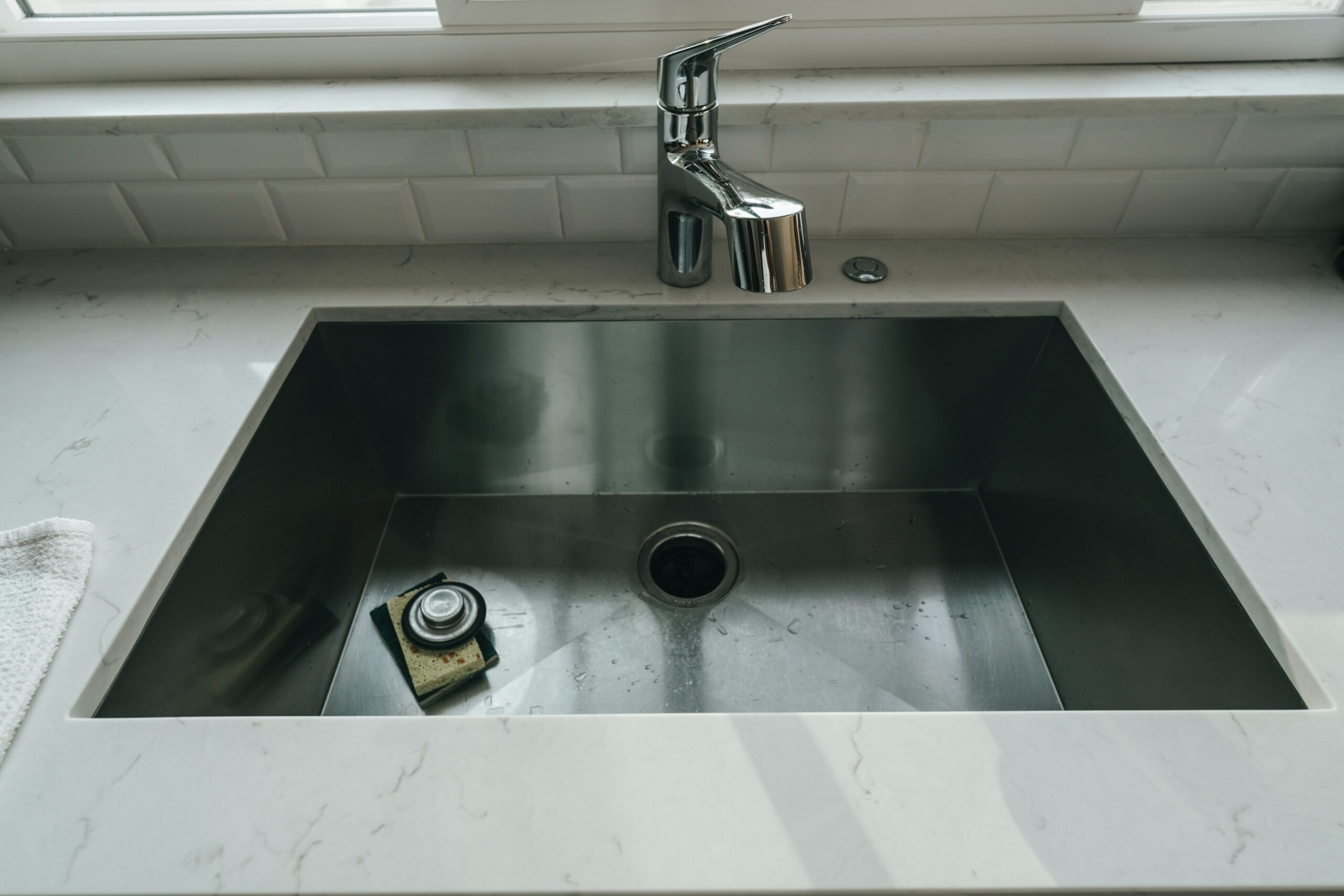
A faucet that spits alternating water and gas after a shutoff may be releasing air admitted during draining or work. The timing does not prove every burst is harmless air. Persistent or returning sputtering needs the actual source, work and equipment history.
Before running more water
Keep away from wet electrical equipment. Do not touch wet appliances, plugs or switches, or enter water to reach a breaker. When no gas leak is suspected, power may be isolated only from a safely accessible dry location; otherwise call an electrician or emergency help. Wet equipment needs qualified assessment before it is used again.
For suspected fuel gas, leave the affected area and call the gas emergency service from safety; do not stay to operate plumbing or switches. Follow current supplier notices after an outage. For a new unexplained odor or discoloration, use a known-safe consumption source and get water-quality advice before flushing away a requested sample.
Use the pattern already observed
- Record whether it was the first use after actual draining, valve replacement, an outage or a long idle period. A valve closure alone does not prove the pipes admitted air.
- Note hot-only, cold-only, one fixture or several outlets. A single smooth tap does not demonstrate the condition of every branch or a heater tank.
- Record whether the bursts stop and stay stopped, recur after idle time or continue during use. Returning gas may need supply, well-system or equipment assessment rather than more purging.
- A drain gurgle is a different observation from gas leaving the water outlet. Identify the location without opening fittings or sniffing at a port.
For an ordinary safe restoration
Follow the actual water-supplier and equipment startup instructions. Use only an approved, safely accessible, attended outlet with an accepting receiver and control hot spray. A floor-by-floor sequence is not a universal rule, and a toilet flush is unnecessary when drainage or bowl capacity is uncertain. Do not remove a showerhead, open a backflow test port or loosen a pressurized joint to vent the system.
Where an approved outlet check is appropriate, observe whether the water flow becomes steady and sputtering stops. Steady airflow is not the endpoint. Stop if leakage, unsafe spray, poor drainage or an unexpected change occurs. Steady water still does not certify potability, complete branch purging or heater readiness.
What if an aerator is involved?
Debris can affect a faucet’s stream, but removing a screen does not diagnose replenished gas. Use the actual faucet’s cool, source-controlled cleaning procedure and reassemble before testing. Do not extend an aerator-cleaning step into cartridge or retaining-part work.
When to call
Contact the supplier, installer or suitable plumber for persistent or recurring sputtering, a well-system change, loss of supply, leaks or severe noise. Do not keep running water for hours to meet an invented normal waiting period. Long-idle hot-water systems can have manufacturer-specific flammable-gas precautions; obtain the actual instructions before operating connected equipment.
Related guides
- How to Turn Water Back On After Shutting It Off (Safely)
- What to Do Immediately After You Shut Off Water to Your House
- Why Your Water Pressure Is Low After Turning the Water Back On
- What to Do If Water Smells or Looks Dirty After a Shutoff
- Air in Pipes After Shutoff
For the wider sequence and device-specific directories, browse Water Entry, Shutoffs & Flow Control Systems.