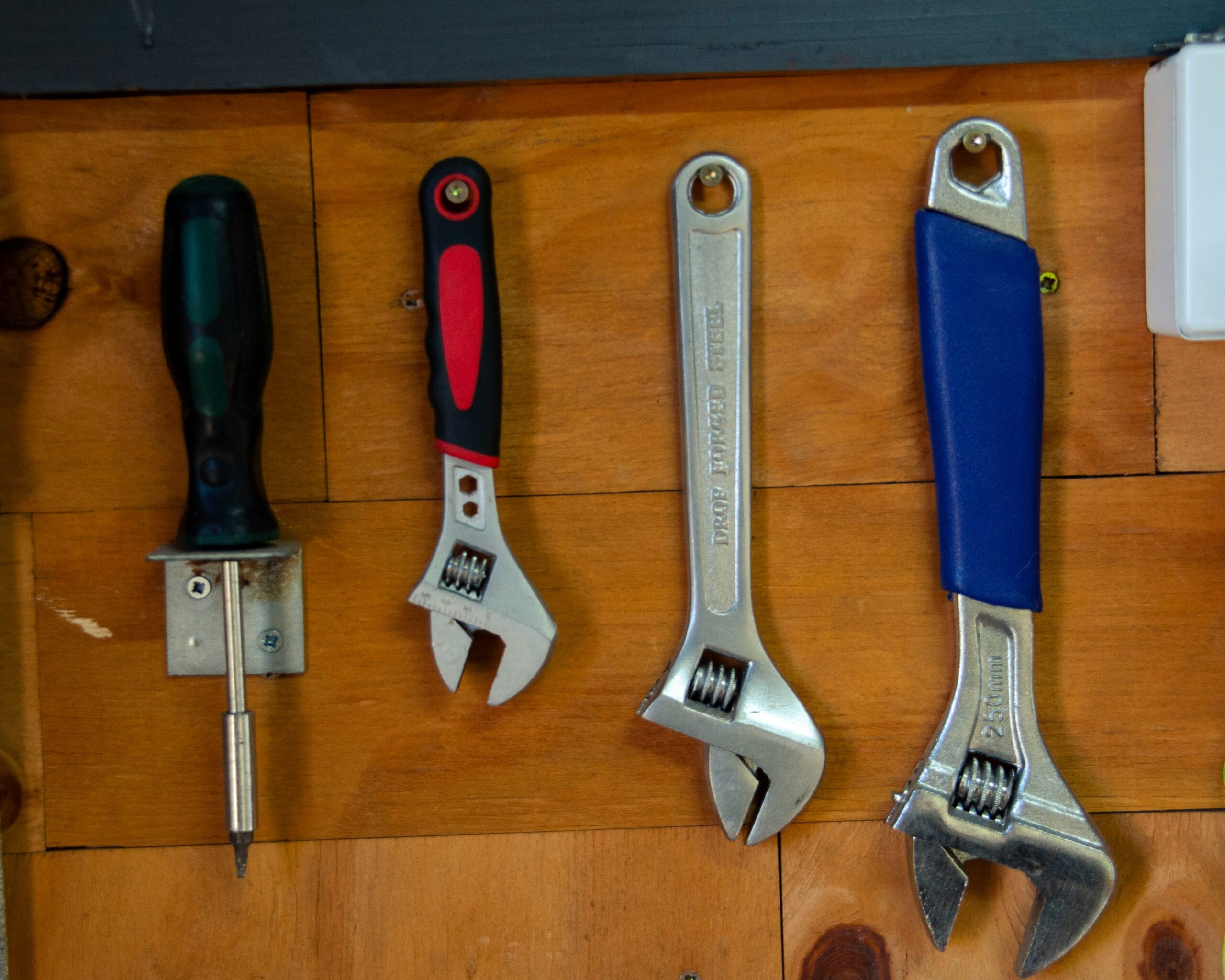
If faucet delivery changed after disposal work, keep the potable supply separate from the waste drain. A weak stream is a flow observation, not a measured pressure reading. Routine work on the disposal drain does not send pipe debris into a faucet aerator without an actual route or separate supply work.
Make the area safe before inspection
Stop affected use for overflow, active leakage, burning, harsh grinding or repeated trips. Stop added water and connected appliance discharge during backup. Do not touch wet electrical equipment or enter water to reach a plug or breaker; isolate only from safe dry access or get qualified help. Wet equipment needs assessment before reuse.
Before permitted manual work, set operating controls OFF and safely disconnect the actual affected power sources. Dishwasher hose work involves the dishwasher as well as the disposal. Never put hands or fingers inside the disposal, even when disconnected. Silence at a switch is not proof that wiring is dead. Keep electrical covers closed; altered or damaged wiring needs a qualified electrician. Re-isolate before further manual work after a powered step.
Check what supply work actually occurred
- Only the kitchen faucet seems weaker: Record whether hot, cold or both changed and whether supply valves or hoses were actually disturbed. An aerator restriction is possible, but normal flow elsewhere does not locate every fault inside that faucet.
- An aerator can be serviced: Use the exact faucet’s owner-removal method, correct key and finish-compatible cleaning. Do not grip an unidentified retained fitting with pliers or apply a universal vinegar soak. Stop for stuck parts or damaged finishes.
- A stop valve may have moved: Identify whether it is multi-turn, quarter-turn, push-pull or another design. Use its actual instructions, do not force it to an assumed counterclockwise stop and do not twist the attached supply line.
- Several fixtures are affected: Use existing observations and check with the water supplier or property manager for an actual service event. If safe drainage is available, limited normal-use comparisons can help describe the scope; do not run several fixtures into a backed-up system.
Keep inspection, repair and testing in the right order
Identify retained water and any drain product before opening a joint. Unknown residue, hot wastewater, uncontrolled inputs or more retained water than can be safely captured need suitable help. Do not add another cleaner or assume a timed rinse cleared the first. A known owner-serviceable removable trap can have appropriate isolated, supported cleaning; do not release a loaded joint or the disposal suspension merely to look inside.
Use the installed model’s compatible parts and actual joint instructions. A slip washer, bolted outlet gasket, spring clamp and sink-flange seal are different connections. Do not force misaligned pipe, apply a universal extra wrench turn or loosen the load-bearing mount without the specified support and procedure. Have uncertain mounting, damaged pipe or required rerouting handled by the installer or plumber.
After suitable correction, fully assemble and secure the plumbing before a connected water check. A dry fit is not a flow test. With no unresolved electrical, product, leak or backup concerns, begin with a small controlled water input and stop at leakage or renewed rise. A maker-specified static installation fill is a different task from dumping a full basin to reproduce a known restriction. Restore power only when required checks are complete, controls are OFF, tools are removed and required guards and covers are secured.
Does better flow prove the pressure and supply are safe?
No. Flow can be reduced while pressure remains normal. Actual pressure assessment requires an appropriate measurement and system context; do not adjust a pressure regulator or declare a universal normal range from stream strength. For a supply leak, stop affected use and isolate water only with an identified safe shutoff; do not tighten an unknown live joint. Disconnecting a supply line requires the correct isolation and confirmation that stored pressure and water are controlled. Persistent trouble needs the supplier or plumber.
Related situations
- Sink drains worse after disposal install
- Leaks after installing new disposal
- Post-Disposal Install Plumbing Failures
Sources and limits
- InSinkErator Complete example: mounting, outlet, leak checks and jam recovery
- Moen INS10477C example: isolation, tools and installation components
- Oatey example: a shared center-outlet waste assembly
- CDC: electrical hazards near water
- Example drain-opener label: remaining product and mechanical-method restrictions
- Portland Water Bureau: flow rate is different from pressure
Manufacturer examples do not identify your installed model. This guidance has not had independent professional review or household field testing.