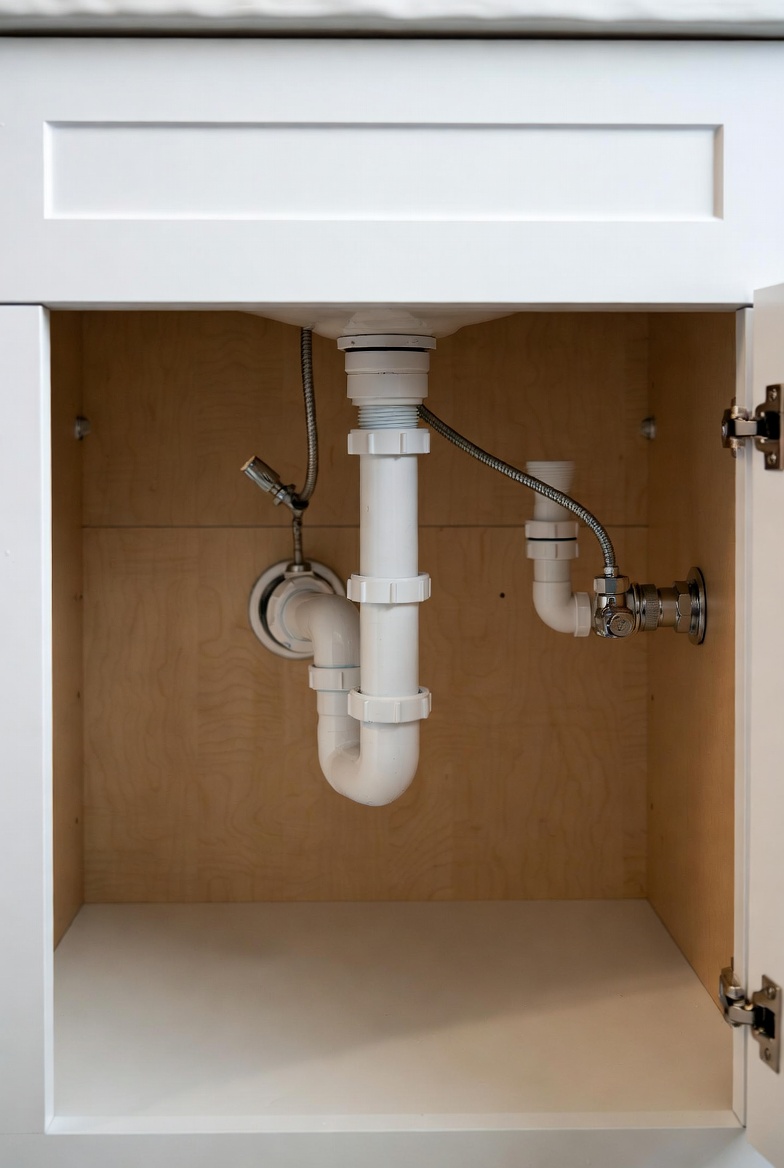
After disposal installation, distinguish a dishwasher tub that retains water, water rising in the sink, an air gap spilling and a leaking hose. Record the original location and program stage. Do not run another drain cycle or add a hot faucet flush to locate a backup.
Make the area safe before inspection
Stop affected use for overflow, active leakage, burning, harsh grinding or repeated trips. Stop added water and connected appliance discharge during backup. Do not touch wet electrical equipment or enter water to reach a plug or breaker; isolate only from safe dry access or get qualified help. Wet equipment needs assessment before reuse.
Before permitted manual work, set operating controls OFF and safely disconnect the actual affected power sources. Dishwasher hose work involves the dishwasher as well as the disposal. Never put hands or fingers inside the disposal, even when disconnected. Silence at a switch is not proof that wiring is dead. Keep electrical covers closed; altered or damaged wiring needs a qualified electrician. Re-isolate before further manual work after a powered step.
Follow the actual discharge and receiving paths
- Water stays in the dishwasher: A blocked hose, pump issue or an unremoved required disposal inlet plug may prevent discharge. The inlet plug blocks that appliance path; it does not close the disposal’s main sink outlet. Confirm the actual model and connected configuration before any plug work.
- Water reaches the sink bowl: This is a receiving-drain observation. A closed inlet by itself cannot cause that flow through the inlet. Assess the route that actually accepted water, including the main outlet and connected branch, without declaring a vent or check valve fault from the symptom.
- The hose connection leaks: A clamp or connection fault can spill externally. This is different from reverse flow into a dishwasher. Work needs both appliance sources isolated, controlled hot or retained water, appropriate capture and the correct hose and clamp.
- Routing or backflow protection changed: Use the dishwasher’s specified height, connection and length and the actual local requirement. Do not lower an existing required loop or replace a required air gap with an improvised high loop. These provisions do not certify that the receiving drain has capacity.
Keep inspection, repair and testing in the right order
Identify retained water and any drain product before opening a joint. Unknown residue, hot wastewater, uncontrolled inputs or more retained water than can be safely captured need suitable help. Do not add another cleaner or assume a timed rinse cleared the first. A known owner-serviceable removable trap can have appropriate isolated, supported cleaning; do not release a loaded joint or the disposal suspension merely to look inside.
Use the installed model’s compatible parts and actual joint instructions. A slip washer, bolted outlet gasket, spring clamp and sink-flange seal are different connections. Do not force misaligned pipe, apply a universal extra wrench turn or loosen the load-bearing mount without the specified support and procedure. Have uncertain mounting, damaged pipe or required rerouting handled by the installer or plumber.
After suitable correction, fully assemble and secure the plumbing before a connected water check. A dry fit is not a flow test. With no unresolved electrical, product, leak or backup concerns, begin with a small controlled water input and stop at leakage or renewed rise. A maker-specified static installation fill is a different task from dumping a full basin to reproduce a known restriction. Restore power only when required checks are complete, controls are OFF, tools are removed and required guards and covers are secured.
Can Cancel safely stop every dishwasher without pumping?
No. On some models Cancel starts a drain operation. Use the actual stopping and source-isolation procedure and do not assume a quiet disposal stops the independent dishwasher pump. Only after suitable correction, secure routing and reassembly, and the required safe-state checks should an appropriate controlled commissioning check occur. Stop if water rises, leaks or returns. Do not clear a known backup with more hot water or motor operation.
Related situations
- Water pressure changed after disposal install
- Sink drains worse after disposal install
- Post-Disposal Install Plumbing Failures
Sources and limits
- InSinkErator Complete example: mounting, outlet, leak checks and jam recovery
- Moen INS10477C example: isolation, tools and installation components
- Oatey example: a shared center-outlet waste assembly
- CDC: electrical hazards near water
- Example drain-opener label: remaining product and mechanical-method restrictions
- Whirlpool: dishwasher air gaps and installation requirements
- KitchenAid example: Cancel can start a drain operation
Manufacturer examples do not identify your installed model. This guidance has not had independent professional review or household field testing.