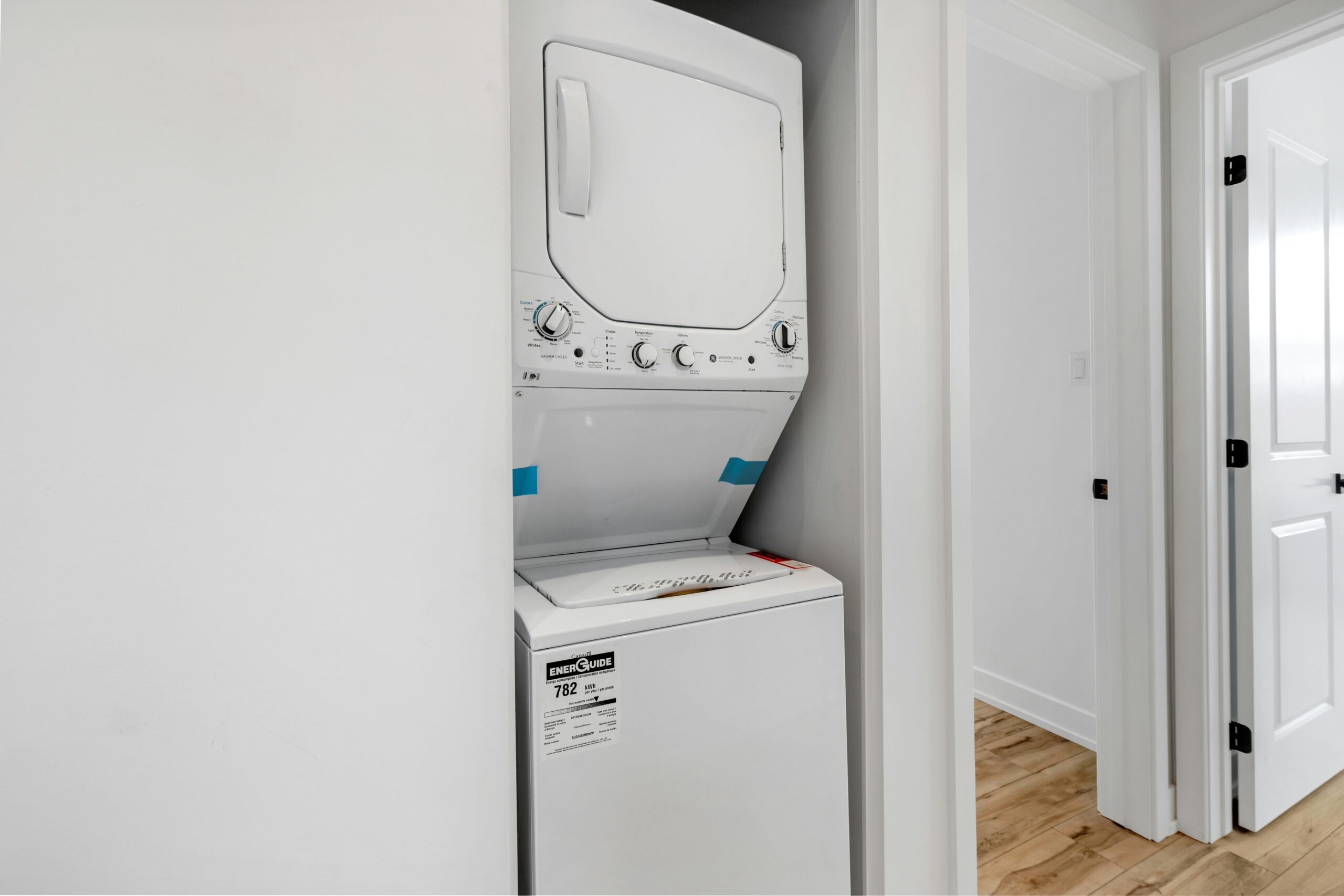
An oily film in washer water may concern the load, additives, drum or incoming supply. Those are different sample locations. Do not pause mid-fill to catch inlet water, disconnect a hose or run an empty hot cycle to prove the source.
Keep away from wet electrical equipment. Do not touch wet appliances, plugs or switches, or enter water to reach a breaker. When no gas leak is suspected, power may be isolated only from a safely accessible dry location; otherwise call an electrician or emergency help. Wet equipment needs qualified assessment before it is used again.
Decide what use is appropriate
If strong chemical or fuel-like fumes, breathing difficulty or another immediate exposure hazard is present, leave the affected area and call emergency help from safety. Do not stay to sniff, ventilate or run appliances to identify it. Follow any emergency or water-use notice.
For a new unexplained water-quality change, use a known-safe supply for consumption while you obtain supplier advice. Avoid deliberate taste, skin-feel and hot-water comparison tests. Boiling is not a remedy for unknown chemical contamination. Ask separately about bathing, laundry and other contact uses; a drinking restriction and a do-not-use notice have different limits.
Record where the observation occurred
- Original cycle phase, water already in the drum versus observed incoming fill, and the actual load.
- Detergent, fabric softener, oily/solvent-contaminated items and recent appliance service.
- Washer model, existing hose/leak condition from a safe dry position and other water observations already known.
What it does and does not show
Drum water contains the wash process and is not a drinking-water sample. A normal utility-sink cup does not certify the washer inlet. A pressure-relief device is not automatically a cross-connection or a backflow preventer; contamination needs an actual source and route, not that part name.
What to do next
- Stop further affected laundry using the normal controls only if safely accessible and no strong-fume or wet-electrical emergency is present. Do not reach into moving parts, bypass the lid lock or unplug wet equipment.
- Keep oil-affected laundry out of the dryer. The cited Whirlpool example warns against laundering flammable-fluid-contaminated items and drying oil-contaminated items, including cooking oil; a washer cannot be assumed to remove all oil. Obtain actual appliance/fabric handling advice.
- Use appliance service for an established machine/load issue and the supplier/lab for a suspected source issue. Preserve both histories without adding rinse cycles or exposing hands to unknown water.
- Hose/screen service needs actual energy and every-feed isolation, pressure release, secure retained control and correct reassembly. Do not select a live or disconnected fill-hose bucket test from a generic guide.
Sampling and any directed restoration
Ask the supplier, local health department or a state-certified drinking-water laboratory which substances and locations fit the history. Get its containers, collection and delivery instructions before taking a sample. Ask before flushing, cleaning an outlet or changing treatment: those actions can alter the evidence. A household jar, paper towel or toilet-bowl sample is not a universal drinking-water test.
If flushing is appropriate, use the actual supplier, installer or product procedure with sound fully assembled plumbing, an accepting drain and continuous attendance. Stop for leakage, backup or a new hazard. No universal number of minutes, hot-appliance cycle or clear-looking endpoint establishes that an unknown substance is removed.
Will an empty hot cleaning cycle clear the washer and supply?
A manufacturer-prescribed clean cycle can address suitable ordinary machine residue, once the actual substance, water suitability and appliance condition allow it. It is not a universal decontamination method or supply-clearance test.
Related guides
- Water feels slick or oily
- Soapy feel in shower water
- Oily Sheen, Slick Feel, or Soapy-Like Water
- Water feels slippery only on hot side
- Soapy feel after smart shutoff trip
- Water leaves rainbow film