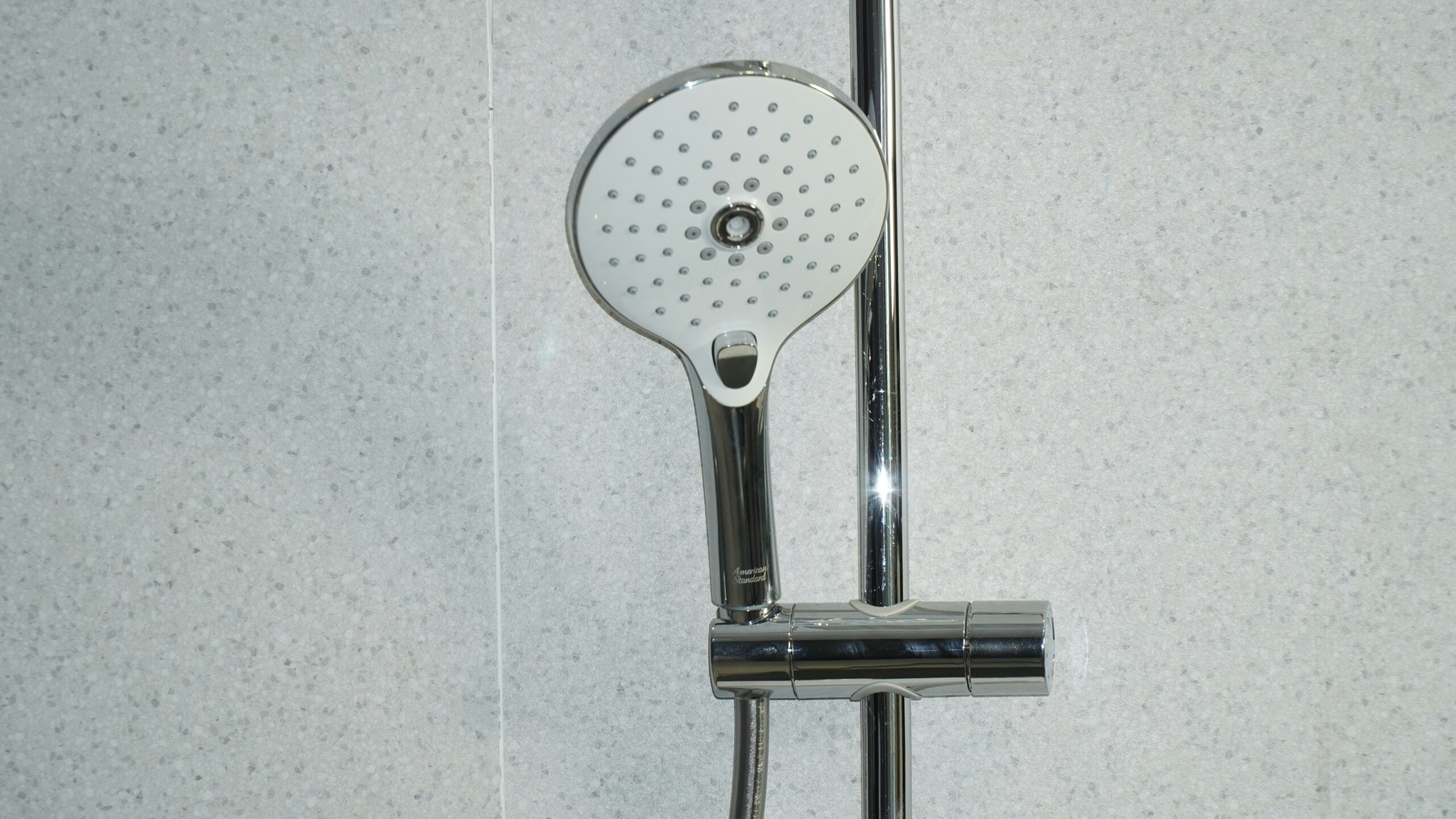
Record where and when the shower odor was already noticed: in the room, at a drain, or with water use. Hot-only, intermittent and drain-area patterns are useful, but do not prove a failed anode, particular bacteria or a safe temporary post-shutoff condition.
Check the emergency and source conditions first
For strong, widespread or unexplained gas-like fumes, exposure symptoms, or suspected high sewer-gas concentrations in an enclosed space, leave the building immediately and call the fire department or emergency services from outside. Avoid flames, switches and other ignition sources; do not remain to ventilate, sniff drains or investigate. Smell intensity does not measure the concentration. A faint localized drain odor without those warning signs calls for a different plumbing investigation; it does not automatically establish a fuel-gas leak.
If fuel gas is suspected, leave the building or affected area immediately. Do not operate valves, switches, plugs, appliances or phones there. Call the gas emergency service from a safe location well away, and wait for responders’ clearance.
For a new, unexplained water-quality change: do not deliberately taste the water. Use bottled water or another known-safe supply for drinking, food preparation, teeth brushing and ice while you contact the supplier. Follow the actual local notice for other uses. Boiling does not make chemically contaminated water safe, and clear appearance or a fading odor does not certify safety.
Do not stay to turn on a fan, sniff a drain or create a hot-water sample when gas, unknown chemical fumes or exposure is suspected. A familiar faint localized odor without those warning signs calls for a different investigation; do not label every odor a gas leak or certify it safe from its strength.
A source comparison has limits
If there is no gas/exposure emergency and the actual supplier considers an ordinary localized odor check appropriate, follow its clean-glass comparison away from the drain. Collect under the supplier’s conditions without splashing or sending the sample through the suspect drain, and compare away from its ambient odor. Do not taste, closely sniff unknown chemicals or use an uncontrolled hot draw. This helps describe whether an odor follows the collected water; it does not measure gas concentration, identify an organism or test potability. Ask about required laboratory sampling before flushing or cleaning away evidence.
Useful information for the provider
- The water source, current advisory, outage/work history and whether the change is new.
- Whether hot, cold or several outlets were already affected during ordinary use; do not run every fixture to recreate it.
- Any idle period, heater/filter service, visible drainage change or chemical product already used.
Choose the next action from the evidence
- For a new unexplained water change, follow the actual supplier or well-water/health advice for drinking, bathing and other contact. A fading smell or clear water does not lift a restriction.
- For a persistent hot-water pattern, give the heater provider the actual model and source/work record. Water chemistry, the heater environment and anode reactions can be relevant; an odor alone does not prove the anode failed or that removal is appropriate.
- For ordinary localized drain care with no emergency, backup or hazardous product, clean only intended accessible owner parts by the actual instructions. An idle trap may need its prescribed water seal restored, but do not keep adding flow to a slow or backing receiver.
- If source or equipment flushing is directed, use the specified outlet, sequence and completion criteria with safe receiving/drainage, temperature and attendance. Do not run two hot outlets for 5–10 minutes as a universal cure.
Cleaning does not certify the water
Do not add or mix cleaners to diagnose a sound or smell. If a drain product is already present, follow its exact label and tell the provider what was used; do not plunge, snake or open a drain while hazardous residue may remain. A generic wait, rinse or ventilation rule does not establish safe conditions. Ordinary accessible hair removal is a separate task under the actual stopper/strainer instructions, with no force or overflow-assembly removal.
Identify the installed valve/trim and the actual owner-serviceable outlet. A volume control, temperature stop and supply-isolating service stop are different controls. Use only safely accessible known controls by their instructions and without force. For a removable head, screen or spout, establish its retention, cool/off state and residual-water handling, then use the specified finish/material care. Vinegar, a screen pull or a penetrating lubricant is not universally compatible. Refit fully before an attended check with safe temperature and a drain or receiver that can accept the flow.
Do not drain or disinfect a heater, raise temperature or remove its anode from an odor guess. Actual heater work requires the product’s energy, cooling, pressure, filled-state and restart procedure; use qualified service when these cannot be established.
Before opening a cartridge retainer, bonnet, supply joint or other pressure boundary, identify and isolate every feed that can pressurize the work, control temperature, relieve the actual segment through the appropriate controlled outlet and verify depressurization. A distant faucet may not relieve a chamber beyond closed local stops or checks. Keep the work isolated while open and use correct seals, retainers and complete reassembly before restoration. A specifically approved service flush needs its own secured capture and source-off steps before extraction or refitting.
Persistent or returning odor, poor drainage, leakage or new concerning water warrants the relevant supplier, plumber or heater provider without first completing a timed flush. Familiar aesthetic conditions can have source-specific remedies; smell intensity alone does not establish bathing safety.
Related guides
- Shower & Bathtub Water Delivery
- Why Your Bathtub Smells Bad When You Fill It
- Why Your Shower Water Is Cloudy, Brown, or Dirty After Changes to the Water Supply
- What to Do If Water Smells or Looks Dirty After a Shutoff
- Why Your Bathtub Drain Gurgles When Filling
Safety sources
- Wisconsin DHS: sewer-gas exposure and emergencies
- Con Edison: suspected gas leaks
- CDC: drinking-water advisories
- Minnesota Health: possible well/plumbing/heater sulfur sources; odor is not a complete sanitary test
- Joint Municipal Water and Sewer Commission: clean-glass comparison away from a drain, when appropriate
- EPA: certified drinking-water laboratories
- Example electric-heater manual: filling and maintenance requirements
- Moen: actual finish and product cleaning requirements
- Example drain-opener label: restrictions on plunging, disposal operation and mixing
- Moen: appropriate supply isolation before service
- BrassCraft: water supply stop instructions