Check for an emergency first
For strong, widespread or unexplained gas-like fumes, exposure symptoms, or suspected high sewer-gas concentrations in an enclosed space, leave the building immediately and call the fire department or emergency services from outside. Avoid flames, switches and other ignition sources; do not remain to ventilate, sniff drains or investigate. Smell intensity does not measure the concentration. A faint localized drain odor without those warning signs calls for a different plumbing investigation; it does not automatically establish a fuel-gas leak.
If fuel gas is suspected, leave the building or affected area immediately. Do not operate valves, switches, plugs, appliances or phones there. Call the gas emergency service from a safe location well away, and wait for responders’ clearance.
Keep away from wet electrical equipment. Do not touch wet appliances, plugs or switches, or enter water to reach a breaker. When no gas leak is suspected, power may be isolated only from a safely accessible dry location; otherwise call an electrician or emergency help. Wet equipment needs qualified assessment before it is used again.
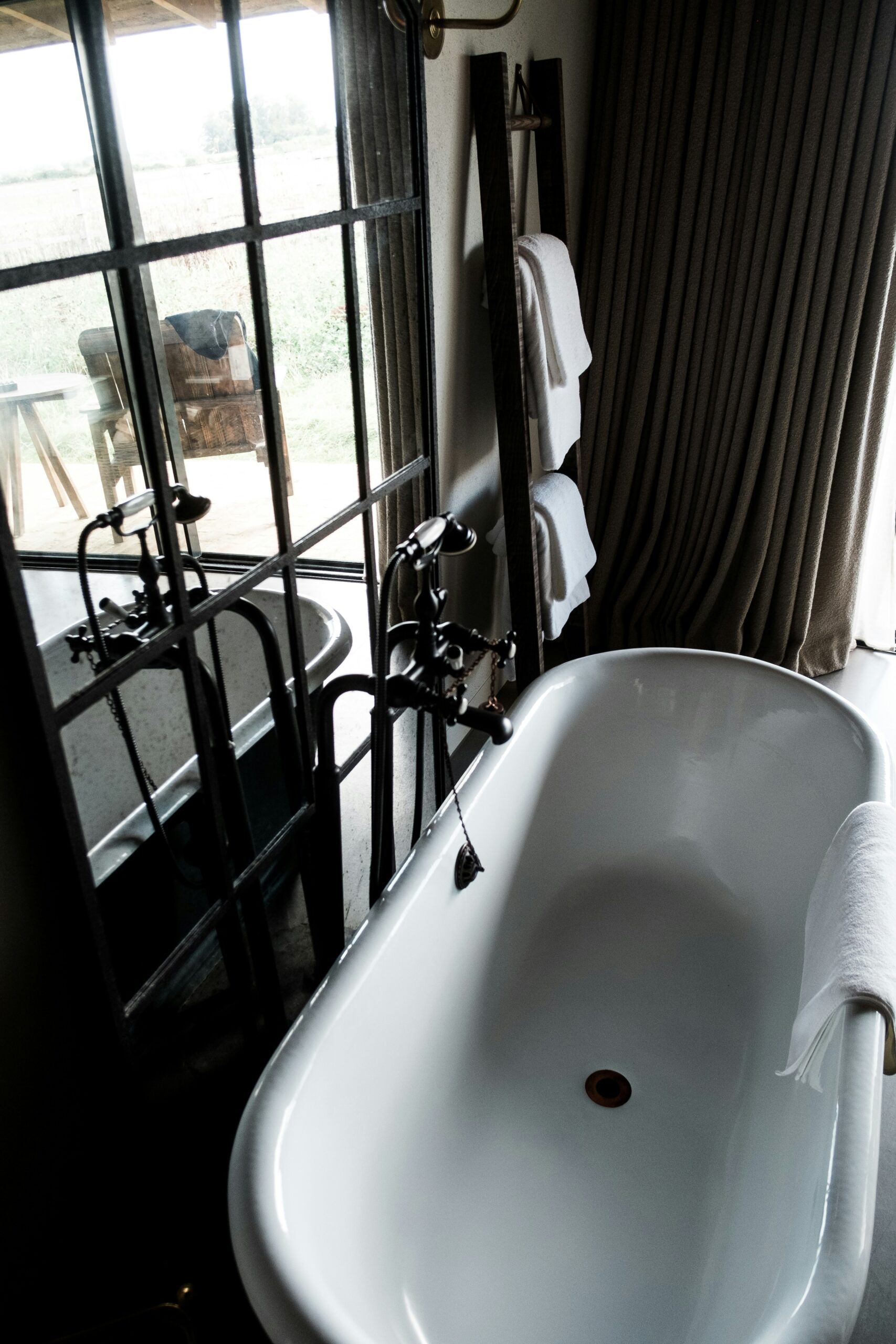
First separate a sound while the bathtub is being filled with the stopper closed from a sound as water actually leaves through the drain or overflow. Those are different observations. Filling a closed tub does not by itself establish a large wastewater discharge, and a gurgle alone does not diagnose a blocked roof vent.
Useful details to record
- Whether the stopper was open or closed, where the sound seemed to come from and whether water reached the overflow.
- Whether it continued after the tap stopped or appeared when water was released, from ordinary use already observed.
- Slow drainage, bowl movement at another fixture, leakage, recent work and chemical use.
What the pattern can tell you
- The sound occurs only with the tap flowing into a closed tub. Describe it as a filling-time sound; do not assume its source is the drain or a shared vent.
- It occurs during actual emptying. The drain arrangement may be relevant, but the noise does not identify an obstruction or vent fault.
- Another fixture rises or wastewater returns. Stop discharge and arrange prompt assessment rather than filling the tub again to compare.
What to do next
- Do not reproduce the symptom with a full bathtub dump, washer drain cycle, simultaneous fixtures or repeated flushes. If water rises or wastewater returns, stop added discharge and keep people and pets clear. Report sewage or several affected fixtures promptly to a plumber and the appropriate building manager or local sewer agency.
- Do not use a chemical drain opener to diagnose a noise or low bowl. If any product has already been used, follow its exact label, tell the provider what it was and avoid plunging, snaking or opening drains while hazardous residue may remain. A generic wait, rinse or ventilation rule does not establish safety.
- For ordinary local tub care without hazards, remove only an intended owner-removable strainer or stopper under its actual instructions and wipe accessible hair into the trash. Do not force a retained part, remove the overflow assembly or run an unknown cable through it.
- Keep cleanouts and vent caps closed. Do not open a basement cleanout to watch flow, sniff openings closely, climb to a roof vent, enter a manhole or explore an attic or concealed chase for this check. Those steps add exposure, fall and release hazards without establishing a diagnosis.
- Do not use plunging as proof of correct venting, fill to the overflow to reproduce a sound or refill repeatedly after each attempt. A plumber can choose suitable checks for persistent or recurrent noise, poor drainage or recent installation changes.
- Give the provider the stopper position and filling-versus-emptying sequence. Ask for an explanation grounded in the actual tub, supply and waste arrangement rather than assuming a main-line fault from a sound.
Is a gurgling sound alone an emergency?
An isolated sound without other warning signs does not by itself establish an emergency or identify a fault. Strong gas-like fumes, exposure symptoms, sewage backup or electrical hazards require the response above. Persistent unexplained sounds or drainage changes deserve assessment.
Related situations
- Toilet-specific escalation guide
- toilet making gurgling noises
- Gurgling Sounds From Drains or Fixtures
- When to Call a Plumber for Bathtub Problems
For common shower and bathtub questions and the existing symptom directories, browse Shower & Bathtub Water Delivery.
Safety sources
- Con Edison: suspected gas leaks
- Wisconsin DHS: sewer-gas exposure and emergencies
- Madison Metropolitan Sewerage District: sewer-backup response
- Example drain-opener label: restrictions on plunging, disposal operation and mixing
- Delta example: identifying and removing a retained sink stopper
- CDC: electrical hazards near water