Quick Answer:
A repeating daily swing in water pressure, even when you aren’t using water, usually points to changes in the municipal supply system — peak demand times, tank filling cycles, or pump controls. Confirm the pattern by logging pressure at set times for several days before changing any in-home plumbing or equipment.
Why This Happens
City water systems run on cycles. In many places pressure drops during morning and evening demand peaks and rises again when demand falls. Storage tanks, booster pumps, and control valves may start or stop on a schedule, producing the same pattern every day. Maintenance activities, hydrant flushing, or reduced service at night can also create a daily repeat.
If you see the pattern mostly on certain days, it may match local use habits — for example, more daytime activity on weekdays. If you want local comparisons, check resources or pages like Pressure weak on weekends and Pressure varies by weekday that describe how pressure can change by day.
Step-by-Step What to Do
Step 1 — Get a reliable pressure gauge
- Use a simple screw-on pressure gauge that attaches to an outdoor spigot or the house hose bib. These are inexpensive and accurate enough for logging relative changes.
Step 2 — Log pressure with a gauge at different times
- Record readings at consistent times each day (for example, 6:00, 9:00, 15:00, 19:00, 23:00).
- Log for at least 3–7 days to confirm the pattern repeats, noting any household water use while you record.
- Include pressure, date, time, and any unusual events (hydrant flushing, maintenance notices).
Step 3 — Correlate readings with city demand patterns
- Contact your water utility or check public notices for peak demand times, tank refill cycles, or planned work. Compare their schedules to your logged times.
- If the drops align with known municipal peaks or pump cycles, the cause is likely outside your home.
Step 4 — Try simple home checks
- Confirm the issue appears at multiple fixtures (outdoor spigot, upstairs sink). If it’s in multiple places at the same times, it’s more likely a supply issue.
- Temporarily avoid major water use during a suspected peak to see if your household usage affects the pattern.
Step 5 — Decide next steps
- If logging and utility information point to municipal timing, you can plan around peaks or ask the utility about long-term fixes (pressure regulators, storage upgrades).
- If you still see unexplained drops after correlation, prepare your log and contact a licensed plumber for diagnosis.
What Not to Do
- Do not replace in-home plumbing before confirming municipal timing patterns.
- Don’t assume a single low reading proves a broken pipe — verify with repeated logs first.
- Avoid shutting off or modifying municipal valves yourself; that work is the utility’s responsibility.
When to Call a Professional
- Call your water utility first if logs match their peak schedules or if you see system notices; they can confirm supply-side causes.
- Call a licensed plumber if: the pattern persists but utility says their system is stable, you find pressure fluctuates only in your house, or you notice leaks, noisy pipes, or sustained very low pressure.
- Bring your pressure log when you call — documented times and readings make troubleshooting faster and more accurate.
Safety Notes
- Turn off fixtures before attaching or removing a pressure gauge to avoid water spray.
- Do not attempt to access or alter public mains, valves, or hydrants; contact the utility for any public-system work.
- If you find a significant leak or burst pipe, shut off your house main and call a plumber immediately to minimize water damage.
Common Homeowner Questions
- Q: How long should I log pressure to be sure it’s a pattern?
A: At least 3–7 days at fixed times; longer if the pattern is subtle. - Q: Can a pressure regulator cause daily swings?
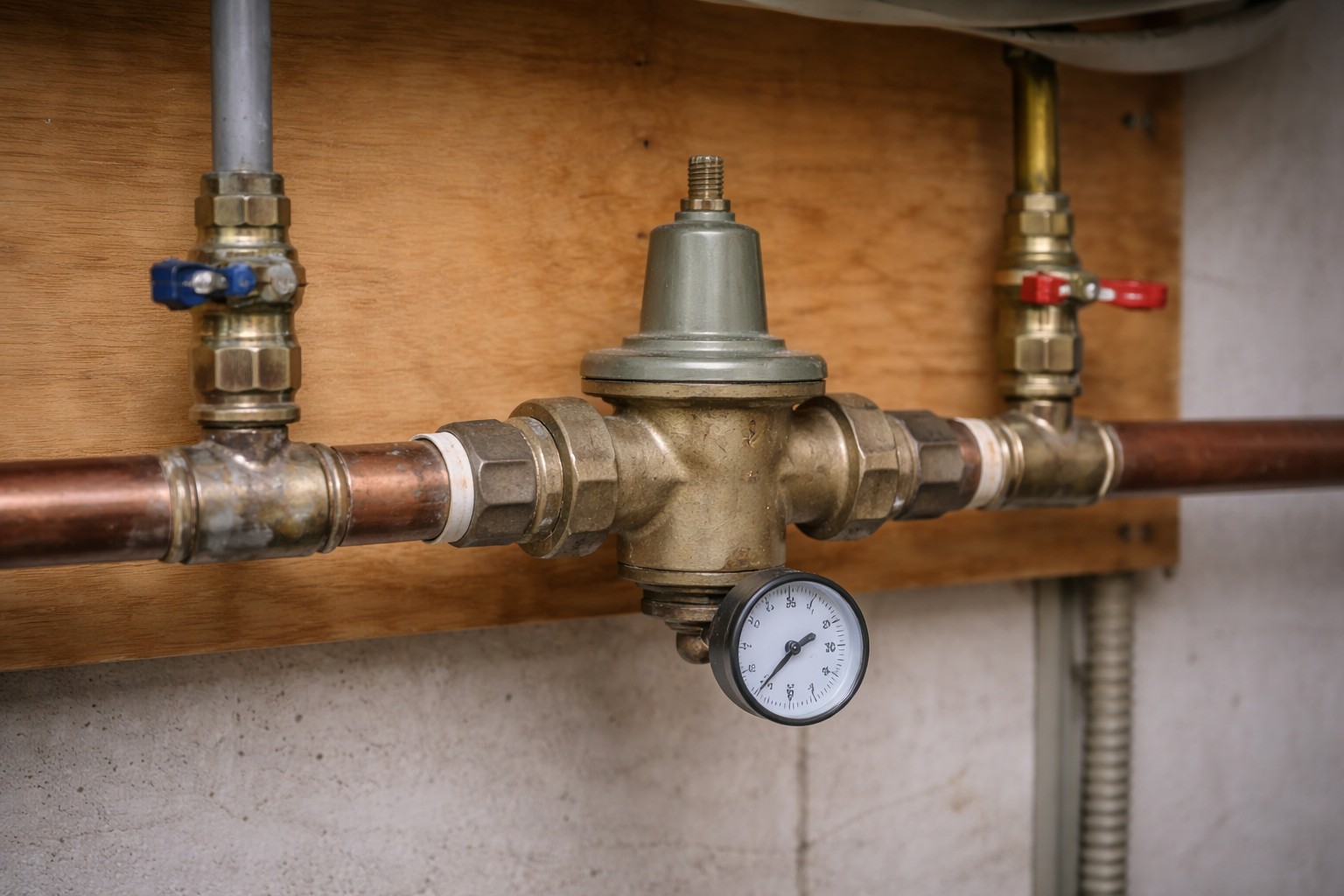
A: Yes — a failing regulator or one set to react to supply changes can amplify daily variation. - Q: Will installing a booster pump fix a municipal supply problem?
A: A booster can help inside your home, but confirm municipal timing first; a pump may run unnecessarily if the root cause is external cycles.
Related Articles
If you’re troubleshooting a similar symptom, these guides may help:
For the full directory, see Water Pressure Changes by Time of Day.