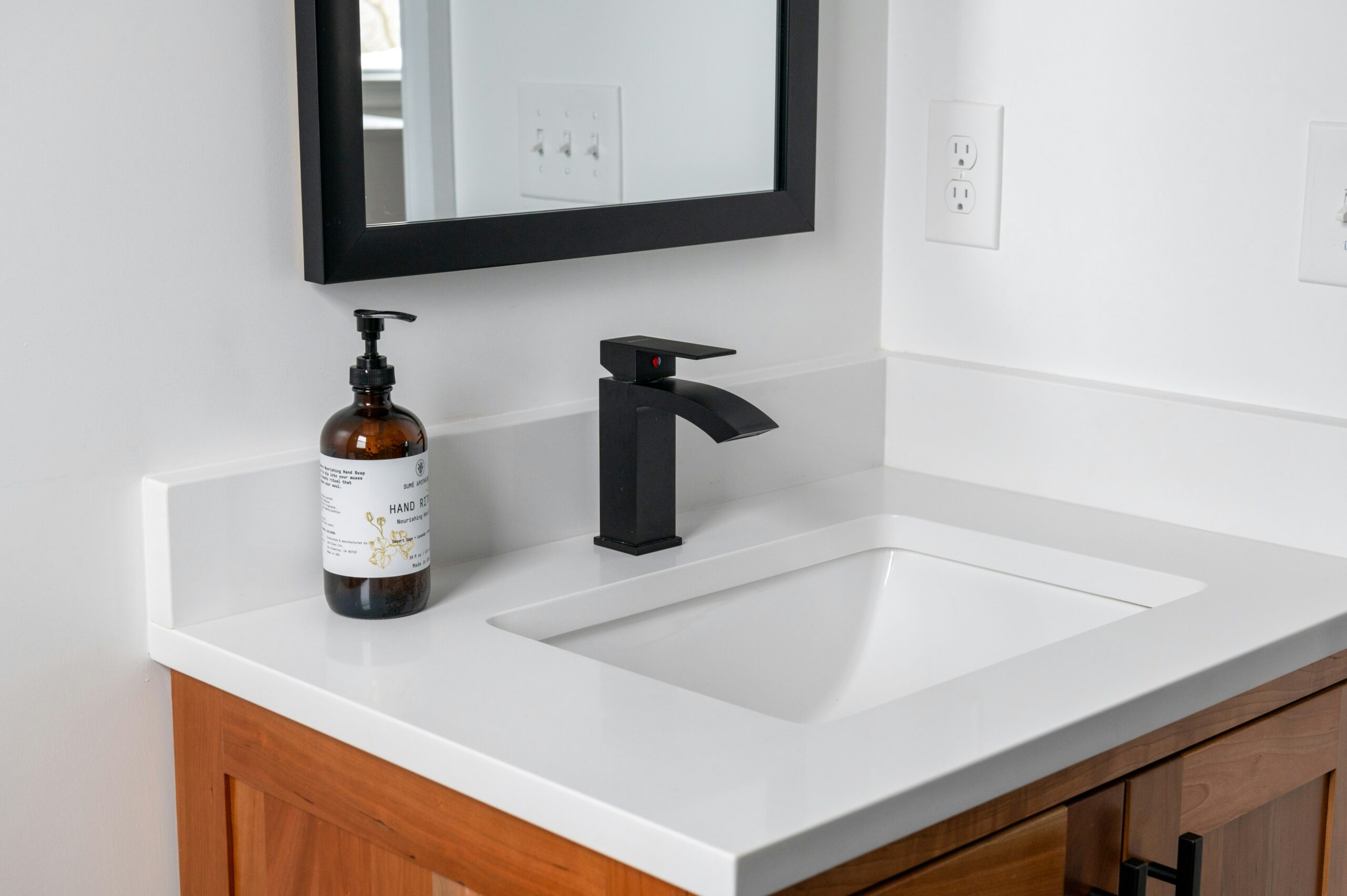
A few drops after closing a faucet can be retained water draining from the spout on some models. A supplied leak that keeps returning or never stops is different. Start by recording where the water appears and whether the discharge ends without further use; do not assume every delayed drop proves a worn cartridge.
Separate drain-down from continuing leakage
- Finite spout drainage: some high-arc designs retain water beyond the valve after closure. Moen documents this behavior for its high-arc example. The pattern should end; that example is not a universal waiting time for every fixture.
- Continuing spout dripping: the installed sealing assembly, debris or valve seat may need assessment. Drip speed alone does not distinguish a washer, cartridge or other part.
- Handle, base or underside wetness: identify that escape path separately. Water can travel along the assembly, so a low drop does not prove where it started.
- Several fixtures change together: report the timing and actual supply observations. Do not tighten every handle or adjust a regulator as a diagnosis.
A useful observation record
When safe during ordinary use, note the fixture model, handle position, time since closure, approximate drop pattern and whether it finally stops. A photograph of the assembled fixture or a short record of the original event can help the manufacturer. Do not put a hand under unexpectedly hot water, leave a receiver to overflow or repeatedly open hot and cold handles just to reproduce a leak.
Before deciding on a part
Identify the actual compression, cartridge, ball, ceramic-disc or other design from the model’s parts information. Those are useful categories, but the correct part is model-specific. A two-handle comparison does not apply unchanged to a single-handle mixer, electronic faucet or special control. Age alone does not prove a failure, and every drip does not inevitably worsen.
If a repair is needed
- For an active damaging leak, isolate the known supply if safely accessible. Stay clear of wet electrical equipment and obtain help if the control is unreliable.
- Before internal repair, close all required feeds and follow the installed product’s relief and isolation-verification procedure. Do not loosen a retaining nut or remove a cartridge under pressure.
- Use the correct part, tools and assembly method. Cover the drain for small parts only where it will not create an overflow risk; keep the work area clear. Do not force stuck components or tighten the handle harder to make it seal.
- Complete assembly before controlled restoration and inspect the actual leak path with a safe, attended receiver. Persistent leakage after correct service, a damaged body, unavailable parts or an unidentified model calls for manufacturer or plumber assistance.
Repair versus replacement depends on the installed fixture’s condition, compatible parts, warranty and actual estimate. Normal finite drain-down alone is not a reason to replace a faucet; continued leakage still deserves attention.
Related guides
- Why Your Faucet Is Leaking After Turning the Water Back On
- How to Shut Off Water to Your House (With and Without a Main Valve)