Quick Answer:
When using showers, washing machines or other fixtures upstairs, the extra flow can drop pressure on lower floors if the system can’t supply the combined demand. Test with fixtures isolated, check the pressure-reducing valve (PRV) setting, and watch the water meter for flow patterns to confirm whether it’s demand-related or a failed component.
Why This Happens
Water pressure at any tap depends on supply pressure and the amount of water flowing through the pipes at that moment. Upstairs fixtures add demand and can cause a noticeable fall in pressure downstairs if:
- the main supply or pump can’t keep up with simultaneous use;
- pipe sizing or routing creates a bottleneck under high flow;
- a PRV is set too low or is failing and can’t hold pressure under transient loads.
Similar sudden drops occur with other high-demand devices, such as laundry or irrigation systems — for example, Pressure drops when ice maker cycles and Pressure collapse when irrigation starts are common patterns that show how localized demand affects the whole system.
Step-by-Step What to Do
1. Confirm the pattern
Before assuming any part has failed, reproduce the problem:
- Ask someone to run the upstairs fixture while you monitor a downstairs tap.
- Note whether pressure drops only while the upstairs fixture is running.
2. Test pressure with fixtures isolated
Isolate fixtures to see if a single appliance or combination causes the collapse:
- Shut off individual shutoff valves for upstairs fixtures one at a time or all at once.
- With upstairs fixtures off, check the downstairs pressure using a hose bib pressure gauge or by feeling flow at a tap.
- If pressure is normal with upstairs fixtures isolated, the issue is demand-related rather than a permanent loss of supply.
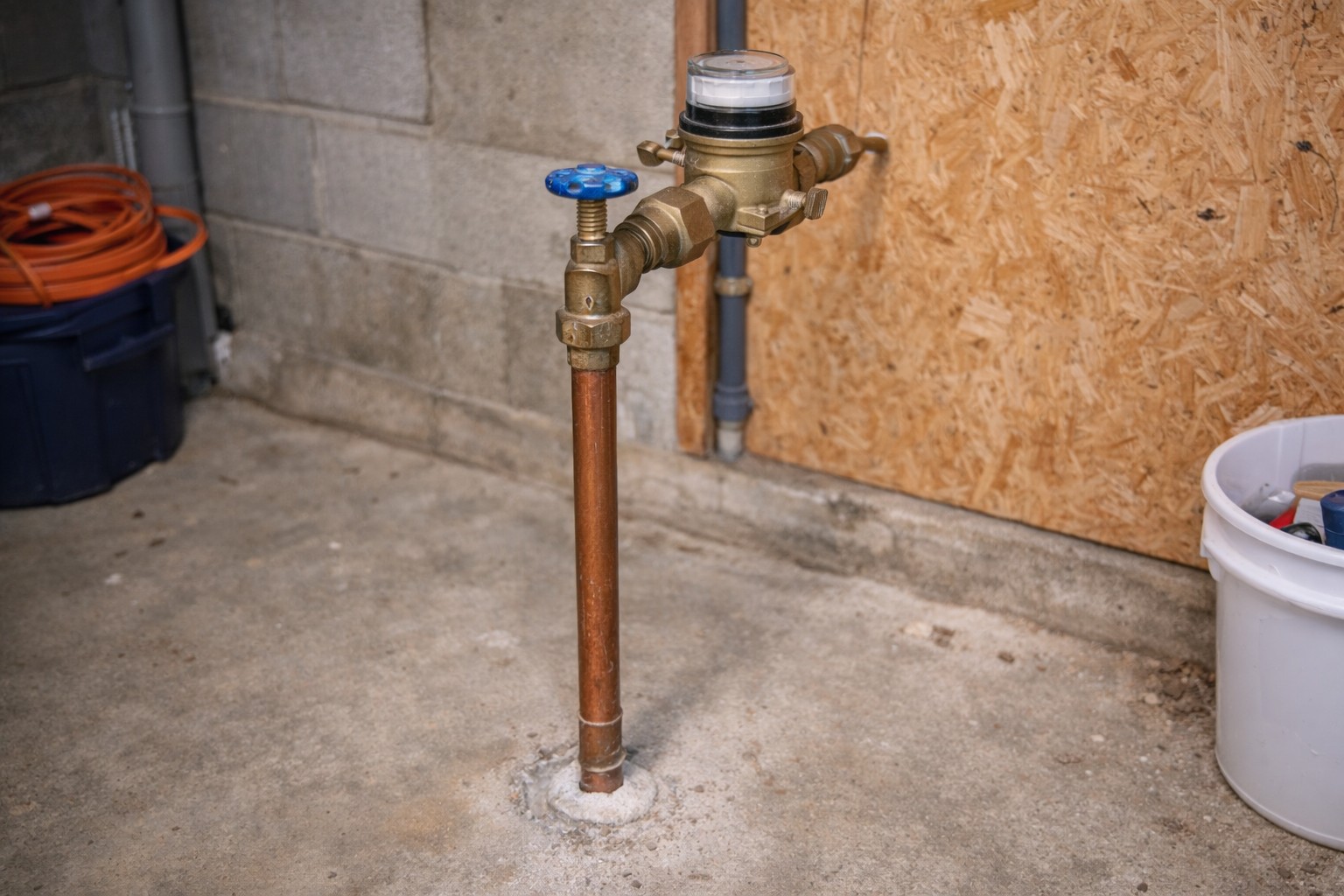
3. Observe meter flow patterns
Watching the water meter can show whether large flows coincide with pressure drops:
- Have someone operate the upstairs fixture while you watch the meter for continuous or pulsing movement indicating flow.
- Rapid rotation or steady movement during the drop confirms high demand; no movement suggests supply or PRV problems.
4. Confirm PRV setting
Locate the pressure-reducing valve (usually near the main shutoff) and check its setting:
- Use a pressure gauge on a downstream outlet to read static pressure (when no fixtures are running).
- If the PRV is adjustable and you’re comfortable doing so, small adjustments can be made, but note the current setting before changing.
- If the PRV won’t hold pressure when flow increases, it may be failing and need replacement.
5. Narrow down other causes
Check for additional factors that worsen drops:
- Partially closed valves or clogged aerators and screens at fixtures.
- Shared branch lines or undersized piping feeding multiple fixtures.
- Municipal supply issues or scheduled/system-wide changes.
What Not to Do
- Do not assume fixture failure when pattern is demand-related.
- Do not remove or force-adjust a PRV without isolating the system and knowing the proper setting.
- Do not start cutting or replacing pipes before confirming whether the problem is demand or supply related.
When to Call a Professional
- Pressure drops persist even with upstairs fixtures isolated.
- The PRV leaks, will not hold a steady pressure, or you suspect a failing pump or municipal supply issue.
- You find signs of pipe damage, corrosion, or repeated low pressure across multiple fixtures despite troubleshooting.
Safety Notes
- Turn off the main water supply before working on valves or replacing a PRV.
- Use proper tools and a pressure gauge rated for household water systems.
- Avoid working on hot water lines without shutting off and allowing them to cool.
Common Homeowner Questions
- Why does upstairs use affect downstairs? Because higher demand upstairs increases flow through shared piping, lowering pressure available to other fixtures.
- Can I temporarily fix it myself? Yes—staggering appliance use or closing an upstairs shutoff reduces demand until a permanent fix is made.
- Is adjusting the PRV safe for a homeowner? Small adjustments are possible, but if you’re unsure or the valve leaks, call a pro to avoid creating higher-than-safe pressures.
For more related articles, see the Pressure Drops When Multiple Fixtures Run hub.