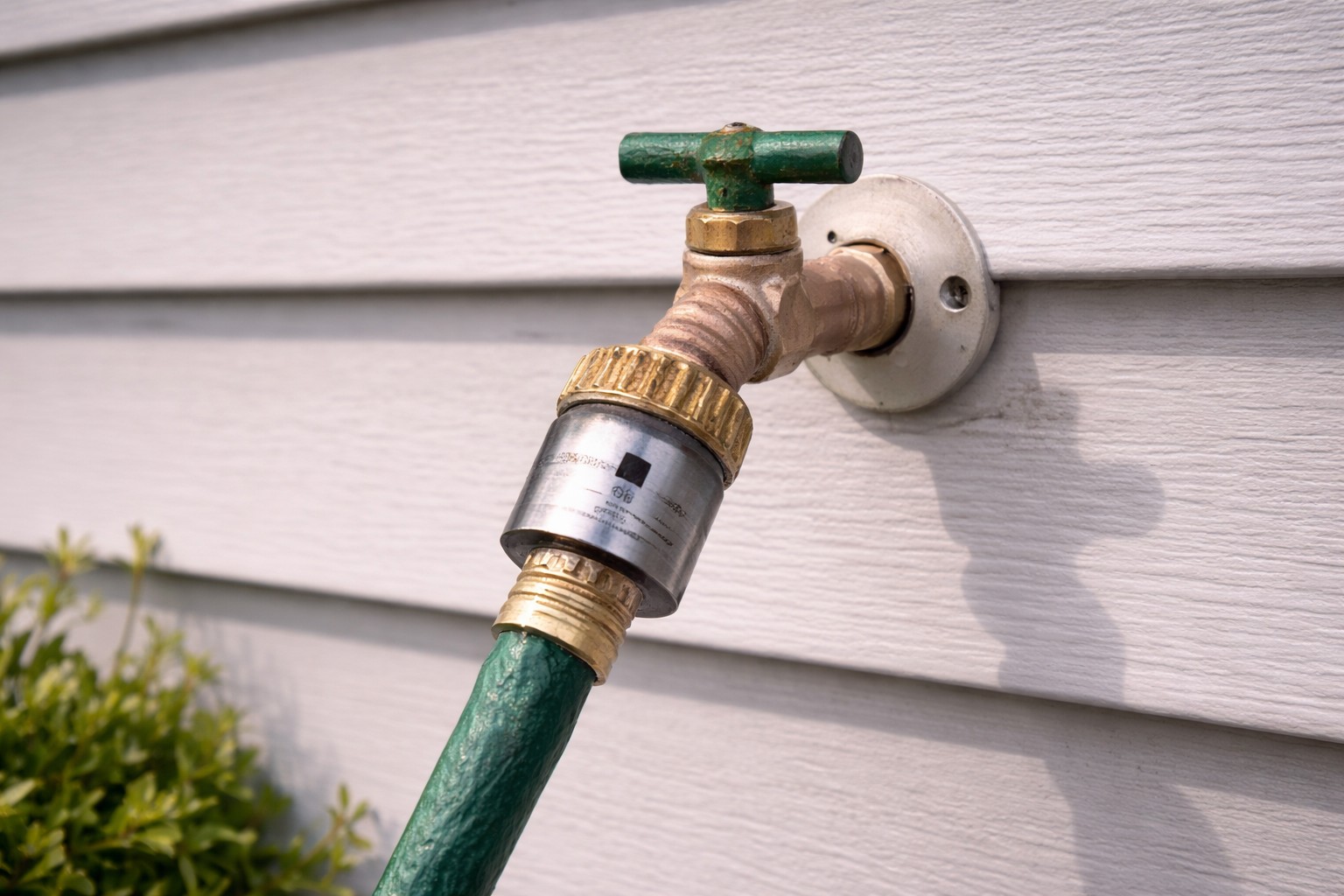
A sharp pressure or delivery change when irrigation starts needs its initial transient separated from the sustained zone demand. The irrigation takeoff may be before or after the house regulator and gauge; the actual layout matters.
Safety before a demand comparison
If fuel gas is suspected, leave the building or affected area immediately. Do not operate valves, switches, plugs, appliances or phones there. Call the gas emergency service from a safe location well away, and wait for responders’ clearance.
Keep away from wet electrical equipment. Do not touch wet appliances, plugs or switches, or enter water to reach a breaker. When no gas leak is suspected, power may be isolated only from a safely accessible dry location; otherwise call an electrician or emergency help. Wet equipment needs qualified assessment before it is used again.
For severe or total supply loss, active leakage, violent pipe movement or unsafe delivered temperature, stop the affected use and obtain prompt appropriate help. Use only a known effective safely accessible homeowner control without force where suitable. Follow current supplier notices. Do not require a second fixture test, neighbor report or a completed notes sheet before calling. A modest stable delivery change has a different urgency, but timing alone does not certify it harmless.
Keep the original event
- Original zone, start versus steady-run effect, known indoor symptoms and any new wet ground or abnormal loss.
- Municipal or well source, safely known takeoff/regulator/backflow arrangement and existing instrument location.
- Actual controller schedule and recent valve/nozzle/pump work, without another severe-collapse test.
Duration and running flow are different
Shortening the run time of an unchanged zone reduces duration/volume, not its running peak flow. Nozzle selection, zone design and permitted sequencing can change demand and need the actual irrigation design. Do not add a booster or remove heads from a timing observation alone.
Protect the real source and service state
Keep required backflow protection installed. A zone controller being off does not necessarily isolate upstream water or remove trapped pressure. Well-pump cycling can be useful existing evidence, but do not open electrical/pressure covers or inspect a wet controller. Use the appropriate qualified irrigation/well provider and safe dry electrical controls; do not normalize severe collapse as ordinary demand.
Measure the actual operating point
A bucket per time measures flow, not pressure. Use only an existing safe gauge or actual approved owner connection, following its temperature/pressure and connection/release method. Identify its side of the source, regulator and takeoffs. A gauge capping an outlet prevents flow there; label no-demand and flowing readings at that location and the actual known loads. No improvised port, live joint or backflow test cock.
A suitable comparison needs stable sound assembly, accepting receivers, safe temperature and normal controls with the intended load actually supplied. Record a single draw versus an explicitly simultaneous combination without forcing an unsafe event. Meter flow is expected during known use; it does not measure pressure, locate a restriction or exclude a leak. An idle home meter with low downstream pressure does not prove a utility fault. Account for automatic/shared uses and leave utility equipment closed.
Settings and service are different tasks
Body markings or a screw position do not measure the regulator setting. Any permitted external adjustment needs the actual model instructions and a measured safe target, not a universal number or comfort with tools. Before opening any retained supply part, independently isolate all feeds, control temperature, relieve and verify pressure at that segment, and keep it isolated for removal/refit. A remote quiet tap or zone-off command is not proof. Fully secure compatible parts before attended restoration and the actual checks.
Choose the next step from the evidence
Share the actual event, models and correctly labeled readings with the appropriate provider. Recovery after a draw stops does not select a replacement. Safe ordinary scheduling may reduce concurrency while assessment is arranged; preserve required services and protection. The cluster directory below contains the fuller measurement guide.
Related situations
- Pressure fine until second fixture opens
- Two showers running causes cold water loss
- Pressure Drops When Multiple Fixtures Run
- Pressure unstable when sprinkler zone starts