Check for an emergency first
Report pressure jumps that began after city repair to the water supplier with the work location and event timing. The timing is useful evidence, but it does not prove the utility damaged a regulator or that air is the only cause. Do not bypass household protection or open supply fittings to locate the change.
Useful details to record
- Date, nearby work or service notice and the first ordinary event observed.
- Existing gauge readings, their actual locations and whether a jump was brief or sustained.
- Leaks, severe noise, appliance alerts and any new water-quality change.
What the pattern can tell you
- Several properties report a similar event. Tell the supplier; neighborhood reports provide context, not a measurement inside each home.
- Only one household has reported it. A supplier check can still be appropriate. Do not require a neighbor comparison before making the report.
- A jump coincides with a local appliance or heater. Keep that timing for the plumber as well; it does not eliminate a supply issue.
What to do next
- Contact the supplier promptly about a marked change after its work and ask for system status, applicable pressure information and any restoration notice. Stop nonessential use for severe pressure behavior or leakage; use only a known safely accessible household isolation if necessary to control damage.
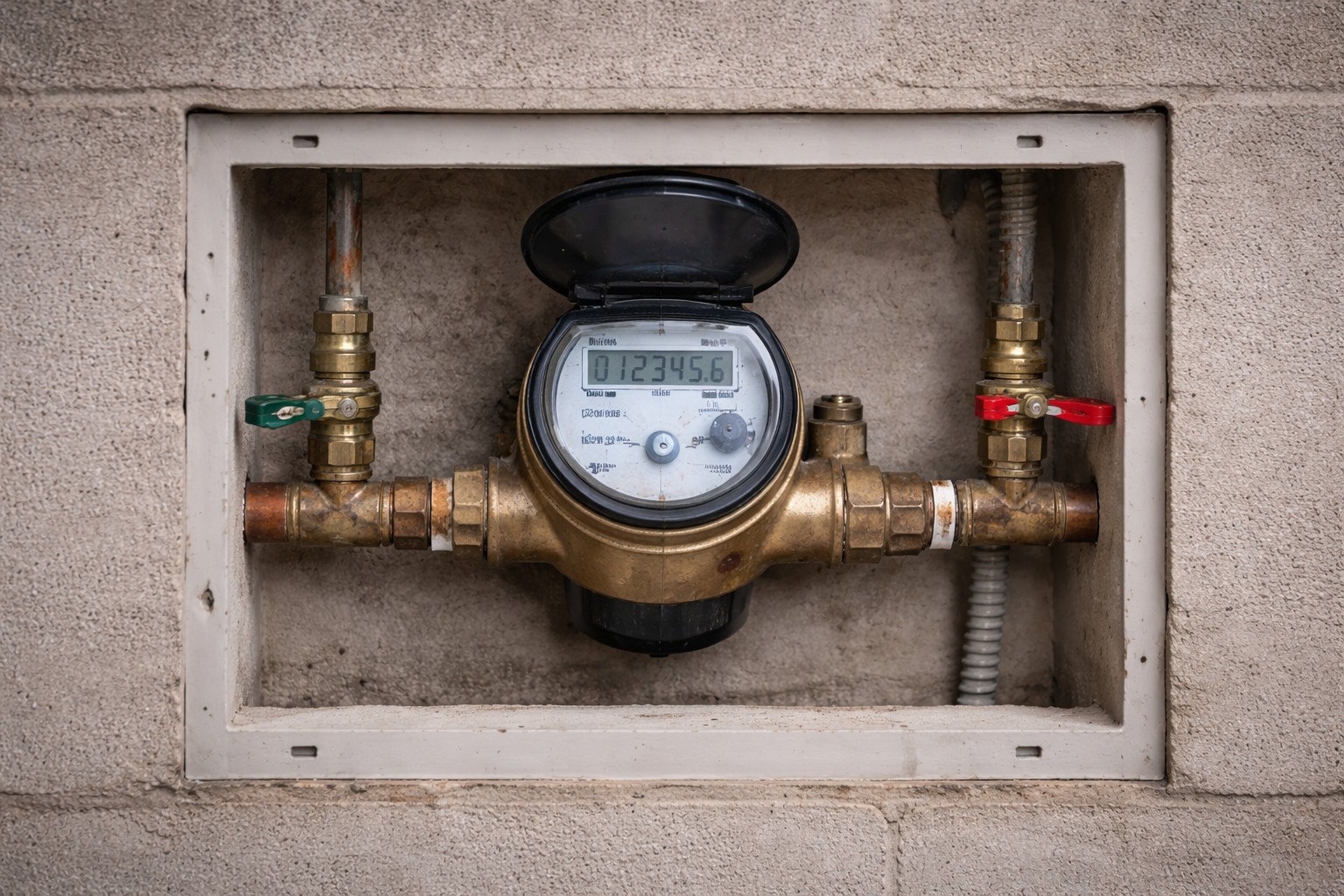
- For an optional cold-water measurement, use only an intact, safely accessible owner test connection whose location in the system is known, with a compatible gauge rated for the actual pressure and temperature. Follow its connection and pressure-release instructions; never loosen a pressurized fitting or use a backflow test cock as a household gauge port. Do not create a new connection to perform this check. A plumber can install or verify the measurement instead.
- Record the gauge location, time, units and whether water was already flowing elsewhere. Static pressure describes a no-flow condition; a running reading describes that specific demand. A hose outlet closest to the street is not necessarily upstream of the regulator or representative of the meter. Compare with the actual equipment limits and local supply requirements rather than a universal household target.
- Do not bypass a pressure regulator, backflow preventer or other protective control to see whether the symptom disappears. A different result after changing the supply arrangement does not prove the removed device was faulty. Approved protected arrangements and qualified device-specific tests are different from an improvised bypass.
- Before any internal service or fitting removal, identify and isolate every supply that can pressurize the section, release trapped pressure through the appropriate controlled outlet and verify depressurization. Account for hot water and possible alternate feeds. Lowering a PRV setting, reducing flow or wearing gloves does not make a pressurized assembly safe to open. If isolation cannot be established, leave it assembled and obtain qualified help.
- If a new unexplained color, odor or other water-quality change accompanies the event, do not taste it or boil unknown water as a general remedy. Use a known-safe consumption source and contact the supplier for the actual restrictions and restoration directions. Clear flow does not lift an advisory.
- Use a qualified plumber for the household layout, regulator, expansion control or appliance concerns. Follow actual restoration instructions; do not run a generic hot/cold whole-house flush or disconnect appliances while pressurized.
Should I wait until a home bypass test proves the city supply is responsible?
No. Report the timing and observations without assigning fault. The supplier and household provider can measure at appropriate known points while maintaining protection. A bypass test can expose equipment and drinking water to additional risk without proving the original cause.
Related situations
- Water pressure suddenly spikes at night
- Pipes bang after pressure surge
- Pressure Spikes & Sudden Surges