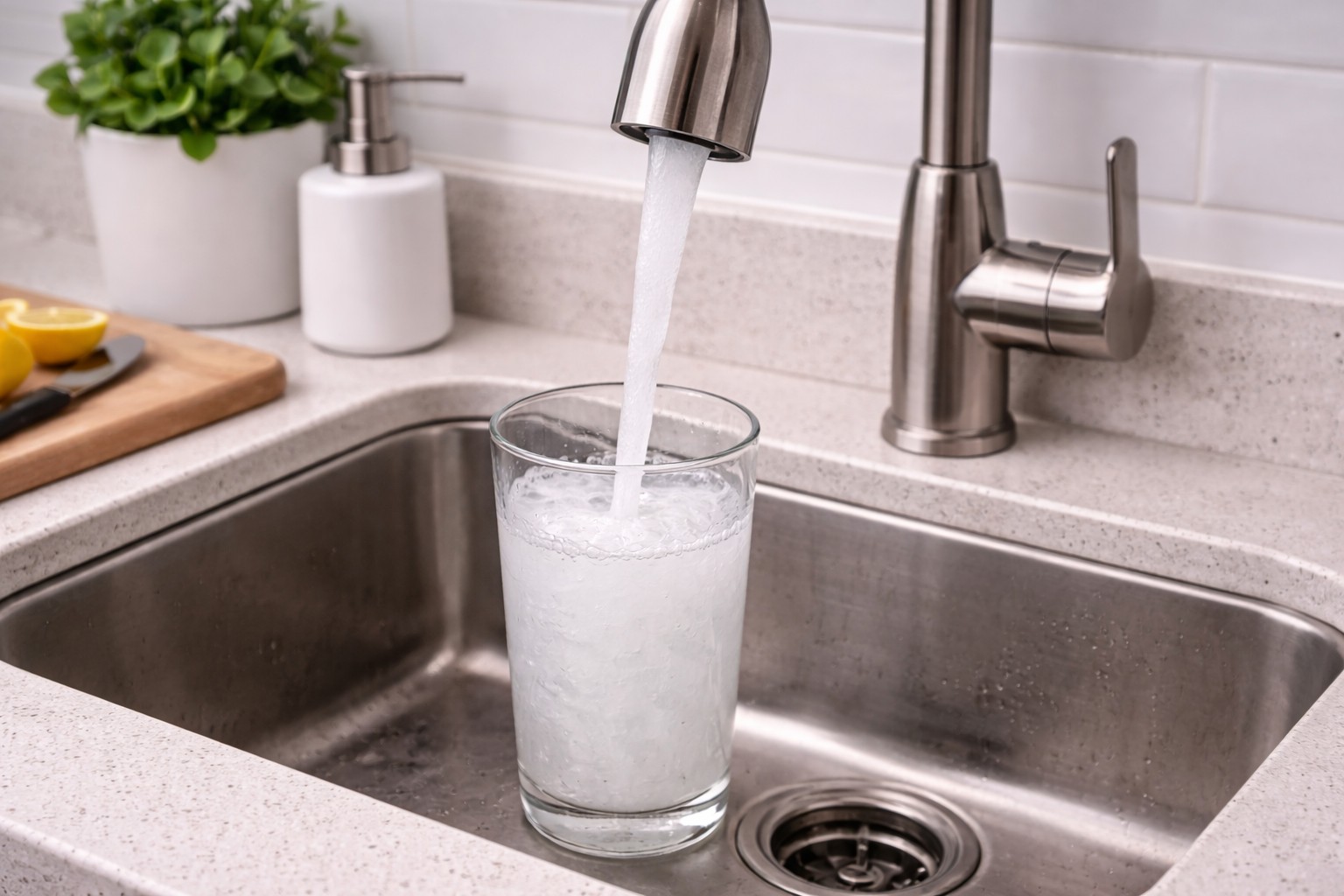
Quick Answer:
If the sink you just fitted with a filter has weak flow, first check the filter’s bypass/valves are open, inspect the tubing for kinks, and confirm the cartridge is installed the right way. A quick test is to remove or swap the new cartridge and flush the lines — that usually shows whether the filter itself is the problem.
Why This Happens
When a single sink has low flow after adding a filter, it’s usually something simple: the bypass or shutoff valves weren’t opened, the tubing is pinched, the cartridge is restricting flow, or the filter was installed backward. New cartridges can also be packed tightly or have shipping plugs that must be removed. These issues reduce flow only at that fixture, not the whole house.
Step-by-Step What to Do
1. Confirm the bypass and shutoff valves are open
- Look under the sink for a small valve on the incoming cold-water line and on the filter housing bypass (if present). Turn each valve fully counterclockwise or to the “open” position.
- Open the faucet and see if flow improves immediately.
2. Check for kinks or pinched tubing
- Trace the supply tubing from the shutoff to the filter and from the filter to the faucet. Smooth any bends so the tubing follows a gentle curve.
- If tubing is visibly creased, replace it or reroute it; a kink can severely restrict flow.
3. Remove or replace the cartridge to test the flow
- Turn off the local water shutoff and relieve pressure by opening the faucet.
- Remove the cartridge and re-open the water (or install a known-good cartridge) to see whether flow returns. If flow improves with no cartridge, the cartridge is the restriction.
4. Flush the lines
- If the cartridge is new, flush the filter and faucet per the manufacturer’s instructions for a few minutes. This clears packing material or air that can slow flow.
- Run the faucet full on for several minutes after reinstalling a cartridge to seat it and remove air.
5. Verify filter direction and fittings
- Check the filter housing arrows or labels — the inlet and outlet must match the supply and faucet sides. Reinstall if reversed.
- Make sure fittings are snug but not over-tightened; cross-threaded or mis-seated connectors can restrict flow.
6. Final test
- With valves open and the cartridge either tested or replaced, run the faucet at full flow. Compare with another sink to confirm the issue is resolved.
- If flow is still weak, note whether the problem exists only at that fixture or elsewhere — that guides the next steps.
For related troubleshooting steps, see Single fixture pressure loss after repair and Low water pressure at one faucet only.
What Not to Do
- Don’t leave a kinked filter line—it can split later and cause a cabinet leak.
- Don’t force fittings or overtighten plastic threads — this can crack housings.
- Don’t assume a new cartridge is fine without testing; shipping plugs or missing parts are common on new filters.
When to Call a Professional
- Call a plumber if you find a leak you can’t stop, if flow is still weak after the checks above, or if the filter assembly is hard-plumbed and complicated to access.
- Also call if you suspect a problem with the home’s supply pressure, not just the filter — a pro can measure pressure and isolate the issue safely.
Safety Notes
- Shut off the local water supply before removing a cartridge or disconnecting tubing to avoid water damage.
- Relieve pressure by opening the filtered faucet before working on the system.
- Work with a towel or small pan under the filter to catch drips. If the filter is near electrical outlets or a garbage disposal, turn power off before working to avoid shock or accidental activation.
Common Homeowner Questions
- Why is only one sink affected? The filter and its tubing are installed under that sink, so any local valve, kink, or cartridge issue will only reduce flow there.
- Can I test the cartridge without throwing it away? Yes — remove it briefly, test flow, then reinstall or replace. Check the manufacturer’s guidance for handling reusable cartridges.
- How long should I flush a new filter? Typically a few minutes; follow the manufacturer’s instructions—generally 2–5 minutes of full flow is adequate to clear air and packing material.
For more related articles, see the Low Pressure at Single Fixture hub.