Quick Answer:
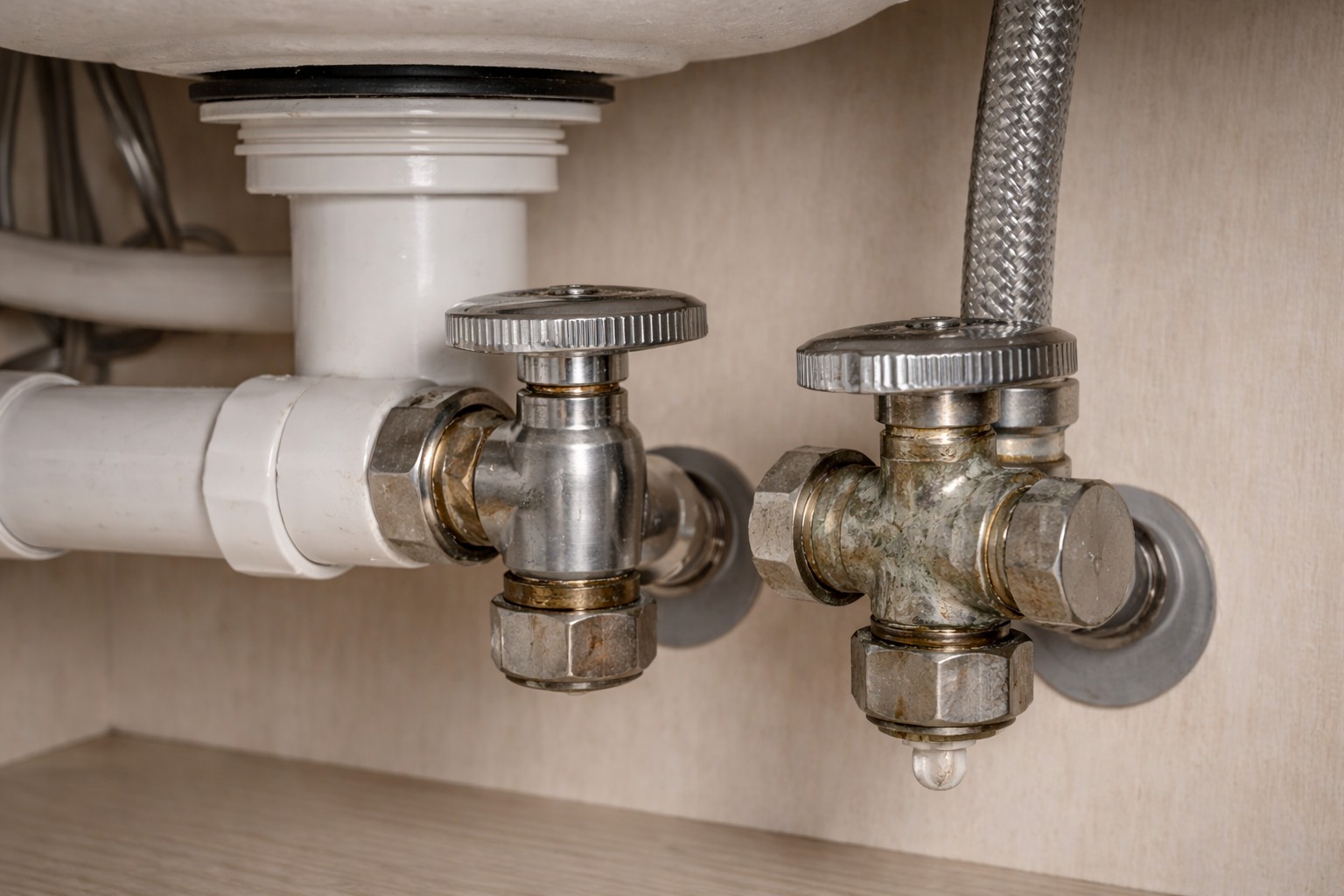
Work through a short checklist: record when the problem started, clean the aerator, then flush the angle stop into a bucket. If flow is still getting worse, inspect the faucet cartridge and the supply line for scale or sediment. If the angle stop won’t open fully, replace it.
Why This Happens
When pressure slowly drops at a single fixture it usually means something small is narrowing the water path. Mineral scale, rust flakes, or pipe sediment will catch in narrow spots: the aerator, the faucet cartridge, the flexible supply line, or the angle stop. These blockages grow over weeks or months until flow becomes noticeably weak. If the restriction is at the very end of the spout or screen, it can be reversed by cleaning; if it’s inside the valve body or supply line, parts may need inspection or replacement.
If the issue only appears with certain parts installed, check the part first—for example, **Pressure drops only when aerator installed** points to the aerator as the likely cause.
Step-by-Step What to Do
Step 1 — Document a timeline
- Write down when you first noticed weaker flow and how it has changed (days, weeks).
- Note any nearby work, water outages, or changes in water taste or color.
- Record what you try and the result (cleaned aerator on X date, flow improved Y%).
Step 2 — Clean the aerator first
- Remove the aerator (use a cloth to protect finishes). Inspect for grit or mineral buildup.
- Soak in white vinegar for 15–30 minutes, brush with an old toothbrush, rinse, and reinstall.
- Test the flow. If it improves substantially, you solved it. If not, continue below.
Step 3 — Flush the angle stop into a bucket
- Place a bucket under the supply line connection at the fixture.
- Shut the main house or fixture supply off if you’re unsure. Then disconnect the flexible supply line from the angle stop.
- Carefully open the angle stop into the bucket to flush any trapped sediment. Watch for debris and note the volume and color of what comes out.
- Reattach everything and test flow. If flushing clears the issue, consider replacing the supply line to prevent repeat clogs.
Step 4 — Inspect the cartridge and supply line for scaling
- For single-handle faucets, remove the handle and pull the cartridge per the manufacturer’s instructions. Look for white or brown scale and trapped particles.
- Inspect the flexible supply line for interior scaling or kinks. If it looks discolored or sluggish when flushed, replace it—flex lines are inexpensive and easy to swap.
- Clean or replace the cartridge if it shows scale; many cartridges are designed to be replaced rather than rebuilt.
Step 5 — Consider replacing the angle stop if it won’t open fully
- If the angle stop won’t open fully, is stiff, or only lets a trickle through when opened, it’s likely internally corroded or clogged.
- Replace the stop with a new quarter-turn angle stop. If you don’t have water-turning experience, shut off the main before replacing or call a professional.
If the flow seems to come and go or is uneven during this troubleshooting, also check guidance for **Pressure fluctuates at one tap only**.
What Not to Do
- Don’t wait months—slow restrictions often end with a total blockage right when you need it most.
- Don’t force-fit parts or overtighten plastic fittings; that can crack components and cause leaks.
- Don’t assume the problem is the municipal supply if it’s isolated to one fixture—work through the fixture checks first.
When to Call a Professional
- If you can’t isolate the restriction after cleaning aerator, flushing the stop, and inspecting the cartridge and line.
- If replacing the angle stop or cartridge is beyond your comfort level.
- If you find significant corrosion inside supply connections or the wall supply looks compromised.
Safety Notes
- Shut off the correct water supply before disconnecting lines. If unsure, shut off the main.
- Have towels and a bucket ready—expect water when you disconnect supply lines.
- Wear eye protection when flushing lines to avoid splashes from debris or chemical cleaners.
- Use gentle force on fittings; overtightening can break valves or fittings.
Common Homeowner Questions
- How long does scale take to build up? Months to years—depends on water hardness and usage.
- Will vinegar damage faucet parts? Short soaks usually won’t; avoid long soaking for plated finishes and rubber seals.
- Can I just replace the aerator and skip other steps? Start with the aerator—if that fixes it, no further work is needed; if not, continue the checklist.
For more related articles, see the Low Pressure at Single Fixture hub.