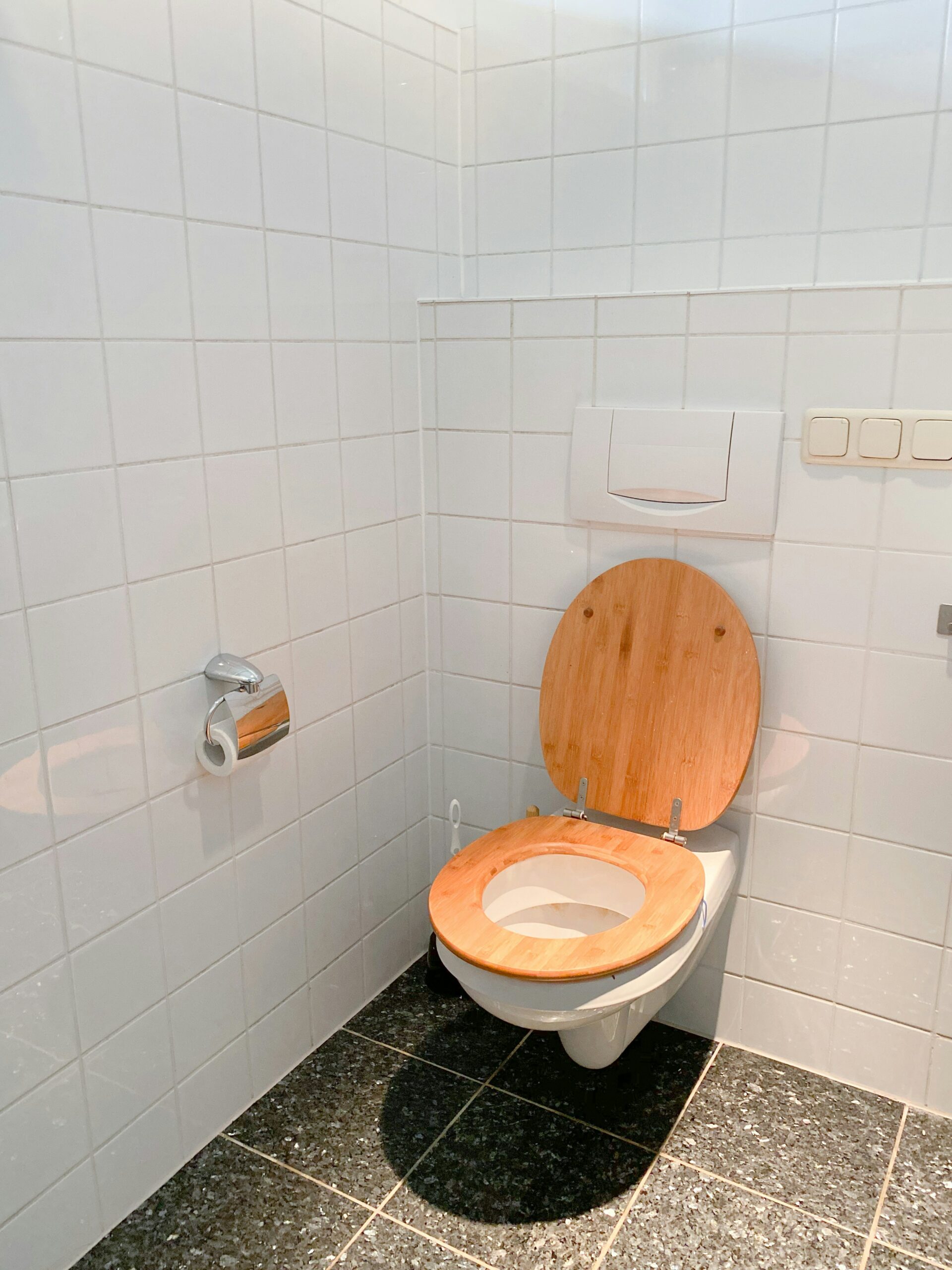
A toilet that does not initiate, releases too little water or fails to clear the bowl needs the actual flush stage identified. Tank delivery and a restricted receiving path can coexist; a tank-looking symptom does not rule out a drain problem.
Safe state before service or another flush
Keep away from wet electrical equipment. Do not touch wet appliances, plugs or switches, or enter water to reach a breaker. When no gas leak is suspected, power may be isolated only from a safely accessible dry location; otherwise call an electrician or emergency help. Wet equipment needs qualified assessment before it is used again.
For strong, widespread or unexplained gas-like fumes, exposure symptoms, or suspected high sewer-gas concentrations in an enclosed space, leave the building immediately and call the fire department or emergency services from outside. Avoid flames, switches and other ignition sources; do not remain to ventilate, sniff drains or investigate. Smell intensity does not measure the concentration. A faint localized drain odor without those warning signs calls for a different plumbing investigation; it does not automatically establish a fuel-gas leak.
If fuel gas is suspected, leave the building or affected area immediately. Do not operate valves, switches, plugs, appliances or phones there. Call the gas emergency service from a safe location well away, and wait for responders’ clearance.
For wastewater rising from a drain or affecting several fixtures, stop adding water and keep affected appliances from discharging using only safely accessible dry controls when no gas emergency is suspected. Avoid sewage contact, keep children and pets away and arrange prompt drainage help. Notify building management or the sewer agency as appropriate. Do not run fixtures to locate a shared blockage.
If a cleaner may be present, identify the exact product and follow its label. Do not add another cleaner, acid, bleach, ammonia, vinegar or an improvised neutralizer. Do not plunge, snake or open the trap while hazardous residue may remain; tell the provider what was used. A rinse or elapsed time is not proof all residue is gone.
Identify the stage and system
Identify the actual toilet and fill/flush system before adjusting parts. A conventional open gravity tank, sealed pressure-assisted vessel, flushometer, pump/electronic toilet and concealed cistern need different procedures. Do not open a pressure vessel, remove a cartridge or apply a gravity-tank recipe to an unknown system. A porcelain-lid observation is different from opening a pressure-retaining valve cap. Handle a permitted removable lid carefully and set it on a stable protected surface.
- Did the handle/button operate its actual mechanism?
- Was the intended water available and released, and did the bowl rise, clear or retain waste?
- Was the event from normal use, another fixture or recent work? Use existing observations rather than another confirmation flush through an uncertain drain.
Use the correct dose and release
Use the actual toilet’s waterline, flush dose and compatible fill-valve installation marks. A fill valve’s critical-level/anti-siphon requirement is different from the tank’s intended waterline. A universal inch-below-overflow rule or simply staying below the overflow opening is not a complete setting procedure. Do not alter an overflow tube or defeat protection to raise the level.
Some efficient gravity designs close the flapper before the whole tank empties. That timing alone is not a fault. Inspect an appropriate accessible actuator for actual interference and use specified parts/clearance. A gravity tank’s stored dose differs from pressure-assisted, pump or direct-feed operation, where source pressure or energy can matter. Do not raise house pressure to improve a weak flush.
Cleaning and obstruction care
Use only actual finish-compatible bowl/jet cleaning and labeled products with known chemical history. A maker may permit a particular gentle jet tool; do not enlarge a passage or substitute arbitrary wire. Plunging is not a compulsory test for every weak flush. It requires an appropriate toilet tool, suitable water level and clear local-case conditions without chemical residue, shared backup, external leakage or unsafe exposure; stop for rise or abnormal resistance. Temporary improvement does not locate the fault.
Keep cleanout caps closed. Do not loosen a cap to check a water level, watch a basin dump or release pressure; sewage and gas may escape. Do not climb to vents, enter pits or tanks, or use a flame to investigate an odor. Those checks need the appropriate qualified provider and controls.
Correct and verify
A justified functional check needs sound fully secured assembly, a known accepting bowl/drain, no hazardous residue, controlled connected inputs and safe attendance. Use the actual model’s procedure and stop immediately for rising water, external leakage, failure to shut off or abnormal behavior. Do not keep flushing to reproduce a known overflow, leak or unknown receiving problem.
Persistent malfunction, rising water, recurring blockage or an unknown system needs appropriate assessment. Notes about the original stage are useful; completing adjustments or plunging is not required before calling.
Related situations
Browse the broader Toilet Fill, Flush & Bowl Dynamics directory. Choose a guide from the actual event and system.
Safety sources
- CDC: electrical hazards near water
- Kohler: gravity, pressure-assisted and pump flush/refill cycles
- Wisconsin DHS: sewer-gas exposure and emergencies
- Con Edison: suspected gas leaks
- Madison Metropolitan Sewerage District: stop discharge and report sewer backup
- Example drain-opener label: restrictions on plunging, disposal operation and mixing
- Portland Water Bureau: actual tank-leak observations and part distinctions