Quick Answer:
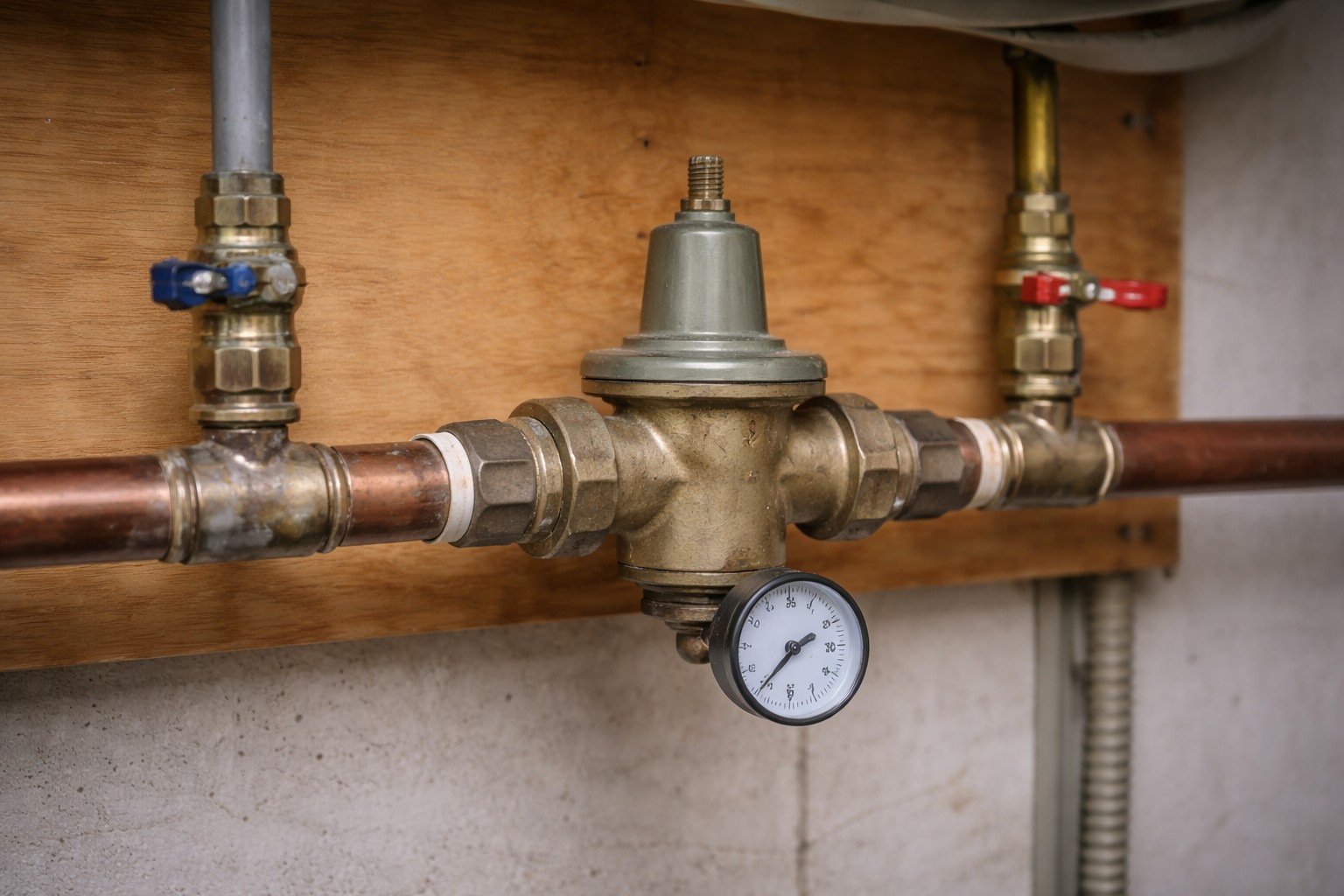
If temperature swings started right after a pressure regulator or valve was adjusted, the household pressure change likely exposed a weak or worn shower cartridge or upset the shower’s balancing mechanism. First confirm your household pressure with a gauge if you can, check whether the swings happen only with other fixtures running, and avoid trying to bypass the regulator. If the problem began immediately after the pressure change, a qualified plumber is the safest next step.
Why This Happens
Shower valves that keep water steady use cartridges or pressure-balancing parts. A sudden jump or drop in supply pressure can:
- Expose worn seals or cartridges that previously worked well enough at a lower pressure.
- Overwhelm the balancing spool or thermostatic element, so it can’t react quickly to inlet changes.
- Change the flow behavior in hot or cold lines, making the valve look unstable even though the source change caused it.
If swings occur when other appliances run, it’s often related to how the valve compensates for pressure differences—see Shower temp changes with washer use for a related situation. Seasonal or supply-temperature changes can also make a marginal valve behave worse—see Shower temperature unstable in winter.
Step-by-Step What to Do
1. Note exactly when the swings started
Write down when you first noticed the problem and whether it began immediately after the PRV or other pressure work. Timing helps link the cause to the symptom.
2. Confirm household water pressure
If you or the person who worked on the system used or adjusted a PRV, measure the system pressure with a gauge (attachable to an outdoor hose bib or a threaded faucet). Typical home pressure is often in the 40–60 psi range; anything consistently much higher can stress fixtures. If you don’t have a gauge, ask the plumber who worked on the PRV what set point was used.
3. Test the shower under controlled conditions
- Run the shower alone and note stability.
- Run another fixture (washing machine, dishwasher, another tap) and see if swings coincide with that appliance starting.
- Try several flow settings on the shower—low flow can make a marginal cartridge worse.
4. Consider the valve’s balancing mechanism
If swings began right after a pressure change, the balancing spool or thermostatic cartridge is a likely suspect. Pressure jumps can reveal weak cartridges that worked poorly only when pressure changed rapidly.
5. Simple temporary steps to reduce scald risk
- Lower the water heater thermostat a few degrees while you troubleshoot.
- Avoid showering until the swings are resolved if the temperature becomes unpredictable.
6. Document and call if needed
Record your pressure reading, note exactly what you tried, and tell the plumber that the issue began after a pressure change. That information speeds diagnosis.
What Not to Do
- Don’t adjust or bypass a PRV without fully understanding the system—this can create high pressure that damages pipes and fixtures.
- If pressure changes triggered swings, a plumber is appropriate; don’t assume DIY fixes will address a regulator-related issue.
- Don’t tear apart a shower valve if you’re not comfortable—some valves need specific parts and correct reassembly to avoid leaks or scalding hazards.
When to Call a Professional
- Pressure readings are consistently above the recommended range (discuss with the plumber who did the work if you’re unsure).
- Temperature swings persist after simple checks and safe temporary measures.
- The swings started immediately after someone changed or adjusted a PRV, or if multiple fixtures show erratic behavior.
- You’re unsure whether the PRV was set or adjusted correctly—this often requires a pro to diagnose and restore safe pressure levels.
Safety Notes
- Temperature swings can cause scalding. Lower the water heater thermostat and avoid using the shower until stable.
- Shut off water before attempting any valve repairs and follow manufacturers’ instructions for the specific valve model.
- If you smell hot-metal or hear banging, stop and call a plumber—those can signal higher-risk problems.
Common Homeowner Questions
- Why did this start after the PRV was adjusted? A change in supply pressure can expose a worn cartridge or confuse a balancing mechanism that relied on the old pressure to function.
- Can I replace the cartridge myself? Sometimes yes, if you have the correct part and basic plumbing experience, but if the issue follows a pressure change it’s safer to involve a plumber so underlying pressure settings are confirmed.
- Is high water pressure dangerous for my shower? Sustained high pressure can wear valves and cause leaks or sudden temperature changes; confirm pressure with a gauge and address high readings promptly.