Quick Answer:
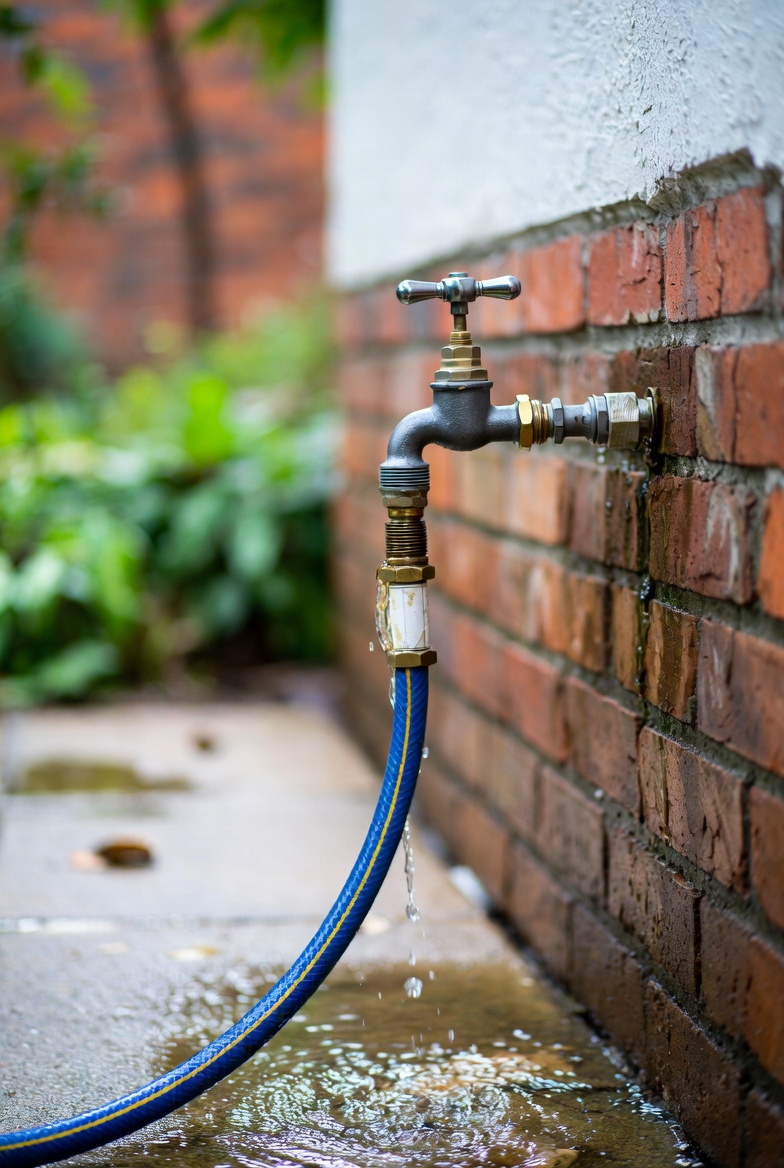
If water seeps from around the spigot only while you turn it on, the leak is most likely at the valve stem packing or the internal seat rather than a full-body crack. Before calling a plumber, close the indoor isolation valve, open the spigot to relieve pressure, watch where the water is coming from, and try a small adjustment to the packing nut. If that doesn’t stop it, you’ll likely need a replacement packing or the valve seat replaced.
Why This Happens
- Stem packing wears or compresses over time; pressure and movement while the valve is open push water past the packing.
- An internal seat (the sealing surface the valve uses to stop flow) can corrode or pit so it seals only poorly when flow is on but holds when there’s no pressure.
- Freeze/thaw damage or foreign debris can make leaks appear after certain events — check related issues like Spigot leaks after winterization or if it’s tied to irrigation, see Spigot leaks when sprinkler running.
Step-by-Step What to Do
1. Prepare
- Have basic tools ready: adjustable wrench, flat wrench small enough for the packing nut, rags, replacement packing material or valve stem packing kit if you have one, and a bucket.
- Wear gloves and eye protection.
2. Close the indoor isolation valve
- Find the indoor shutoff that feeds that spigot and close it to stop supply pressure. This is usually where the outdoor line leaves the house.
3. Open the spigot to relieve pressure and observe where the leak originates (stem packing vs body)
- With the supply isolated, open the outdoor valve fully. Water left in the line will drain; this makes it safe and makes the leak easier to see.
- Watch closely: if water comes from around the stem (where the handle shaft exits the valve), it’s packing. If water seeps from the body or a crack in the pipe, that’s a different repair.
4. Slightly tighten or loosen the packing nut to see if leak changes
- Locate the packing nut just behind the valve handle. Turn it a small fraction (about 1/8 to 1/4 turn) clockwise to tighten and test. Don’t over-tighten — that can stiffen the valve or damage the stem.
- If tightening makes it worse or binds the stem, back it out a little. Sometimes loosening then retightening can seat the packing more evenly.
5. Operate the valve fully open then closed while watching the leak
- After adjustments, close the indoor isolation valve so the spigot has supply again, then slowly open the spigot fully and watch the leak behavior. Then close it and watch again.
- If the leak only appears when the valve is open, that supports packing or seat wear as the cause.
6. Replace worn packing or the internal seat if identified
- If small adjustments don’t stop a stem packing leak, drain the line, remove the packing nut, remove the old packing material, and install new packing or a new packing washer per the valve’s instructions.
- If the leak comes from the internal seat (you’ll see flow past the closed valve), the seat or the whole valve cartridge may need replacing. Replace the seat or the valve body as required.
- Reassemble, open the indoor isolation valve, and test again for leaks.
What Not to Do
- Do not hammer or force the valve closed to stop a packing leak — that can break the stem or body and make the problem worse.
- Don’t over-tighten the packing nut repeatedly; excessive force can seize the stem or damage internal parts.
- Do not attempt major seat or body repairs without proper parts and experience; avoid makeshift fixes that hide leaks instead of fixing them.
When to Call a Professional
- Call a pro if loosening or adjusting the packing nut doesn’t reduce the leak.
- If the valve stem appears corroded, seized, or damaged, get a plumber — extraction and replacement can be difficult and may require cutting or specialty parts.
- If the spigot body, pipe, or seat is badly corroded or cracked, a professional can ensure a safe, code-compliant repair.
Safety Notes
- Always relieve pressure before disassembling fittings — open the spigot after closing the indoor shutoff to drain the line.
- Turn tools gently; seized plumbing parts can break suddenly. Stand to one side when you apply force.
- If you smell gas or see signs of major pipe failure, stop and call an emergency professional.
Common Homeowner Questions
- Why does the leak only happen when I turn the spigot on? Short answer: flow and pressure push past worn packing or a damaged seat that otherwise holds when there’s no pressure.
- Can I replace the packing myself? Yes, small DIY repairs are common if the stem turns freely and the parts are accessible, but follow the valve manufacturer’s guidance and shut off the supply first.
- How long will a repaired packing last? It varies with use and water quality; good repairs often last several years, but repeated corrosion or hard water shortens life.
More in this topic
For more related fixes and similar symptoms, see Outdoor Spigot Leaks Under Load.