Quick Answer:
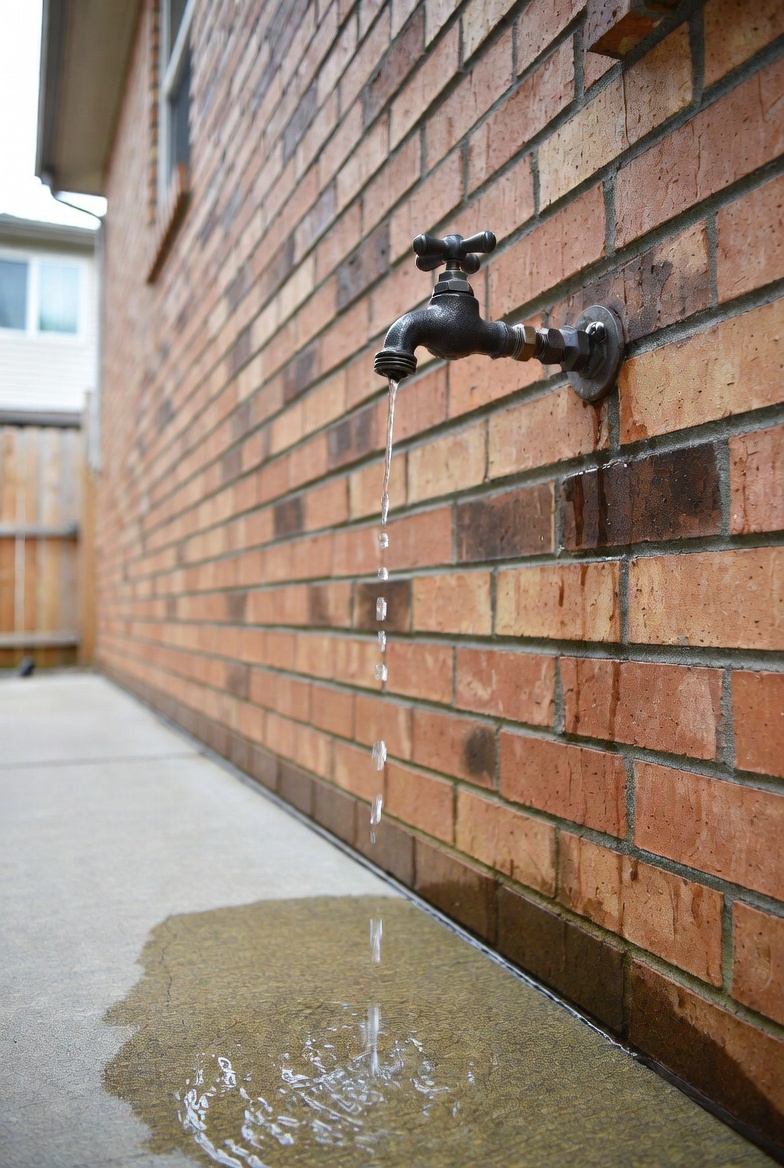
Water pooling under a spigot only while an irrigation zone runs usually means a pressure-related leak in the irrigation supply fittings or the backflow preventer. First shut off the irrigation zone and see if the leak stops. If it does, the problem is tied to continuous flow and pressure. For related troubleshooting, see Spigot leaks when sprinkler running and Hose bib leaks under pressure.
Why This Happens
When irrigation zones run, water flows continuously and pressure in the supply lines stays higher than when you briefly run a hose. That constant pressure can force water through hairline cracks, loosened unions, or failed seals that don’t show up under short tests. Common weak points:
- Irrigation quick-connects and unions that develop tiny leaks during sustained flow.
- Supply couplings or couplers with hairline cracks or degraded rubber sleeves.
- Backflow preventer seals or union fittings that are loose or failing under pressure.
- Pressure spikes that reveal weaknesses only when the zone is active.
Step-by-Step What to Do
1. Shut off the irrigation zone and observe
Turn off the specific irrigation zone feeding the spigot or the controller station. Watch the spigot for a few minutes. If pooling stops, the leak is linked to irrigation flow or pressure. If it continues with the zone off, the problem is likely with the spigot or the house supply.
2. Relieve pressure and dry the area
Close the irrigation zone and open a nearby faucet to relieve trapped pressure before you inspect fittings. Dry the spigot and surrounding fittings with a towel so you can spot fresh weeps while you test again.
3. Inspect quick-connects and unions during a run
With the area dry, run the irrigation zone again briefly and look closely at quick-connects and unions. Hairline leaks can appear only during continuous flow. Check for small weeps at O-rings, union faces, and plastic connection seams.
4. Check the backflow preventer
Inspect the backflow preventer for loose unions, cracked housing, or failed seals. Look for water pooling beneath the unit or wet pipe joints. Tighten unions gently to manufacturer torque specs if loose, and note any seals that look flattened or damaged.
5. Replace cracked couplings or reseat the backflow unit
If you find cracked couplings, cracked plastic parts, or damaged seals, replace them. If the backflow device shows movement or sits incorrectly, reseat it following the manufacturer’s instructions or replace faulty seals. Use parts rated for irrigation/backflow service.
6. Retest and monitor
After repairs, run the irrigation zone and watch for leaks. Recheck after a few zones and again after a day or two — small leaks sometimes reappear once pressure cycles repeat.
What Not to Do
- Avoid simply tightening visible clamps or hose clamps without locating the true source — that can mask the problem or make a broken part fail catastrophically.
- Do not ignore the effects of irrigation pressure on fittings; parts that look fine under low or no flow may fail under sustained pressure.
- Don’t attempt complex backflow repairs unless you understand local codes and the device — incorrect work can contaminate your water supply.
- Call a professional when leaks persist only during irrigation runs or when you suspect backflow devices are damaged or leaking.
When to Call a Professional
Hire a licensed irrigation or plumbing pro if:
- The leak continues only during irrigation after you’ve checked unions and couplings.
- You find a damaged backflow preventer, cracked body, or failed internal check — these affect potable water protections and may require certified servicing.
- The supply coupling is hard to access, corroded, or you’re unsure how to reseat or replace fittings safely.
A pro can pressure-test the line, replace backflow internals to code, and ensure the repair won’t create a cross-connection risk.
Safety Notes
- Always shut off the irrigation zone and relieve pressure before loosening unions or fittings.
- Avoid working on backflow preventers without understanding local rules — in many areas, altering backflow devices requires a certified tester.
- Use the correct replacement parts and pipe thread tape or sealant rated for potable water when reassembling.
- If you smell sewer or chemical odors, or if water pressure behaves unusually after repairs, stop and call a professional immediately.
Common Homeowner Questions
- Why does the leak only show when sprinklers run? Continuous flow raises pressure and exposes hairline cracks or weak seals that don’t leak during short tests.
- Can I just wrap the leak with tape or clamp it? Temporary tape or clamps may hide the true problem; replace cracked couplings or damaged seals for a lasting repair.
- Is a backflow leak an emergency? If the backflow device is leaking or its seals are failing, call a pro—backflow issues can affect potable water safety and may need certified repair.
More in this topic
For more related fixes and similar symptoms, see Outdoor Spigot Leaks Under Load.