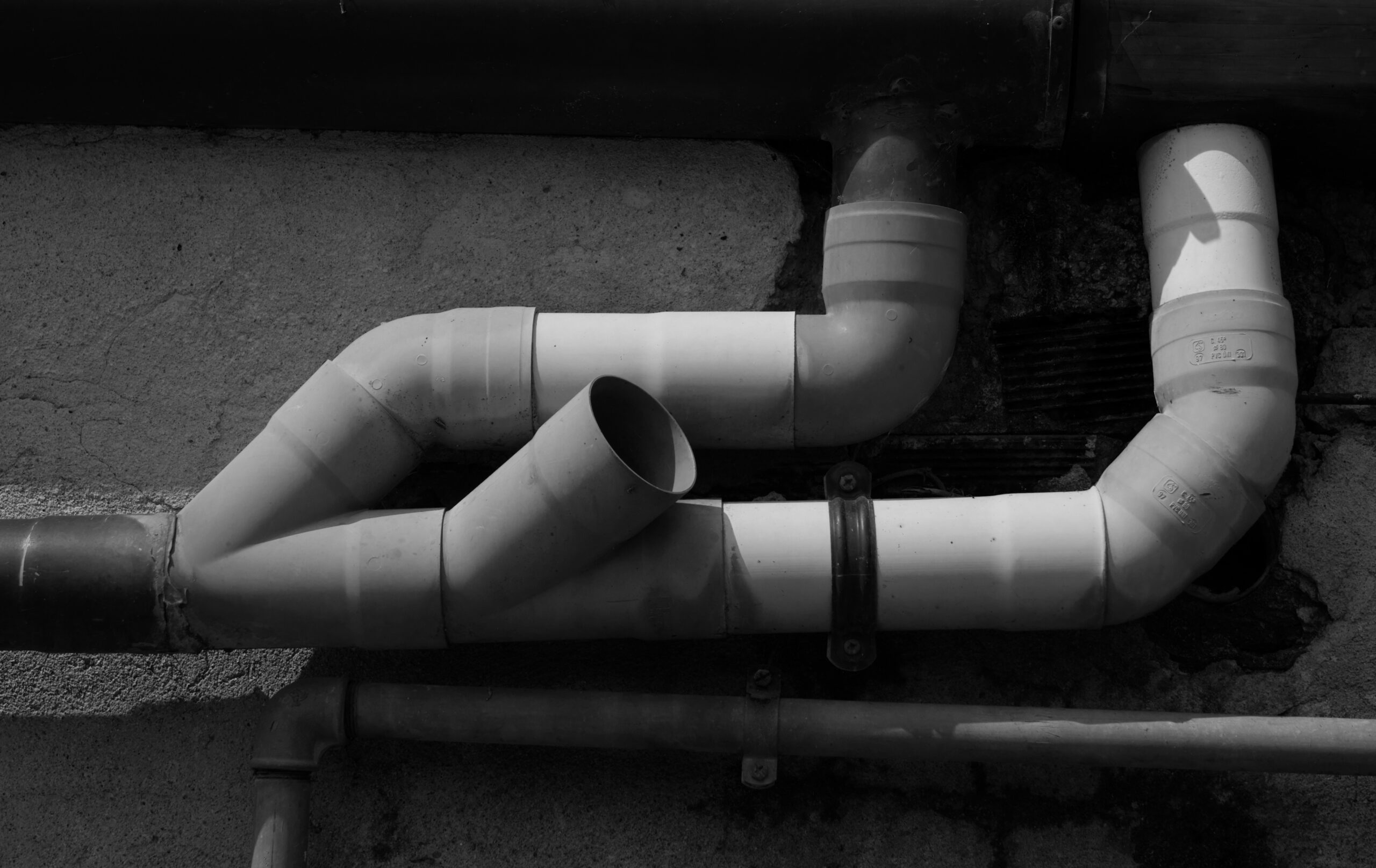
If drainage changed after adding a disposal, keep the unit inactive for backup, leakage or abnormal operation and contact the installer with the changed-part record. The actual outlet elevation and connections matter, but the date alone does not diagnose misalignment, a loose inlet or displaced grease.
Check the conditions before adding water or using tools
Stop added water and connected appliance discharge at backup, renewed rise, leakage or wastewater return. Keep away from sewage and wet electrical equipment. Disconnect affected power only from safe dry access; otherwise get help. Strong gas-like fumes, exposure symptoms or suspected fuel gas require leaving and calling for help from safety, without operating switches there.
Identify any drain product already used. Follow the exact label and tell the service provider; do not add another cleaner or improvise neutralization. While hazardous residue may remain, do not plunge, snake, open the trap or operate the disposal. Waiting or a guessed rinse does not establish clearance. A safe method for one known maintenance product does not apply to an unknown opener.
Never put hands or fingers inside a disposal, even when disconnected. Before permitted manual service, controls must be OFF and the actual affected source safely disconnected. A silent motor does not prove wiring dead. Keep the dishwasher from independently pumping into an open drain. Remove tools and restore required guards and secure connections before any permitted return to use; re-isolate before further manual work.
Inspect the installed waste arrangement before selecting a tool
- What can be documented: Keep the old and new models, earlier photographs, installer checks and original bowl-level observations. Do not run water for a fixed ten-to-twenty seconds just to move loose debris.
- The trap looks displaced: Assess the actual outlet, drop, trap inlet, weir, wall arm and vent arrangement. Do not force parts straight or use a universal outlet-to-trap centerline rule. A supported dry fit is different from a fully secured water check.
- An object or jam is suspected: Use only the exact model’s permitted isolation, tool and access. Not every unit has a bottom wrench socket. Remove tools and restore required guards before the permitted test; do not use the motor to force a jam.
- The trap is clear but drainage remains poor: Do not insert an auger into the disposal or probe a guessed discharge opening. Appropriate downstream service needs the actual access, pipe condition, product history and compatible tool.
Should I loosen the disposal mount to see the outlet?
Do not release a load-bearing mount to inspect a drain joint. Any required release needs the maker’s support procedure first. Compatible outlet seals, a bolted connection, a clamp and a slip washer have different instructions. Have uncertain mounting, inadequate elevation, damaged fittings or required rerouting handled appropriately. Reassemble securely and complete suitable leak checks before any permitted return to operation.
A bounded option for an ordinary local restriction
For a sound, cool plain-water local case without the warning conditions above, use the linked kitchen guide for intended removable surface parts, suitable cup plunging or serviceable-trap care. Keep connected inputs inactive and capture retained water before opening. Never run the faucet into disconnected plumbing. Fully reassemble before a small attended check; stop at leaks or rise. Persistent or recurrent trouble needs assessment.
Choose maintenance by the actual product and equipment
Keep grease outside the drain. Use actual compatible product and appliance instructions for ordinary care; approved hot drainage, warm cleaning or ice maintenance can differ by model. None is a diagnostic treatment for an unknown restriction or substitute for required source isolation.
Related situations
- Grease clogging kitchen drain
- Kitchen sink drains slow then backs up
- Slow Kitchen Sink Drain & Grease Accumulation
Bounded cleaning for an ordinary local kitchen drain
Detailed after-install drain-path assessment · Post-installation plumbing and appliance guide
Sources and limits
- Seattle Public Utilities: collect cooking grease outside drains
- Example liquid drain-opener label: remaining product and plunging restrictions
- Moen disposer example: no hands, isolation and approved access
- Manufacturer kitchen-sink guide: suitable surface care, plunger and full reassembly
- CDC: electrical hazards near water
- Madison Metropolitan Sewerage District: stop contributing discharge during backup
- InSinkErator Complete example: installation, jam recovery and approved care
Examples do not identify the installed appliance, product or local system. Independent professional review and household field tests have not been obtained.