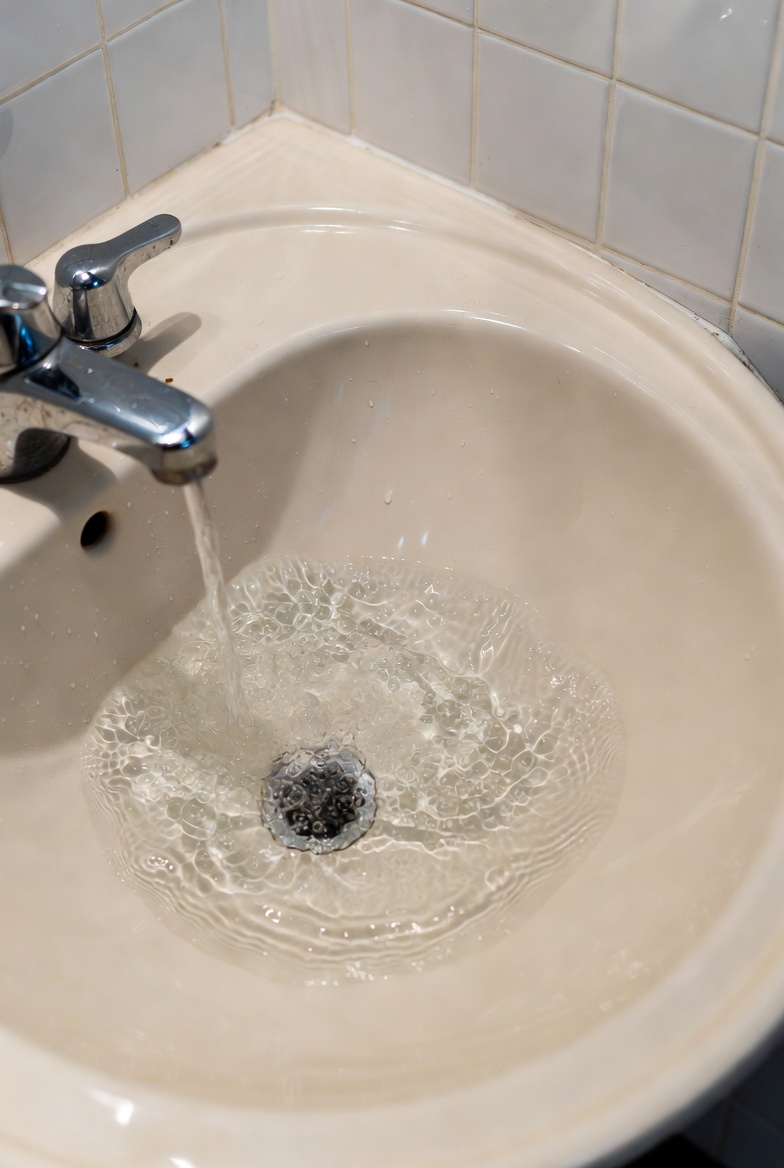
A mildew-like smell is a description, not an organism identification. Separate accessible drain residue from a leak, damp cabinet or other building moisture before choosing cleanup.
For strong, widespread or unexplained gas-like fumes, exposure symptoms, or suspected high sewer-gas concentrations in an enclosed space, leave the building immediately and call the fire department or emergency services from outside. Avoid flames, switches and other ignition sources; do not remain to ventilate, sniff drains or investigate. Smell intensity does not measure the concentration. A faint localized drain odor without those warning signs calls for a different plumbing investigation; it does not automatically establish a fuel-gas leak.
If fuel gas is suspected, leave the building or affected area immediately. Do not operate valves, switches, plugs, appliances or phones there. Call the gas emergency service from a safe location well away, and wait for responders’ clearance.
For wastewater rising from a drain or affecting several fixtures, stop adding water and keep affected appliances from discharging using only safely accessible dry controls when no gas emergency is suspected. Avoid sewage contact, keep children and pets away and arrange prompt drainage help. Notify building management or the sewer agency as appropriate. Do not run fixtures to locate a shared blockage.
Record the original context
- Actual visible deposits or water damage, without close sniffing or opening concealed materials.
- Original timing, actual leak location and whether drainage failed.
- Parts cleaned, exact products and how long any change lasted.
What the observation can tell you
A damp surface can support growth, but smell alone cannot name it or select a disinfectant. Normal seal water in a trap is not itself a failure to empty. Drying a cabinet does not repair the water source.
Before cleaning or opening parts
If a cleaner may be present, identify the exact product and follow its label. Do not add another cleaner, acid, bleach, ammonia, vinegar or an improvised neutralizer. Do not plunge, snake or open the trap while hazardous residue may remain; tell the provider what was used. A rinse or elapsed time is not proof all residue is gone.
What to do next
- Do not run water and sniff around the drain/cabinet to locate the strongest smell. For ordinary safe residue, identify actual owner-removable parts and clean compatible accessible surfaces only.
- Do not automatically open the trap, hot-flush for a minute or repeat a bleach/fizzing recipe after twenty-four-to-forty-eight hours. Actual product purpose and retained residue govern.
- Repair the moisture problem and address affected materials appropriately. Suspected hidden growth, substantial water damage or sewage-contaminated materials need experienced help rather than probing or spreading contamination.
- For ordinary humidity control when no gas/chemical emergency exists, suitable ventilation may help. It does not replace leakage repair or justify operating a fan during suspected gas.
Limited ordinary maintenance
Only for a faint localized drain odor without exposure symptoms, suspected fuel gas, strong fumes, active backup or cleaner residue: a known infrequently used fixture may have its trap seal replenished with a modest amount of plain water through its normal inlet if drainage is unobstructed. Stop if water rises or leaks. Improvement does not prove evaporation was the only cause or exclude a leak or vent problem.
For ordinary accessible surface residue with no chemical history or hazards, keep the faucet and any connected appliance off, use the actual sink/stopper instructions and remove only an intended owner-removable stopper or cover. Clean accessible surfaces with a small brush and mild soapy water compatible with the finish. Do not force a retained stopper or push a tool into hidden passages; fully reassemble before a small attended cool-water leak check.
Should I pour diluted bleach into the drain because it smells like mildew?
Do not select a generic bleach recipe from an odor. The actual surface, product and condition govern; moisture correction and suitable removal differ from a disinfection claim.
Use appropriate assessment for recurrent odor, actual leakage, damaged parts or shared drainage effects. Keep cleanout caps closed and do not climb to vents, alter pipe slopes or add a vent device from an odor pattern. A particular cleaner, camera, smoke test or one-visit repair is not automatically selected by the smell.
Related guides
- Odor only when hot water used
- Odor returns every few weeks
- Odors Originating from Bathroom Sink Drain
Safety sources
- Wisconsin DHS: sewer-gas exposure and emergencies
- Con Edison: suspected gas leaks
- Madison Metropolitan Sewerage District: stop discharge and report sewer backup
- Example drain-opener label: restrictions on plunging, disposal operation and mixing
- Delta example: identifying and removing a retained sink stopper
- EPA: moisture correction, mold cleanup and hidden-material limits