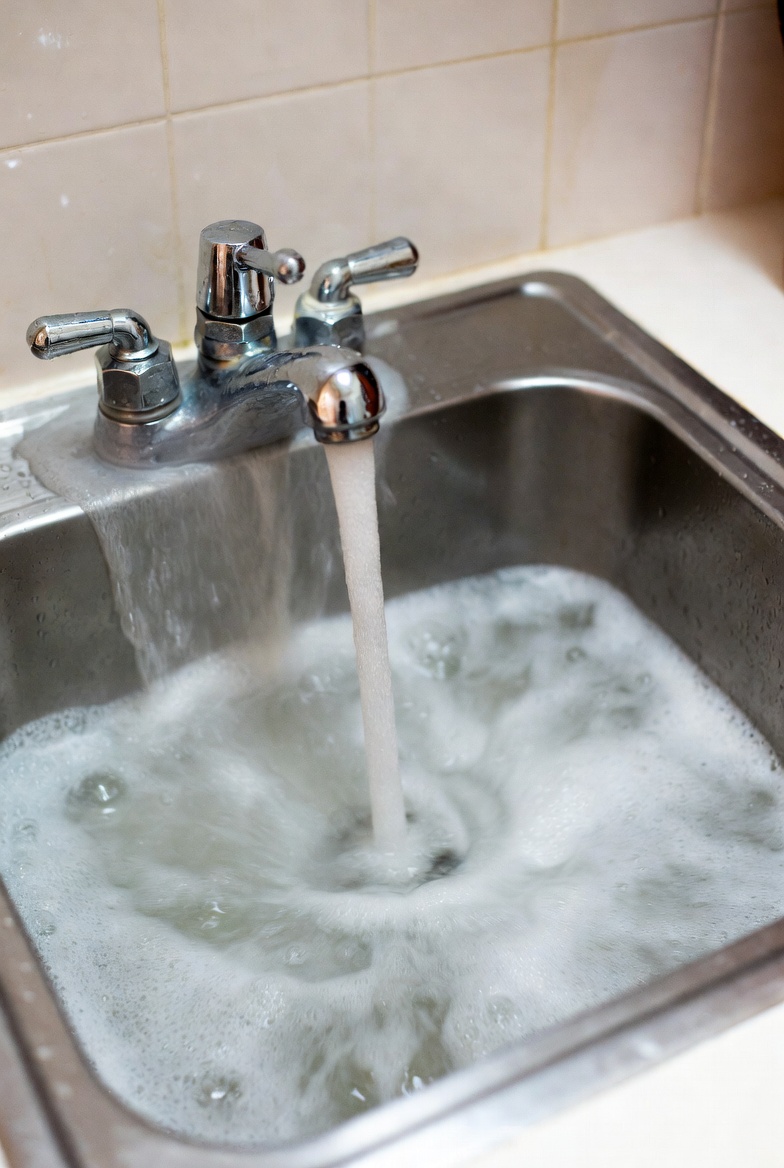
Check for an emergency first
For strong, widespread or unexplained gas-like fumes, exposure symptoms, or suspected high sewer-gas concentrations in an enclosed space, leave the building immediately and call the fire department or emergency services from outside. Avoid flames, switches and other ignition sources; do not remain to ventilate, sniff drains or investigate. Smell intensity does not measure the concentration. A faint localized drain odor without those warning signs calls for a different plumbing investigation; it does not automatically establish a fuel-gas leak.
If fuel gas is suspected, leave the building or affected area immediately. Do not operate valves, switches, plugs, appliances or phones there. Call the gas emergency service from a safe location well away, and wait for responders’ clearance.
If a carbon monoxide alarm sounds or you suspect carbon monoxide exposure, get everyone outside immediately and call emergency services from safety. Carbon monoxide has no smell; an odor comparison cannot rule it out. Do not restart or repeatedly cycle a fuel-burning heater to investigate a possible combustion problem.
Keep away from wet electrical equipment. Do not touch wet appliances, plugs or switches, or enter water to reach a breaker. When no gas leak is suspected, power may be isolated only from a safely accessible dry location; otherwise call an electrician or emergency help. Wet equipment needs qualified assessment before it is used again.
An odor noticed during hot-water use may involve supply water, a heater, the fixture or the drain. Do not lean over streams to compare odor strength, remove supply hoses, flush a heater or raise temperature as a home disinfection test. A rotten-egg description does not distinguish water odor from a fuel-gas leak.
Useful details to record
- Which outlets were already affected in ordinary use and whether the effect was noticed only with hot use.
- Heater/source type, recent shutdown or work and treatment equipment.
- Color, particles, leaks, supplier notices or alarms, without collecting hot comparisons.
What the pattern can tell you
- Several outlets were affected. A shared supply/heater assessment may be useful; this does not identify an anode or bacteria.
- One sink was affected. A local fixture or drain remains possible; do not disconnect supplies to prove it.
- The smell fades with use. That is not a water-quality clearance or proof the source has been removed.
What to do next
- If a new unexplained color, odor or other water-quality change accompanies the event, do not taste it or boil unknown water as a general remedy. Use a known-safe consumption source and contact the supplier for the actual restrictions and restoration directions. Clear flow does not lift an advisory.
- Contact the supplier, health authority or appropriate well professional about a new unexplained quality change. For testing, ask a state-certified drinking-water laboratory about the actual question and collection plan before flushing or changing aerators.
- Before any internal service or fitting removal, identify and isolate every supply that can pressurize the section, release trapped pressure through the appropriate controlled outlet and verify depressurization. Account for hot water and possible alternate feeds. Lowering a PRV setting, reducing flow or wearing gloves does not make a pressurized assembly safe to open. If isolation cannot be established, leave it assembled and obtain qualified help.
- Have a qualified heater provider assess the actual model and permitted maintenance. Do not permanently remove an anode, add bleach, use a generic high-temperature hold or drain/run until clear as an odor cure.
- Any heater service must follow actual energy isolation, cooling, pressure release and refill/purge requirements before restart. Keep relief functions intact and stay away from hot discharge.
- Only for a faint localized drain odor without exposure symptoms, suspected fuel gas, strong fumes, active backup or cleaner residue: a known infrequently used fixture may have its trap seal replenished with a modest amount of plain water through its normal inlet if drainage is unobstructed. Stop if water rises or leaks. Improvement does not prove evaporation was the only cause or exclude a leak or vent problem.
- For ordinary accessible surface residue with no chemical history or hazards, keep the faucet and any connected appliance off, use the actual sink/stopper instructions and remove only an intended owner-removable stopper or cover. Clean accessible surfaces with a small brush and mild soapy water compatible with the finish. Do not force a retained stopper or push a tool into hidden passages; fully reassemble before a small attended cool-water leak check.
Does hot-only odor mean the water heater needs disinfection?
No. Minnesota health guidance describes several possible water-odor sources and explains that other contaminants may be undetectable by smell. Testing and the actual equipment context should support any treatment. Odor alone neither certifies safety nor selects a heater-temperature recipe.
Related situations
- Sink smells after city outage
- Bad smell from bathroom sink drain
- Odors Originating from Bathroom Sink Drain
Safety sources
- Wisconsin DHS: sewer-gas exposure and emergencies
- Con Edison: suspected gas leaks
- CDC: carbon monoxide alarms and wet electrical devices
- CDC: electrical hazards near water
- Minnesota Department of Health: water odor sources and testing limits
- Example electric-heater manual: filling and maintenance requirements
- CDC: drinking-water advisories
- EPA: certified drinking-water laboratories
- BrassCraft: water supply stop instructions