Quick Answer:
If your sink is noticeably full in the morning after a dishwasher cycle ran overnight, the most likely cause is slow drainage or a partial restriction downstream rather than an immediate plug. Check how the sink behaves over time and follow a few simple tests to narrow the problem. If multiple fixtures back up or you notice sewage smells, call a plumber right away.
Why This Happens
Dishwashers send their wastewater into the sink drain, disposal, or a dedicated branch of the kitchen drain. If the drain line beyond the sink is partially blocked, water pushed into the line during the wash cycle can slowly seep back into the sink as the dishwasher finishes and the pump stops. That slow return can happen overnight when the cycle finishes and no one is watching.
Check whether the sink drains down by itself over a few hours; that pattern suggests slow downstream flow rather than an instant plug. Other common causes:
- Partial clog in the P-trap, disposal, or drain line.
- A blocked or restricted branch to the main sewer line or grease buildup in the pipe.
- Venting problems that slow flow and let water sit in low spots.
- A sticking check valve on the dishwasher or a low drain hose loop that allows backflow.
If the problem appeared after a municipal outage or heavy rainfall, consider checking related guidance on Backup after city outage. If the sink only fills during certain dishwasher cycles, see Sink fills only on hot cycles for a different set of checks.
Step-by-Step What to Do
Step 1 — Confirm the pattern
Wait a few hours after the dishwasher finishes (or run a cycle and observe). Note whether the sink slowly drains down by itself or remains full. Slow self-draining points to restricted downstream flow; an instant full sink suggests an immediate clog or stuck check valve.
Step 2 — Check the garbage disposal and high loop
- Run the disposal with water running to clear food debris. If you don’t have a disposal, check the drain hose connection for kinks or a missing high loop.
- Make sure the dishwasher drain hose is secured with a high loop or air gap so waste can’t easily flow back into the appliance or sink.
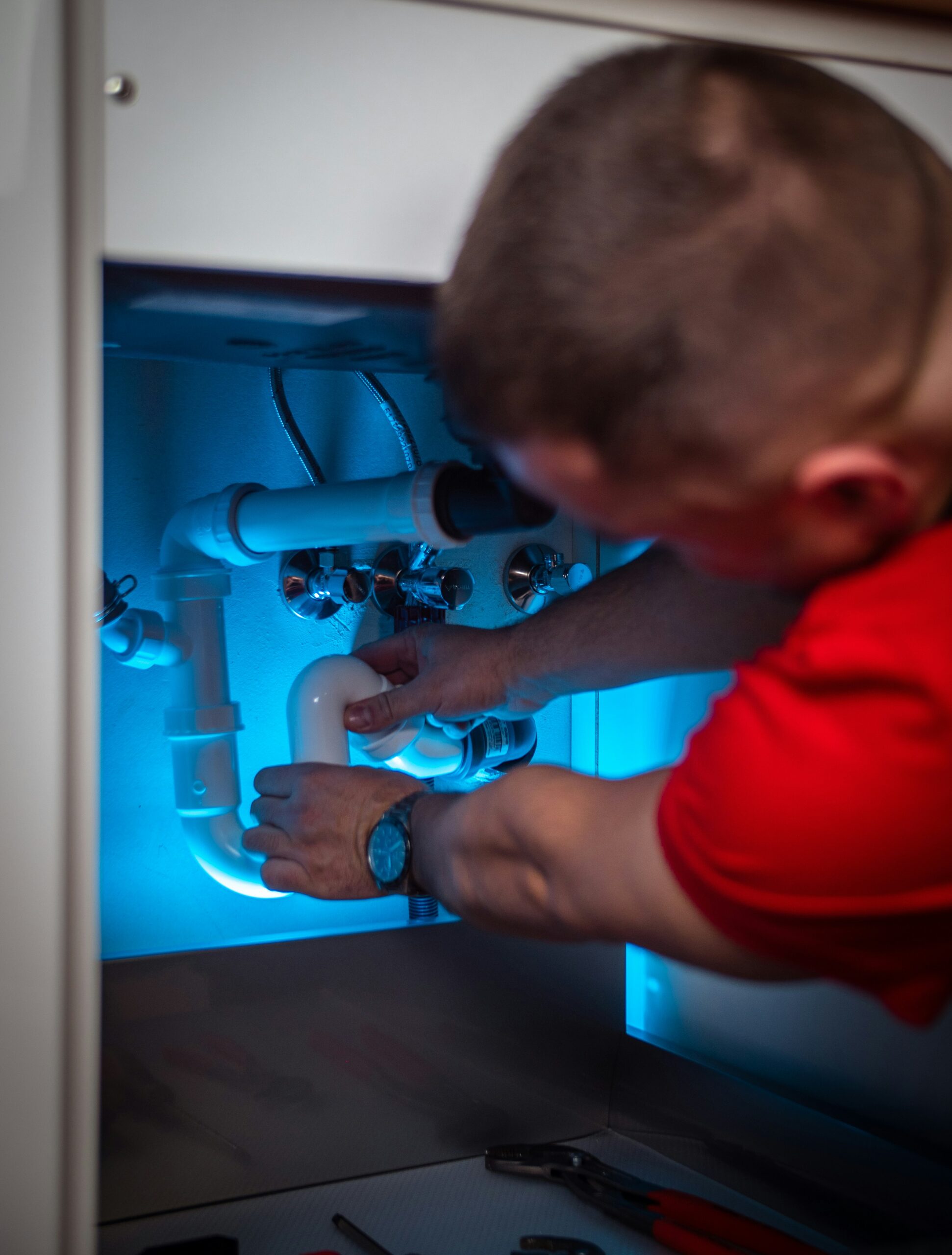
Step 3 — Test and clear the P-trap
- Place a bucket under the P-trap, remove the trap, and clean out debris. Reinstall carefully.
- If you’re uncomfortable doing this, stop and call a plumber.
Step 4 — Try a plunger and hand auger
- Use a sink plunger on the kitchen sink to see if the restriction is near the trap. If that fails, a short hand auger (plumbing snake) can clear clogs in the sink line.
- Avoid pouring strong chemical cleaners into the dishwasher drain; they can damage hoses and create hazards.
Step 5 — Run a flow test
- With the trap reinstalled, pour a bucket of water down the sink and watch how it drains. Slow emptying points to a further line problem vs. a localized trap issue.
- If multiple fixtures drain slowly or back up, this suggests a main sewer or deeper line restriction—call a professional.
What Not to Do
- Do not dismiss overnight backups; slow seep-back can indicate a restriction that needs attention.
- Do not pour concentrated chemical drain cleaners into the dishwasher or sink drain—these can damage plumbing and create a hazardous cleanup if you later open the trap.
- Do not force electrical components (like trying to run the dishwasher with the disposal jammed) or remove dishwasher panels unless power is off and you know what you’re doing.
- Do not ignore repeated occurrences—recurring backups can lead to water damage and mold.
When to Call a Professional
- Multiple fixtures are slow or backing up at the same time (kitchen and basement floor drains, for example).
- There is a strong sewage smell or raw sewage in the sink or other drains.
- You can’t clear the restriction with a plunger or hand auger, or you’re not comfortable disassembling the trap.
- The dishwasher check valve or internal dishwasher plumbing appears to be leaking or damaged.
Safety Notes
- Turn off power to the dishwasher at the breaker before working near electrical connections, and disconnect the appliance if you must access its underside.
- Wear gloves and eye protection when cleaning traps or using tools. Wastewater can contain bacteria and sharp debris.
- Avoid using drain chemicals if you might need to open the drain later; chemical residue can harm skin and eyes and damage tools.
- If you smell gas or have sewage backing up into living areas, evacuate and call a professional immediately.
Common Homeowner Questions
- Is this an emergency? — Not usually an immediate emergency unless sewage is present or multiple fixtures are affected, but it should be addressed promptly.
- Can I fix this myself? — You can often clear traps and small clogs yourself, but call a plumber for persistent problems or sewer-line issues.
- Will running the dishwasher overnight cause damage? — Occasionally running it overnight is unlikely to cause damage, but repeated backups can harm cabinets and cause mold if left unaddressed.