Quick Answer:
If the drain backed up the first time you ran a newly installed disposal, the most likely causes are a misaligned discharge connection, a trapped or clogged P‑trap, or a kinked/sloped drain line. Start by turning the unit off and checking the discharge pipe and trap under the sink before running the disposal again.
Why This Happens
- New disposals change the height and position of the outlet. If the discharge pipe or trap doesn’t line up, water can pool and back up.
- Too little downward slope at the discharge causes slow flow and standing water in the sink or trap.
- A reinstall may leave debris or partial clogs in the trap or wall drain that reveal themselves when the disposal runs.
- Plumbing vents or dishwasher connections can also allow air or water to back up into the sink. In some households the pattern is intermittent — for example, Backup occurs only at night — which points to non-obvious drain use or venting issues.
Step-by-Step What to Do
1. Turn power off and don’t run the disposal
Unplug the unit or switch the circuit breaker off. Never reach into the disposal while it can be powered.
2. Verify the discharge alignment and slope
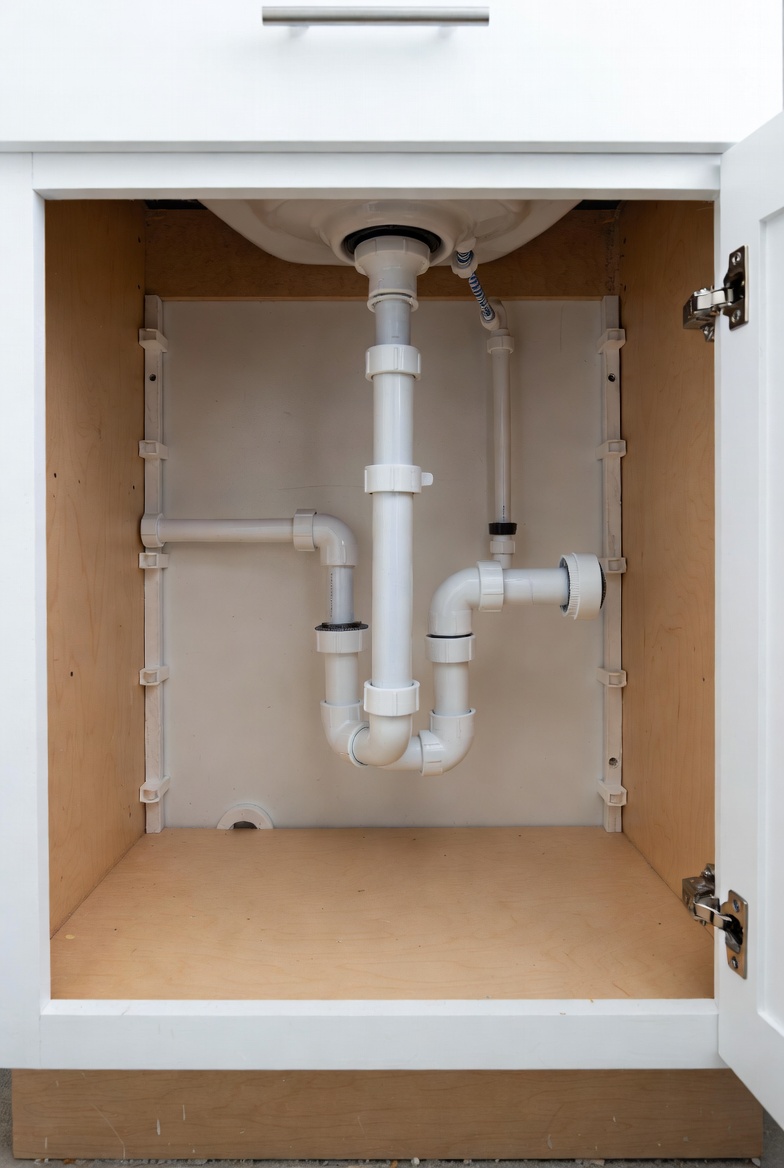
Verify the disposal discharge pipe alignment and slope after installation. Look under the sink and confirm the discharge elbow and trap line run downward toward the wall drain with a consistent slope (a small downhill angle, not level or uphill).
3. Inspect the slip nuts and seating
Loosen the slip nuts, reseat the pipes so they line up, then hand-tighten. Make sure the washer/gasket is seated flat. If a connection is out of line, reseating it correctly matters more than cranking the nut tight.
4. Check and clear the P‑trap
Place a bucket under the trap, loosen the trap nuts, and remove the trap. Clear any debris and flush with water. Reassemble and test flow.
5. Check the dishwasher inlet and knockout
If a dishwasher is connected, ensure the knockout plug was removed from the disposal inlet during installation. A plugged dishwasher inlet can force water the wrong way.
6. Test with water only, then with the disposal
Run hot water to verify the drain flows before turning the disposal on. If water drains fine but the problem returns when the unit runs, note that pattern — for example, **Sink backs up when disposal restarted** — which helps diagnose whether the disposal is forcing solids into a partially blocked line.
7. If flow is still poor, check the wall drain or cleanout
If the trap and immediate fittings are clear but the sink still backs up, the blockage may be in the wall drain. If you have access to a cleanout, remove it and inspect or use a hand auger from there.
What Not to Do
- Do not overtighten fittings if alignment is wrong; reseating matters more.
- Do not stick your hand into the disposal or the sink opening while it can be powered.
- Avoid pouring strong chemical drain cleaners into a disposal or recently disassembled trap — they can splash and cause burns or damage pipes.
When to Call a Professional
- You’ve checked alignment, trap and cleanout and the sink still backs up.
- There’s a persistent sewage smell, repeated backups in multiple drains, or slow drainage throughout the house — signs of a deeper blockage or main line issue.
- There’s a leak, damaged piping, or the discharge needs re‑routing or cutting to correct slope.
Safety Notes
- Always disconnect power before working on the disposal.
- Use gloves and eye protection when removing the trap or clearing debris.
- Use a bucket to catch water before loosening trap nuts.
- If using a hand auger, feed it carefully to avoid damaging pipes; stop if you feel sharp resistance and call a pro.
Common Homeowner Questions
- Why did this start the first time I used the unit? — Misaligned piping or a dislodged knockout/plug often shows up only when the disposal runs and pushes solids into the line.
- Can I fix this without special tools? — Often yes: hand tools, a bucket, and basic checks of alignment, trap cleaning, and reseating fittings solve many problems.
- Is it safe to keep using the disposal until a plumber arrives? — No. Turn the unit off and avoid running water into that drain until you’ve verified the piping and cleared the trap to prevent overflow or leaks.