Quick Answer:
If the shower loses most or all pressure the moment a toilet is flushed, the likely causes are a large, sudden demand on the same supply line, a low or misadjusted pressure-reducing valve (PRV), or a restricted service line. Start by confirming the pattern, then isolate fixtures and check the supply-side controls before replacing parts.
Why This Happens
- Toilets fill quickly after flushing. That fast flow can temporarily lower pressure in a shared pipe run or in the service line into the house.
- A PRV set low or failing won’t recover quickly under short spikes of demand, so you see a pressure dip at outlets like the shower.
- Pipe size, long runs, or partial blockages amplify the effect. If multiple fixtures share the same branch, the sudden draw is concentrated and pressure falls more noticeably.
- Municipal supply limits can also mean the main pressure drops when a large demand starts, affecting household fixtures at the same time.
Step-by-Step What to Do
Observe the symptom and confirm the pattern
Watch what happens when the toilet is flushed. Note whether the drop is instant and whether it recovers quickly once the toilet stops filling. Also check for similar patterns elsewhere — for example, does your kitchen or laundry show the same timing? Compare with other reports such as Kitchen sink loses pressure when washer runs and Pressure loss when laundry starts to see if it’s a demand-related pattern in your home.
Test pressure with fixtures isolated
- Close other fixtures and run only the shower, then have someone flush the toilet while you watch the shower flow.
- For a more precise check, attach a simple pressure gauge to an outdoor hose bib or a fixture drain line and read pressure before, during, and after a flush. This shows whether the static pressure drops or if it is only the shower flow that changes.
- If the shower only dips when other fixtures run, the problem is system demand rather than a single shower part.
Observe meter flow patterns
- Go to the water meter and watch the dial while the toilet is flushed. A sharp jump in meter flow confirms the toilet draw is large enough to affect house pressure.
- If the meter shows large swings and municipal supply pressure is steady, the issue is inside your service line or distribution piping.
Confirm PRV setting
- Locate the PRV (usually near the main shutoff) and check its outlet pressure with a gauge. Typical residential settings are 50–60 psi, but your system may vary.
- If the PRV is set unusually low or is slow to recover under demand, adjusting or replacing it can stop brief pressure collapses.
- Only make small adjustments if you’re comfortable; if unsure, include this in the items to discuss with a pro.
Check the toilet and local piping
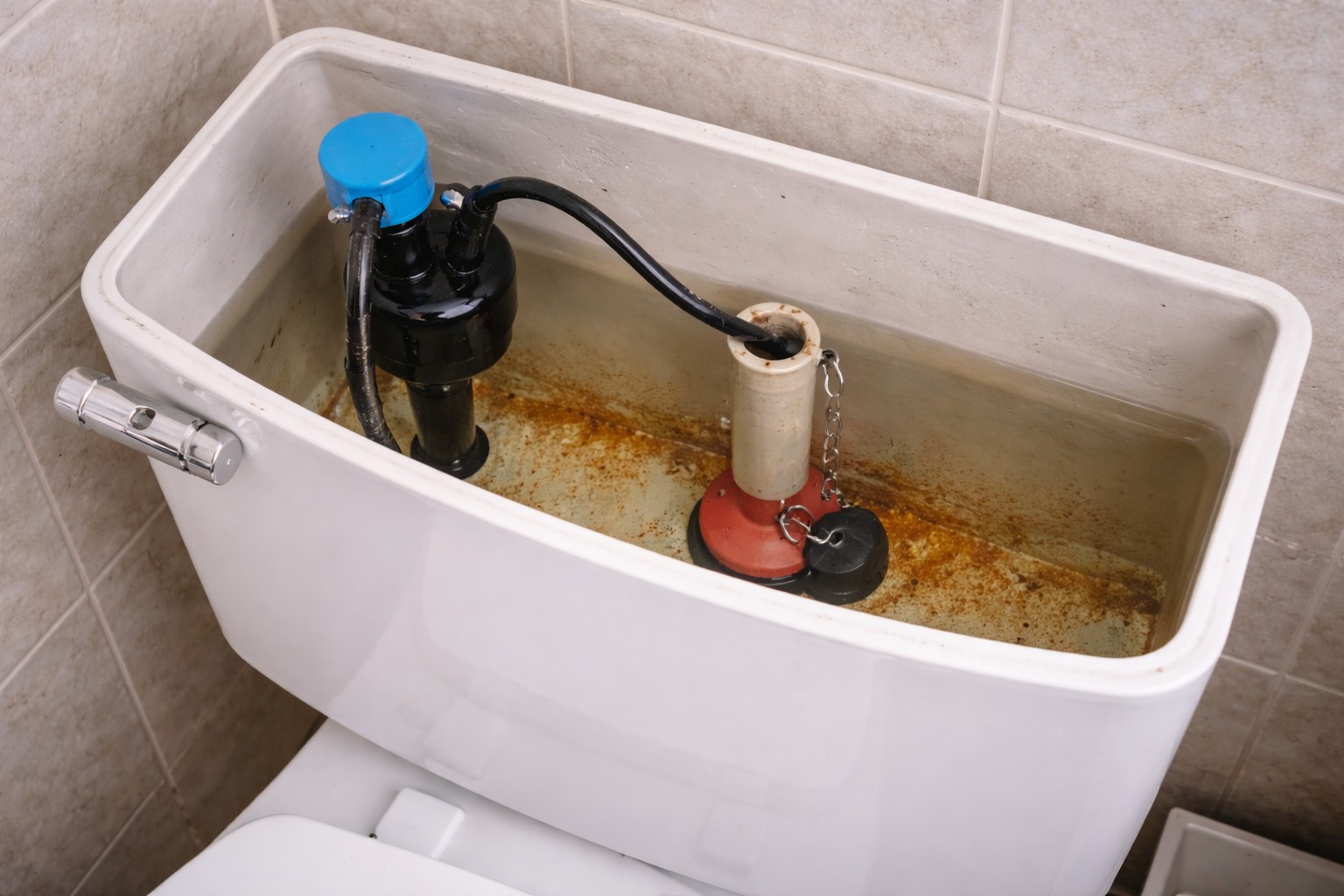
- Ensure the toilet’s fill valve isn’t oversized or failing (causing an unusually high draw). Replace the valve if it runs continuously or fills far faster than other toilets.
- Check shutoff valves and visible supply lines for partial closures or kinks that reduce available flow to the shower when other fixtures run.
Broader troubleshooting
- If tests point to the service line or main, ask your water supplier to confirm mains pressure and any recent work that might affect supply.
- For persistent or severe drops, a professional can perform a flow/pressure test at the meter and inside the house to locate the constraint.
What Not to Do
- Do not assume fixture failure when pattern is demand-related. A working shower valve can still lose flow if the system pressure drops briefly.
- Don’t replace the shower cartridge or install a high-flow shower head before confirming supply-side behavior; that wastes time and money.
- Avoid making large PRV changes or removing the valve without shutting off the main and understanding local code — incorrect pressure can damage appliances.
When to Call a Professional
- Pressure drops are large and frequent, and simple isolation tests don’t identify a single fixture.
- You suspect the PRV is failing or the service line has a blockage or leak.
- Meter observations show abnormal behavior or your water supplier confirms adequate mains pressure but the home still drops.
- You’re not comfortable performing pressure-gauge checks or working at the main shutoff.
Safety Notes
- Turn off the main water supply before doing any work on the service side or removing valves.
- Be cautious with hot water. If you run the shower during tests, reduce temperature to avoid scalding when pressure changes.
- If you open or adjust the PRV, relieve downstream pressure and follow manufacturer instructions; if unsure, hire a pro.
Common Homeowner Questions
- Why does the shower recover after a few seconds?
Short recovery means the toilet’s fill cycle caused a temporary demand spike; once it ends, system pressure returns. - Will a bigger shower head fix it?
No—larger heads increase demand and can make the problem worse if supply pressure is the issue. - Can the water company fix this?
If mains pressure is low or fluctuating, the supplier can address it; if the problem is inside your service or PRV, a plumber is needed.
For more related articles, see the Pressure Drops When Multiple Fixtures Run hub.