Quick Answer:
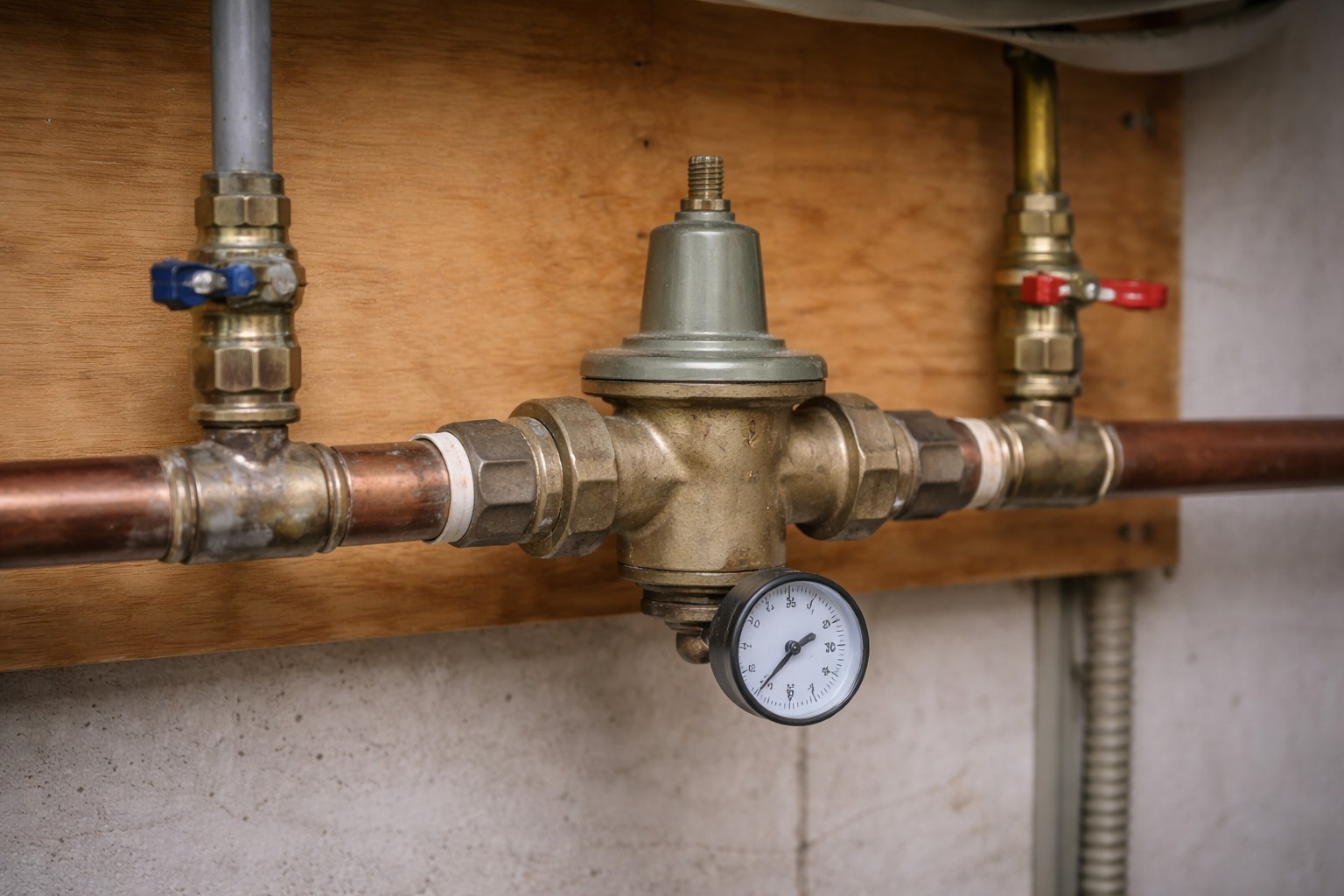
If the pressure regulator starts to hunt, whistle, or won’t hold pressure after a debris event, the inlet screen or seat is probably contaminated. First check the PRV with a pressure gauge while water is flowing. If the valve is serviceable, clean the inlet screen and flush the upstream piping, then retest for stable regulation. If it still hunts or won’t regulate, replace the PRV and flush again.
Why This Happens
When the system is shut off, repaired, or a main is flushed, small particles and grit can loosen and travel into the PRV. Those particles can lodge on the inlet screen or between the seat and plug, causing unstable operation or preventing the valve from sealing. This is a common result of work on supply mains or pipes and is related to broader issues like Debris causing valves to leak.
Step-by-Step What to Do
1. Confirm the problem under flow
- Attach a pressure gauge downstream of the PRV.
- Open a downstream fixture (a sink or hose bib) so water is flowing while you observe the gauge. You need a flow condition to reveal hunting or a failure to regulate.
- Note whether the pressure is steady, swings, or drops to supply pressure.
2. Shut down and relieve pressure
- Shut the upstream main or the PRV isolation valve, then open a downstream fixture to relieve residual pressure.
- Wear eye protection and be prepared for a small spray when you open the PRV later.
3. Inspect and clean the inlet screen
- Remove the PRV bonnet or the inlet screen cap per the manufacturer’s instructions.
- Carefully remove the screen and rinse with clean water. Use a soft brush if needed; avoid scratching the screen or seat.
- Check the seat area for grit. If visible debris is present, clean gently—don’t use tools that can score the seat.
4. Flush the upstream piping
- Before reassembling, open the upstream isolation briefly to flush water through the line and out a downstream fixture. Run until the water is clear.
- This step removes loose sediment that would otherwise re-enter the PRV after reassembly. Good post-work practice helps with Preventing sediment damage after shutoff.
5. Reassemble and retest stability
- Reinstall the screen and bonnet, re-pressurize the line, and check the gauge under flow again.
- If the pressure is steady and the PRV regulates normally, monitor for a while to confirm the fix.
6. Replace the PRV if it still hunts or won’t regulate
- If cleaning and flushing do not stop the hunting, whistle, or inability to hold pressure, replace the PRV. Internal damage or a scored seat may be present.
- After replacement, flush the upstream piping again to remove lingering debris that could harm the new valve.
What Not to Do
- Don’t keep adjusting the PRV while it’s contaminated; repeated adjustments can score the seat and make leaks worse.
- Don’t scrape or file the seat aggressively — scoring or improper shaping will prevent a proper seal.
- Don’t skip flushing upstream before reinstalling — trapped sediment will re-block the new or cleaned valve.
When to Call a Professional
- Call a plumber if the PRV is hard to access, if replacing it requires soldering or complex pipework, or if the valve leaks after you’ve cleaned it.
- If you suspect the seat is damaged, or if the system supplies multiple units and the work must meet code, get a licensed pro to replace and test the regulator.
- Also call a pro if you’re uncomfortable working on pressurized plumbing or if the main shutoff belongs to the utility.
Safety Notes
- Always relieve pressure before opening the PRV. Wear eye protection and gloves.
- Be cautious with hot water lines; run cold first if unsure which branch is which.
- If you must work near a meter or utility connection, contact your water provider before making changes.
Common Homeowner Questions
- How long does cleaning a PRV take? About 20–40 minutes for access, cleaning, and initial testing.
- Can I reuse a PRV after cleaning? Yes if the internals and seat are not damaged; replace it if there’s scoring or persistent leaks.
- Will a simple flush always fix noisy or hunting PRVs? No — flushing helps, but if the valve still hunts after cleaning it should be replaced.