Quick Answer:
If water pressure became unstable right after operating the curb stop, stop using affected fixtures, isolate the repaired component, check for visible leaks, then flush the affected lines and measure pressure before and after the repair point. Small amounts of trapped air or debris are the most common cause and often clear with controlled flushing, but if pressure stays erratic call a pro.
Why This Happens
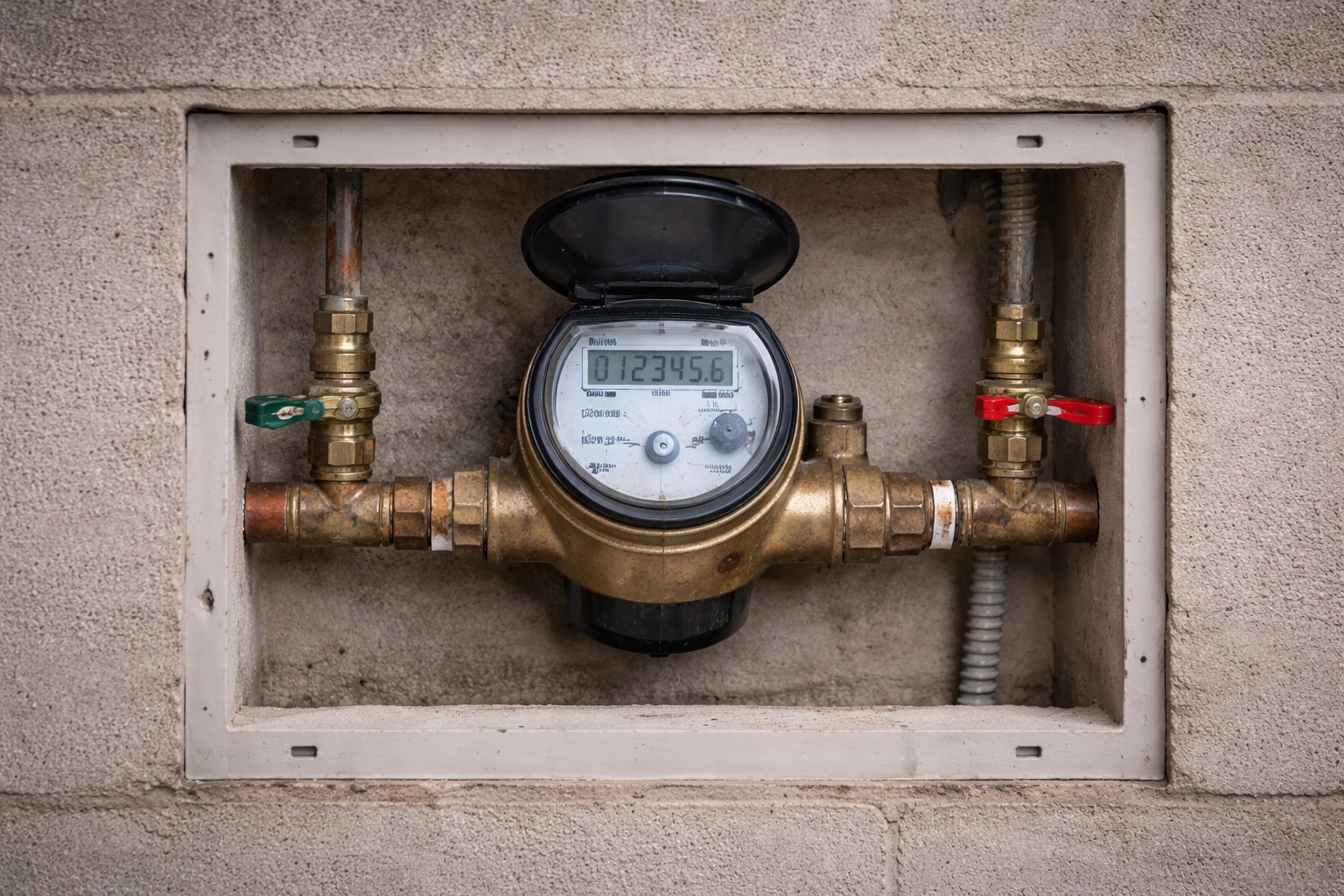
Operating a curb stop can introduce air, dislodge mineral deposits, or move debris into the service line. Those things can cause pressure to fluctuate, pump cycling, or pockets of low flow at fixtures. A partially opened curb stop or a pressure regulator that shifted during the operation can also create instability. If work included the meter or a temporary bypass, problems often follow typical patterns such as Pressure loss after reconnecting meter or Pressure loss after bypass removal.
Step-by-Step What to Do
1. Stop and isolate the repaired component
- Close fixture shutoffs or the local valve serving the repaired section so only the main service is active.
- If the repair was at or near the house inlet, close the curb stop again briefly to stabilize the line while you prepare to test.
- Confirm isolated components are drained or capped so water won’t enter them during flushing.
2. Measure pressure before you reopen the line
- Attach a simple water pressure gauge to an outdoor hose bib or a laundry spigot on the service side (not downstream of a regulator) and note the reading.
- Record the pressure and whether it is steady or fluctuating. This gives you a baseline to compare after you reopen and flush.
3. Reopen slowly and watch for changes
- Open the curb stop or service valve slowly to avoid banging and to let air and debris escape gently.
- Have someone watch the gauge as you reopen so you can see immediate changes.
4. Flush affected lines
- Open the highest hot and cold fixtures in the house, then open a hose bib at the lowest point. Let water run until it clears and runs steadily (often several minutes).
- Flush both hot and cold lines separately if only one was disturbed—hot-side air and debris can linger in the water heater, so open the hot taps long enough to push that air out.
- Check for sediment at fixtures and in faucet aerators; remove and clean aerators if flow is weak or sputtering.
5. Measure pressure after the repair point
- Reattach the pressure gauge to the same fitting and record the new reading.
- Compare before-and-after values. Small differences are normal; large swings, frequent surges, or sustained low pressure mean there’s still a problem.
6. Inspect for leaks and re-check fixtures
- Look at exposed piping and joints used during the repair. Even small leaks can cause pressure loss or unstable readings.
- Test showers, toilets, and appliances to ensure stable flow and no sputtering.
What Not to Do
- Do not assume pressure will self-correct without flushing and inspection.
- Don’t reopen the curb stop fully and quickly if you haven’t measured pressure or prepared to flush—fast opening can force debris into fixtures and cause surges.
- Avoid using tools to force a stuck curb stop; that can damage the valve or service line. Leave seized main valves to the utility or a plumber.
When to Call a Professional
- Pressure remains unstable after flushing and measuring, or you see significant pressure swings.
- You can’t isolate the repair location or you find leaks you can’t safely fix.
- There are signs of regulator failure (pressure spikes above safe limits) or banging/hammering that won’t stop.
- If the curb stop will not operate properly or feels loose, call your water utility or a plumber rather than forcing it.
Safety Notes
- Hot water flushing can cause scalding. Open hot taps cautiously and start with cold if unsure.
- Shut off power to pumps or water heaters before doing work that may allow devices to run dry or cycle rapidly.
- If you smell gas near the work area or see major leaks, evacuate and call emergency services as appropriate—do not attempt remote repairs.
Common Homeowner Questions
- How long does pressure instability usually last?
Minutes to an hour after proper flushing; persistent problems require inspection. - Can I measure pressure myself?
Yes—use an inexpensive gauge on an outdoor spigot; measure before and after the repair point for comparison. - Will trapped air clear on its own?
Sometimes, but you should flush and inspect; do not assume it will resolve without action.
Related Articles
If you’re troubleshooting a similar symptom, these guides may help:
For the full directory, see Pressure Loss After Plumbing Repairs.