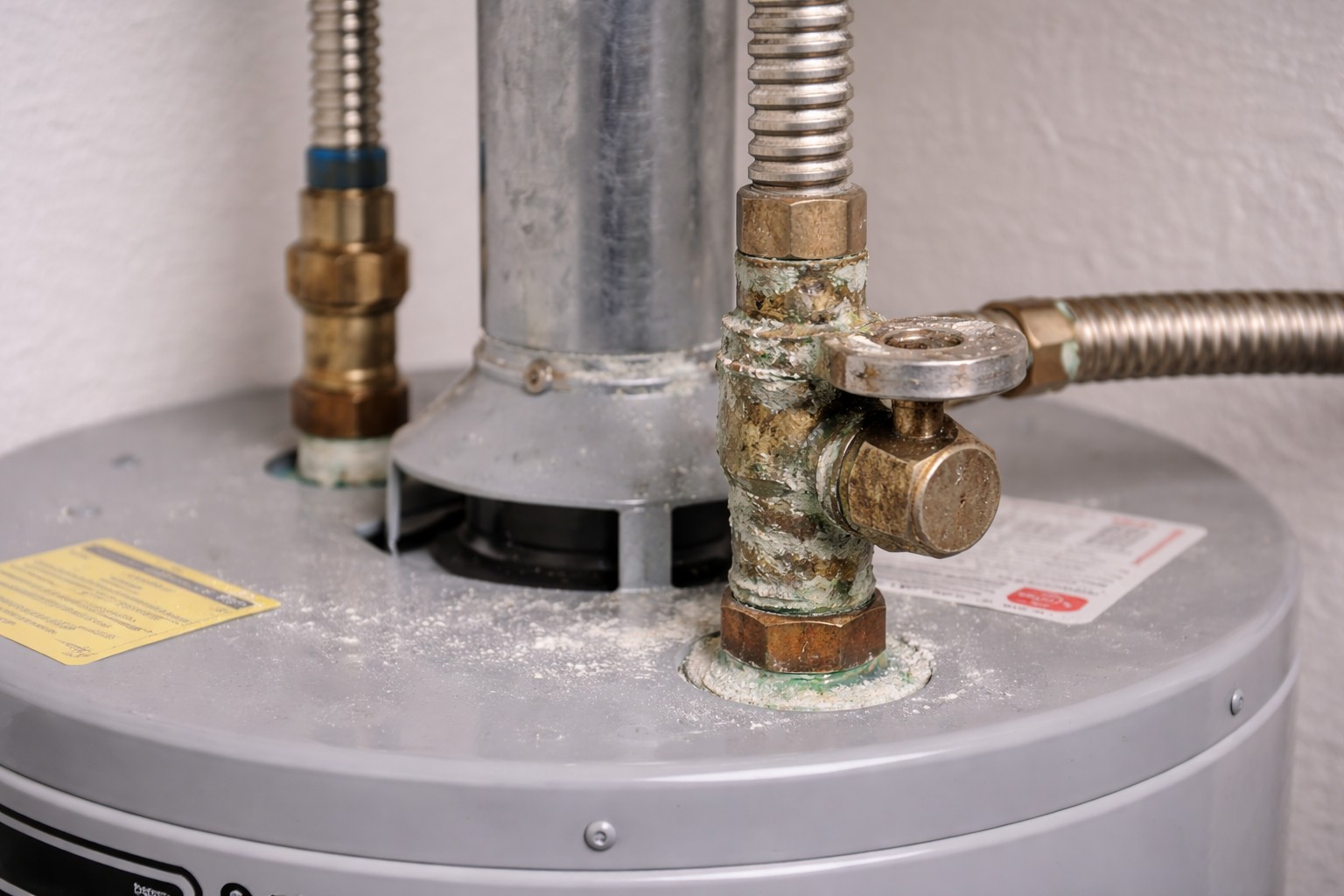
Quick Answer:
If the relief valve only crackles open briefly when the heater finishes a cycle, use a max-needle pressure gauge to see whether a true pressure peak is occurring at that moment. If the gauge shows no high peak, the valve is likely weak or has debris and should be replaced. If the gauge records a high pressure spike, address the expansion tank or closed-system issue first, then retest.
Why This Happens
Two common causes make a relief valve open briefly after heating:
- Thermal expansion raises the system pressure when water is heated. If the expansion tank is waterlogged or the system is effectively closed, pressure can spike and lift the relief valve.
- The relief valve itself can be weak, corroded, or clogged with debris so it lifts at a lower pressure than it should or sticks and then lets go briefly.
Use a max-needle gauge to capture the peak pressure during the cycle and decide which problem you have. For related reading, check **Pressure builds overnight when heater runs** and **Pressure spikes only on hot water**.
Step-by-Step What to Do
1. Prepare safely
- Turn off the heater (electric: switch off breaker; gas: set to pilot or off) if you’ll be working on valves or fittings. Let water cool if you must remove parts.
- Have basic tools and a bucket ready. Wear eye protection and gloves.
2. Measure static system pressure
- Attach a gauge to a nearby hose bib or the water heater pressure port. Record the static pressure with the system idle (cold).
- Typical household static pressure is in a moderate range; you’re only looking for obvious overpressure compared to normal, not exact relief-set numbers.
3. Use a max-needle gauge during a heating cycle
- Use a max-needle (max-hold) pressure gauge so it records the highest pressure reached during the cycle.
- Start a normal heating cycle (restore power/gas if you turned it off) and let the heater go through a full heat-up. Watch the gauge or read the maximum needle after the cycle completes.
- Note whether the relief valve opens at the same time the gauge shows a pressure peak.
4. Interpret the results
- If the max-needle gauge shows a high peak that coincides with the relief opening: the system is experiencing expansion pressure. First fix the expansion tank or the closed-system issue (recharge or replace the expansion tank, or add a thermal expansion solution), then retest.
- If the gauge stays in the normal range but the relief still opens briefly: the relief valve is likely weak or has debris. Replace the relief valve and retest to confirm the problem is resolved.
5. Replace and retest if needed
- If you decide to replace the relief valve, do it only after confirming the peak pressure. Install a valve rated for your system and retest with the max-needle gauge to ensure it no longer opens in normal operation.
What Not to Do
- Don’t replace the relief valve without measuring peak pressure—or the new one will drip too.
- Don’t remove or service the temperature-pressure (T&P) valve while the heater is hot or the system is pressurized.
- Don’t ignore repeated relief openings; persistent openings indicate a system problem that will worsen if left alone.
When to Call a Professional
- If you can’t attach a gauge or safely observe a full heating cycle.
- If the gauge shows high pressure but you’re not comfortable diagnosing or replacing the expansion tank or making plumbing changes.
- If the relief valve leaks after replacement, or if there’s visible corrosion or repeated failures—call a licensed plumber to inspect the heater and system.
Safety Notes
- Always shut off power to the water heater before working on plumbing around it. For gas units, follow the manufacturer’s instructions for safe shutdown.
- Do not remove a relief valve while the tank is hot or under pressure. Let the tank cool and relieve pressure through a faucet first.
- If you see steam, hot water spray, or cannot safely control the pressure, turn off the cold-water inlet and power source and call a professional immediately.
Common Homeowner Questions
- Is a brief drip from the relief valve dangerous? A brief drip is not an immediate emergency, but it signals a problem that should be diagnosed; don’t ignore it.
- Can I recharge the expansion tank myself? You can if you’re comfortable using a tire-pressure gauge and an air pump; otherwise hire a pro.
- How long before I should replace a leaking relief valve? Replace it as soon as you’ve confirmed the pressure is not the root cause; a leaking relief valve usually won’t stop on its own.
Related Articles
If you’re troubleshooting a similar symptom, these guides may help:
For the full directory, see Thermal Expansion Pressure Behavior.