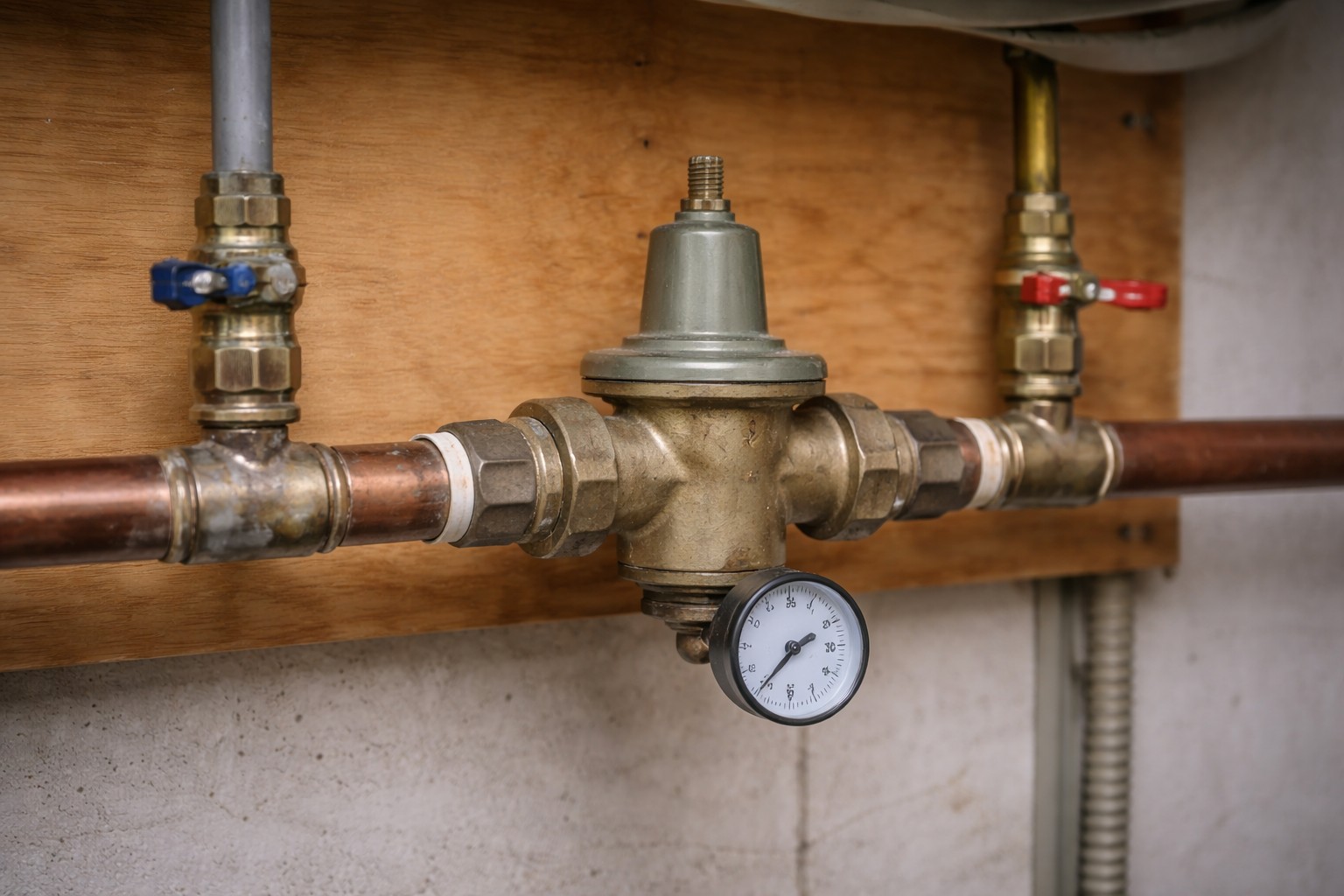
This hub covers how a pressure reducing valve (PRV) can fail—low pressure, pressure spikes, unstable readings, leaks at adjustment parts, noise, and issues that only show up under higher demand.
It also includes basic checks to confirm PRV behavior and common triggers like sediment buildup or changes in city pressure.
Use the groups below to match your symptom and open the most relevant article. For related topics on shutoffs and flow control, see the sub-category hub: Water Entry, Shutoffs & Flow Control Systems.
Low pressure symptoms
Articles that focus on PRV-related restrictions that make the whole house or specific areas feel weak.
-
PRV causing low water pressure everywhere
Describes how a malfunctioning PRV can reduce flow to the entire home and how to distinguish it from municipal supply issues.
-
Water pressure dropped suddenly after PRV install
Looks at common installation or adjustment errors that produce an abrupt, sustained pressure drop after a new PRV is fitted.
-
PRV stuck closed symptoms
Summarizes signs a valve is jammed toward the closed position and basic checks before calling for service.
-
PRV causes low pressure upstairs only
Explains why a poorly functioning PRV can show pronounced low pressure on higher floors and what to inspect first.
-
PRV failing only under high demand
Covers symptoms that appear when multiple fixtures run at once and how to test the PRV under load.
High pressure and spikes
Signs that the valve is not reducing supply pressure or is passing spikes from the street.
-
PRV stuck high causing pressure spikes
Details how a stuck-open or worn seat can allow dangerous pressure spikes and the risks to plumbing and appliances.
-
PRV stuck open symptoms
Lists indicators a PRV is not closing properly and steps to confirm whether the valve or upstream supply is at fault.
Fluctuations and unstable gauge readings
When pressure swings or gauges don’t hold steady, these articles help separate PRV behavior from supply instability.
-
Pressure fluctuates randomly throughout day
Explains common timing patterns for fluctuations and practical tests to pinpoint a PRV versus municipal causes.
-
Pressure gauge readings unstable at PRV
Focuses on interpreting noisy gauge readings at the valve and verifying whether the gauge, tap, or PRV is at fault.
-
PRV adjustment makes no change
Describes why turning the adjustment screw may have no effect—worn internals, stuck parts, or debris—and what to try next.
Leaks, drips, and noise at the PRV
Physical symptoms at the valve body—drips, humming, or water hammer—often point to particular failure modes.
-
PRV leaking from adjustment screw
Covers small leaks at the screw area, common sealing failures, and temporary vs. permanent fixes.
-
PRV buzzing or humming
Explains vibration and noise sources in the valve and what to inspect to confirm the PRV is the noise origin.
-
PRV dripping at relief port
Discusses why the relief/drip port may discharge intermittently and how to assess whether it indicates overpressure or a stuck part.
-
PRV causing hammer in pipes
Describes how PRV malfunction can create or exacerbate water hammer and basic measures to reduce pounding while diagnosing.
Testing and common causes
Procedures and root causes to confirm a failing valve, including sediment, supply changes, and testing methods.
-
How to test PRV failure
Step-by-step checks to verify PRV operation using gauges and fixture tests without advanced tools.
-
PRV failed after city pressure change
Explains how sudden municipal pressure shifts can expose or accelerate valve faults and what to review with the utility.
-
PRV clogged by sediment
Outlines signs of sediment-related sticking or partial blockage and simple inspection approaches to confirm debris buildup.
Wear, replacement, and downstream effects
How age and replacement can create new symptoms, and how PRV issues show up at fixtures or appliances.
-
PRV lifespan and wear patterns
Summarizes typical wear mechanisms, expected service life, and signs that replacement is advisable.
-
PRV replacement caused new leaks
Details common installation mistakes or compatibility issues that lead to leaks after replacement and how to check fittings.
-
PRV causing hot water pressure issues
Explores why a PRV problem might affect hot-water circuits differently and what to inspect on the heater side.
-
PRV causing toilet refill problems
Looks at how reduced or intermittent pressure from a PRV can produce slow or incomplete toilet refills.
-
PRV failure causing faucet spray loss
Explains how pressure loss or fluctuating supply from a PRV can reduce aerator spray and what tests to run at the fixture.
All Articles in This Cluster
- PRV causing low water pressure everywhere
- Water pressure dropped suddenly after PRV install
- PRV stuck closed symptoms
- PRV causes low pressure upstairs only
- PRV failing only under high demand
- PRV stuck high causing pressure spikes
- PRV stuck open symptoms
- Pressure fluctuates randomly throughout day
- Pressure gauge readings unstable at PRV
- PRV adjustment makes no change
- PRV leaking from adjustment screw
- PRV buzzing or humming
- PRV dripping at relief port
- PRV causing hammer in pipes
- How to test PRV failure
- PRV failed after city pressure change
- PRV clogged by sediment
- PRV lifespan and wear patterns
- PRV replacement caused new leaks
- PRV causing hot water pressure issues
- PRV causing toilet refill problems
- PRV failure causing faucet spray loss