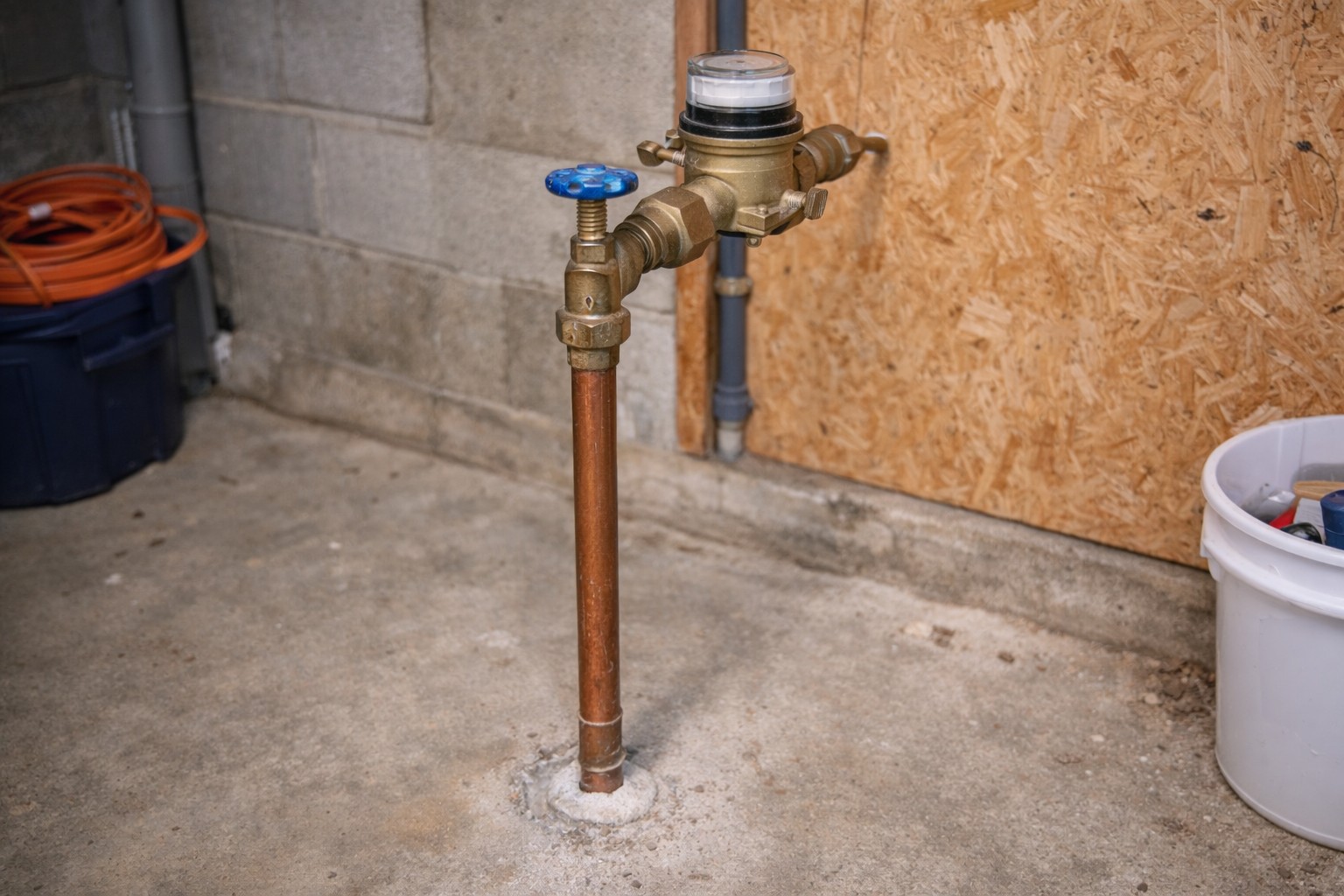
Quick Answer:
If whole-house pressure dropped after the main shutoff was replaced, the most common causes are trapped air, debris in the line, or a partially closed valve. Start by isolating the replaced section, measure pressure at the meter or incoming pipe, flush the affected lines, then measure again on the far side of the repair. That sequence usually reveals and fixes the problem or shows when to call a pro.
Why This Happens
- Air trapped in the pipes after work can reduce flow until it is flushed out.
- Debris from cutting or soldering the piping can lodge at fittings, screens, or valves and restrict flow.
- If a stop valve was not fully opened or the packing nut is too tight, flow can be limited.
- A pressure regulator or meter isolation valve may have been adjusted or left partly closed during the repair.
- Recent related work can point to the source. For example, problems similar to Low pressure after water heater install or Pressure loss after installing new filter sometimes show the same symptoms and troubleshooting steps.
Step-by-Step What to Do
1. Prepare and measure baseline pressure
- Turn on a single outside spigot or use a pressure gauge at the incoming pipe to get a baseline reading before you change anything. Note the value.
- Record whether pressure is steady or fluctuating; that helps narrow causes.
2. Isolate the repaired component
- Close valves so the replaced shutoff and immediate fittings are isolated from the rest of the system. This lets you test upstream and downstream separately.
- If you have a secondary shutoff downstream, close it to isolate zones for testing.
3. Measure pressure before and after the repair point
- Attach a pressure gauge on the supply side (upstream) of the replacement and note the reading.
- Attach or move the gauge to the downstream side and compare. A significant drop across the repair point indicates an installation problem, valve not fully open, or obstruction.
4. Flush affected lines
- With the isolated section open to the house, open a few full-flow fixtures (hose bibs or tubs) and run water for several minutes to clear air and debris.
- Flush from the upstream side toward the house when possible to push debris away from the service connection.
- After flushing, re-measure pressure downstream to see if it returns to normal.
5. Check valves, fittings, and fixtures
- Ensure the new shutoff is fully open and the packing nut is not over-tightened.
- Inspect faucet aerators, shower screens, and inline filters for debris that may have been dislodged during work.
6. Look at the regulator and meter
- If your house has a pressure regulator, verify its setting and condition. A damaged regulator can cause low pressure everywhere.
- Confirm the water meter and its isolation valve (if present) are fully open and not damaged.
7. Re-test and document results
- Measure pressure again at the same spots you used in step 1. If pressure is restored upstream but not downstream, focus on the repair area or piping to the house.
- Note any persistent drops or leaks to report to a plumber if you call one.
What Not to Do
- Do not assume pressure will self-correct without flushing and inspection.
- Do not force a valve that feels stuck—this can break the stem or packing and make the problem worse.
- Avoid running only small fixtures (a single sink) to “test” pressure; full-flow fixtures show the true condition better.
When to Call a Professional
- Pressure remains low after isolating the repair, flushing lines, and comparing upstream vs downstream measurements.
- There are unexplained drops at the meter, suspected damage to the regulator, or a leak that you cannot safely access.
- Your home uses a complex system (well pump, booster, or backflow device) that could be affected by the shutoff work.
Safety Notes
- Turn off the incoming supply and relieve pressure before working on the shutoff to avoid spray or water damage.
- Be careful with hot water—if you open lines near the water heater, use gloves and allow cooling time when needed.
- If you are unsure about isolating the service or working near the meter, stop and call your water utility or a licensed plumber.
Common Homeowner Questions
- Why is there air in the pipes after the shutoff was replaced? Air enters when sections are opened; flushing clears it in most cases.
- How long should flushing take to restore pressure? Typically a few minutes of full-flow from outdoor spigots or tubs removes air/debris; stubborn clogs may take longer or need inspection.
- Can I open the shutoff more if it still feels low? Only open fully if the valve is turning freely; do not force a stuck valve—call a pro instead.
Related Articles
If you’re troubleshooting a similar symptom, these guides may help:
For the full directory, see Pressure Loss After Plumbing Repairs.