Quick Answer:
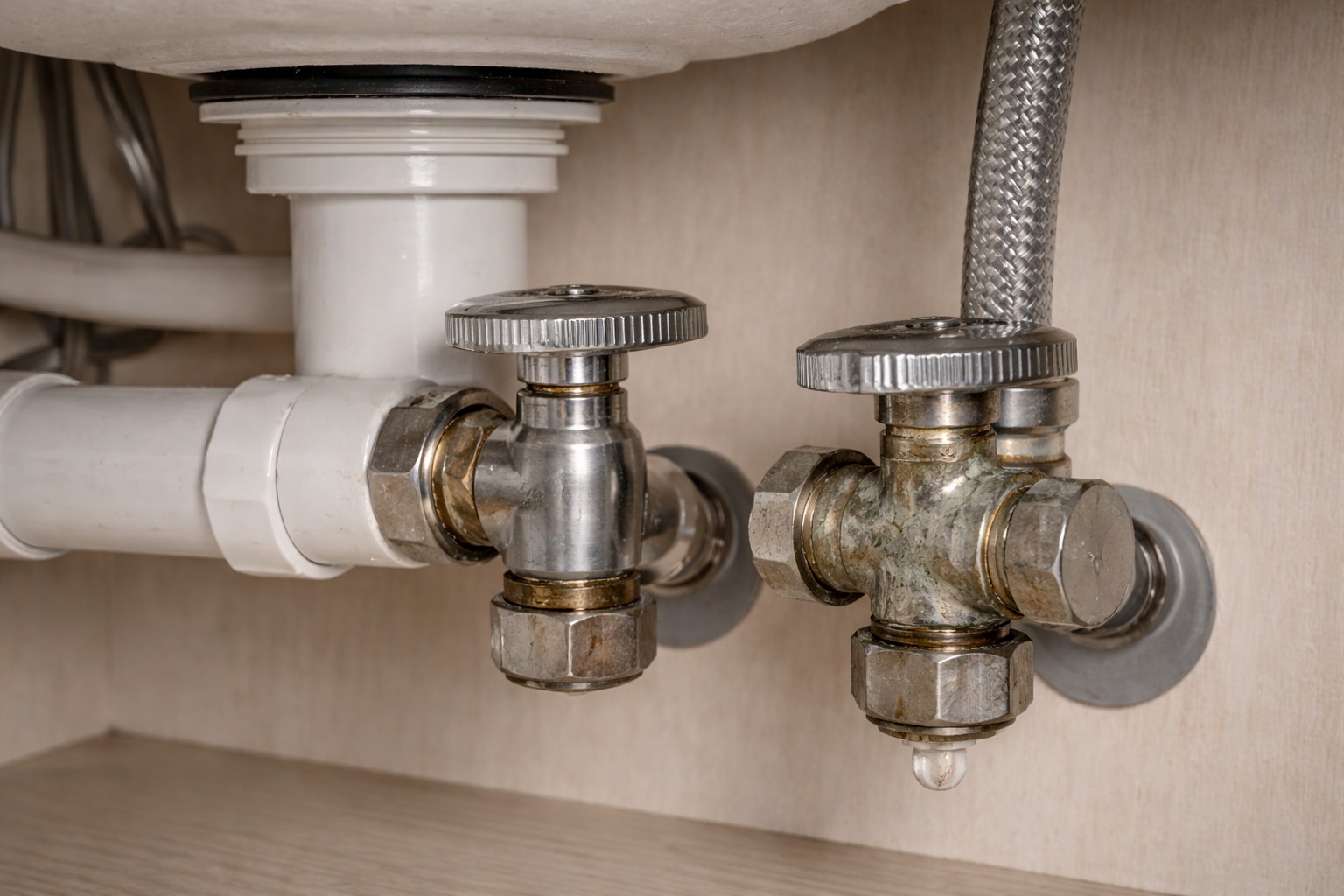
If snaking a drain left water pressure low at a sink or nearby fixtures, debris likely moved into a supply valve, aerator, or a shared branch line. Start by isolating the repaired component, measure pressure upstream and downstream of the repair point, then flush the affected lines. Those checks will usually show whether the issue is a simple clog in the supply or something that needs a valve or regulator repaired.
Why This Happens
Snaking a drain can dislodge hair, mineral scale, or grit. Most of that stays in the drain, but some can be pushed into the fixture area, especially if the snake disturbed a mixing valve, shutoff, or nearby recessed connection. If debris reaches an aerator, cartridge, or a shutoff valve, flow and pressure at that fixture can fall noticeably.
Other recent changes — for example a new fixture or a device installed on the same branch — can reveal weak spots in the plumbing. See Pressure drops after fixture replacement and Pressure issues after smart shutoff install for similar patterns to watch for.
Step-by-Step What to Do
1. Isolate the repaired component
- Close the local shutoff valve for the fixture you were working on. If there’s a multi-handle or a mixer, close the appropriate isolation valves.
- Open an adjacent fixture on the same branch to see whether pressure there is normal. This helps tell you if the problem is local or affects the whole branch.
2. Measure pressure before and after the repair point
- Attach a simple pressure gauge to a nearby hose bib or a test port upstream of the isolated valve to get a baseline (upstream pressure).
- Open the branch downstream of the isolation point (or remove the aerator) and measure pressure there as well (downstream pressure).
- Compare the two readings. A large drop indicates the issue is between those points — often a shutoff, valve, or cartridge that needs cleaning or replacement.
3. Flush affected lines
- With the isolation valves set appropriately, open the fixture and a nearby hose bib to flush water through the affected section for several minutes. This can clear loosened debris.
- Remove and inspect aerators and in-line screens; clean them of sediment.
- If flushing restores pressure, re-measure to confirm upstream and downstream pressures match expectations.
4. Inspect and, if needed, service valves or cartridges
- If pressure remains low downstream after flushing, consider removing the shutoff valve cartridge or the faucet cartridge for inspection. Replace worn or clogged parts.
- If you find damaged seals or heavy scale, replacement is usually the reliable fix rather than repeated attempts to clear the part in place.
What Not to Do
- Do not assume pressure will self-correct without flushing and inspection.
- Do not force a stuck valve repeatedly; that can break it and create a bigger leak and outage.
- Do not mix strong chemical drain cleaners with flushing attempts — they can harm fixtures and create hazardous conditions if residue remains in the lines.
When to Call a Professional
- Pressure drop affects multiple fixtures or the whole house after snaking.
- You find damaged valves, a broken cartridge, or you cannot locate the pressure loss point after measuring upstream and downstream.
- There are signs of a hidden leak (soft spot in walls, new stains) or if turning valves causes leaking you cannot control.
Safety Notes
- Turn off the main water only when necessary and be prepared for short outages. Know how to reopen it safely.
- Wear gloves and eye protection when inspecting debris and removing aerators or cartridges.
- If you use a pressure gauge, secure fittings properly to avoid spray. If unsure how to attach a gauge safely, call a plumber.
Common Homeowner Questions
- Q: How long should I flush the lines? — A: Run water for several minutes (3–5) until it clears and then recheck pressure.
- Q: Will replacing the aerator usually fix it? — A: Sometimes; aerators and screens clog easily and are quick to clean or replace.
- Q: Can I test pressure myself? — A: Yes, with an inexpensive gauge on a hose bib; measure upstream and downstream to pinpoint the problem.
Related Articles
If you’re troubleshooting a similar symptom, these guides may help:
For the full directory, see Pressure Loss After Plumbing Repairs.