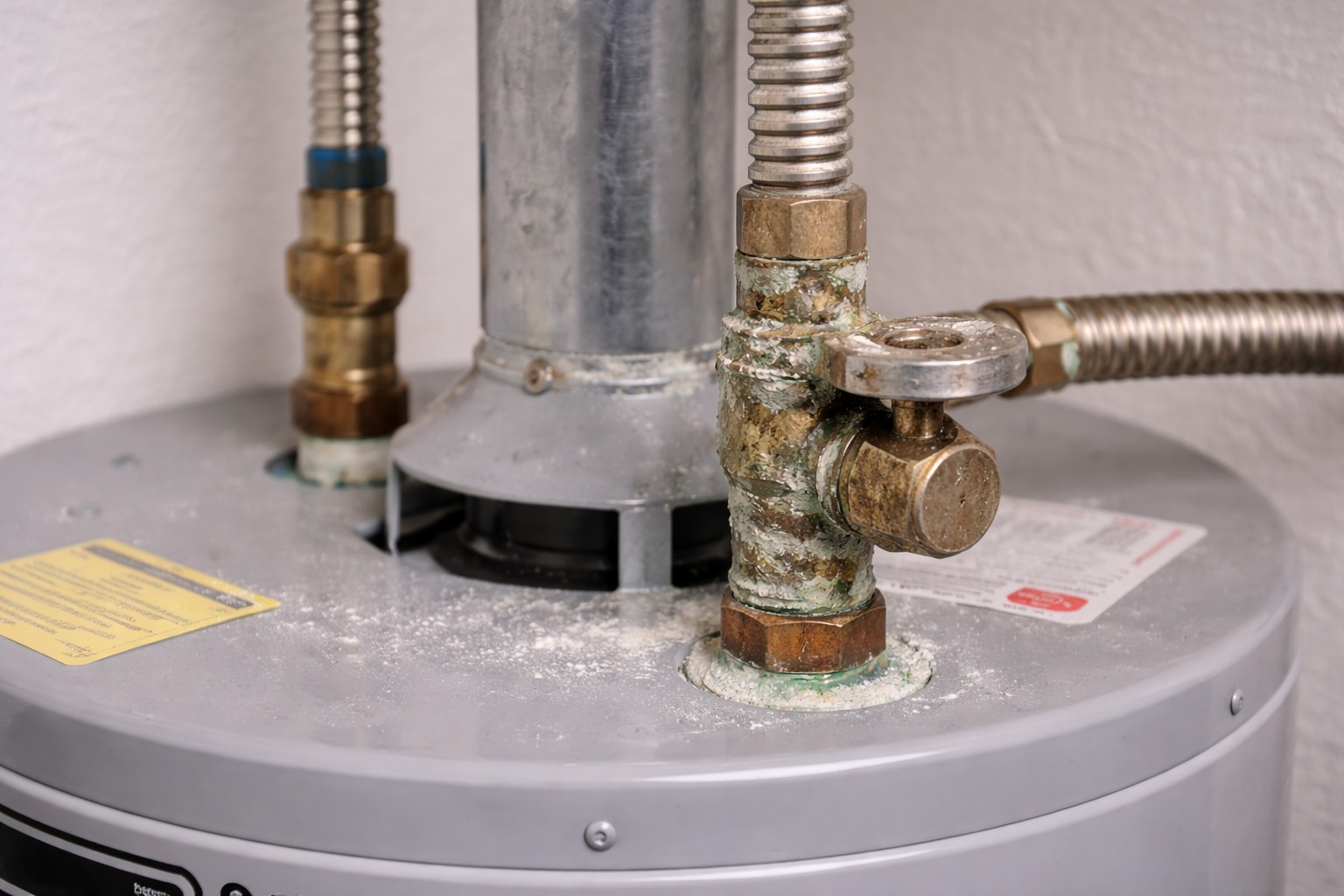
Quick Answer:
After a long hot shower you may see the home water pressure rise or pulse while the water heater cools back down. This is usually thermal expansion in a closed system — hot water expands, pressure spikes as the heater recovers, then the pressure drops. Stop all water use and watch the pressure gauge during the heater recovery to confirm. If the peak needle rises, address the expansion tank and system closure, then test again after another long shower.
Why This Happens
Water expands when heated. In an open system that expansion can push back into the supply, but in a closed system (one with a check valve, backflow preventer, or pressure-reducing valve at the meter) that extra volume raises house pressure. The water heater heats a large volume of water during a long shower; when you shut the shower, the heater continues or recovers, causing a brief expansion/recovery cycle that shows as a pressure spike or pulsing at the house gauge.
This process can also lead to related problems like piping noise or toilet fill issues; learning more about Thermal expansion causes hammering pipes and Thermal expansion causing toilet fill leaks can help you spot other signs around the house.
Step-by-Step What to Do
Step 1 — Recreate and observe safely
- Run a long hot shower to repeat the condition.
- When you finish, stop all water use in the house so no fixtures are changing flow.
- Watch the pressure gauge (ideally one with a max-needle) as the heater recovers. Note whether the peak needle moves upward during the recovery.
Step 2 — Confirm the pattern
- If you see the peak needle rise right after the shower, that matches the expansion + recovery cycle.
- Record what you saw — how high the spike went and how long it lasted.
Step 3 — Check whether the system is closed
- Look for a backflow preventer, check valve, or pressure-reducing valve near the meter or main shutoff. If present, the system is likely closed and will trap expansion.
- If you’re unsure, note whether household pressure rises when the street supply is off — if it does, treat the system as closed and proceed to the expansion tank checks.
Step 4 — Correct the expansion tank charge
- Turn off the cold feed to the water heater and relieve pressure at a faucet before working on the tank.
- Check the tank’s air charge with a tire gauge at the Schrader valve. The cold static system pressure (measured on the house gauge with no water use) should match the tank’s air pressure, typically 40–60 psi depending on your main pressure.
- If the tank’s air pressure is low, add air with a pump until it matches the system pressure (do this only if you are comfortable and the tank is accessible; otherwise call a pro).
Step 5 — Re-test after another long shower
- Run another long hot shower, stop all water use, and watch the maximum-needle gauge again.
- If the spike is gone or significantly reduced, the expansion tank charge and system checks fixed the issue.
What Not to Do
- Don’t immediately blame the shower cartridge or valve if the timing matches heater recovery. Confirm the pattern first before replacing trim or cartridges.
- Don’t open the water heater or pressure relief valve without isolating and depressurizing the system — that can be dangerous.
- Don’t add or remove air from the expansion tank while it’s full of water or under pressure; always relieve system pressure first.
When to Call a Professional
- If pressure spikes continue after you’ve recharged or replaced the expansion tank.
- If the pressure relief valve is dripping or discharging water, or if you can’t isolate or confirm a closed system.
- If you’re uncomfortable working on tanks or valves, or if the heater is gas-powered and requires inspection of burner or vent components.
Safety Notes
- Always relieve pressure before working on the plumbing: shut off the cold-water feed to the heater and open a hot faucet to drain pressure.
- When in doubt, call a qualified plumber. Working on pressurized systems or gas appliances carries risks.
- Wear eye protection when checking or adding air to an expansion tank and never tamper with temperature-and-pressure relief valves unless instructed by a pro.
Common Homeowner Questions
- Q: How high is too high for a temporary spike?
A: Short spikes a few psi above normal are common; sustained pressure above 80 psi needs attention. - Q: Can a weak expansion tank cause pulsing pressure?
A: Yes — a waterlogged or undercharged tank will let pressure spike and may cause pulsing as the system seeks equilibrium. - Q: Will turning down the water heater temperature help?
A: Lowering temperature reduces expansion slightly but is not a substitute for a properly charged expansion tank in a closed system.
Related Articles
If you’re troubleshooting a similar symptom, these guides may help:
For the full directory, see Thermal Expansion Pressure Behavior.