Quick Answer:
If pressure is normal with one fixture open but falls when a second opens, the system is simply meeting demand and the supply or control devices are limiting flow. Test with fixtures isolated, watch the meter while you open each tap, and check the pressure-reducing valve (PRV) or main supply before assuming a bad faucet.
Why This Happens
Most homes have a single supply line that splits to multiple fixtures. When one fixture runs alone it may draw within the home’s available flow. Add a second fixture and the combined demand can exceed what the pipe, PRV or meter will deliver at the set pressure. Common causes include partially closed valves, a PRV set too low, pressure loss at the meter during higher flow, or short-duration events like a water heater refilling. See how these situations affect temperature and pressure in related issues like Water temperature changes with pressure drop and Pressure weakens when water heater refills.
Step-by-Step What to Do
Test pressure with fixtures isolated
- Close or turn off every tap, appliance and outdoor hose bib so only the fixture you are testing is open.
- Measure pressure at that fixture with a simple in-line pressure gauge or a faucet-mounted gauge. Note the reading.
- Close that fixture, open the second fixture alone and repeat the measurement.
- If each fixture alone shows normal pressure but both together drop, the problem is demand-related rather than a single fixture failure.
Observe meter flow patterns
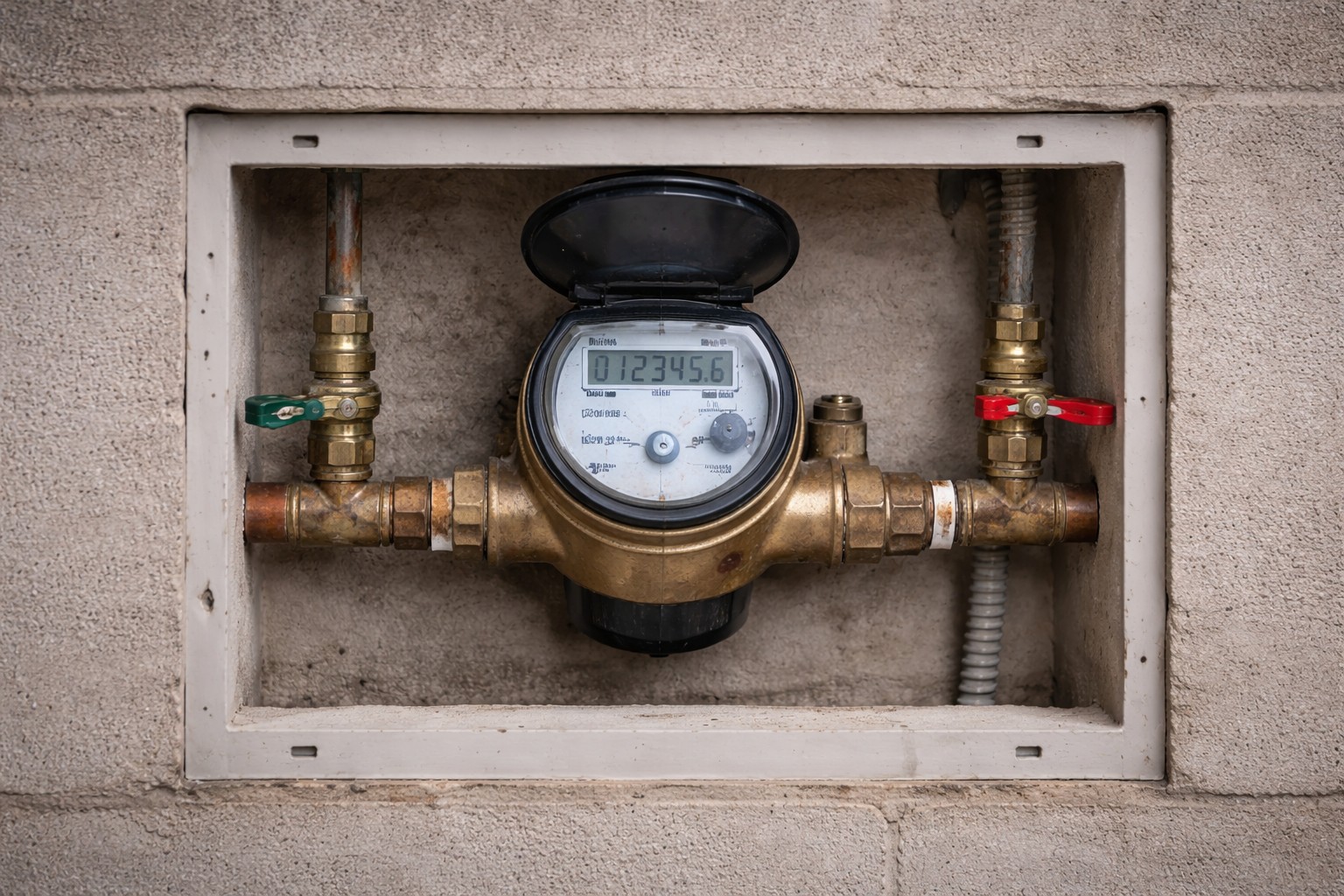
- With the house still isolated, watch the water meter while opening one fixture, then the other. Look for a big jump in meter flow or rapid needle movement when the second fixture opens.
- A sharp increase in meter flow that coincides with the pressure drop indicates the supply or PRV is reaching its flow limit.
Confirm PRV setting
- Locate the pressure-reducing valve near the main shutoff. Many PRVs have a gauge or an adjustment screw with a small gauge nearby. Note the pressure reading with no flow and with one and two fixtures running.
- If the PRV is set unusually low or if pressure falls under even modest flow, the PRV may need adjustment or replacement. If you are not comfortable adjusting it, note the readings and move to the next step or call a pro.
Check valves and piping
- Make sure the main shutoff and any supply stop valves are fully open. Partially closed valves can limit flow when demand increases.
- Consider whether multiple fixtures share a small branch line or a clogged aerator. Swap fixtures (if possible) to see if the pattern follows a pipe run or a specific fixture.
Final test
- With valves verified and PRV checked, run both fixtures again and watch pressure and the meter. If the drop persists, document the pressures and meter behavior to share with a technician.
What Not to Do
- Do not assume fixture failure when pattern is demand-related. If pressure is fine with a single tap, the fixture is often not the root cause.
- Do not repeatedly force or overtighten the PRV adjustment screw without knowing the expected pressure range — improper adjustment can create other problems.
- Do not tear into complex equipment (such as whole-house boosters or the water meter) unless you have experience; this can make the issue worse or breach local utility rules.
When to Call a Professional
- Pressure drops significantly even with low demand or single fixtures running.
- The PRV appears faulty (pressure does not recover when closed or is erratic) or you cannot locate the cause after the basic checks.
- You observe leaks, banging pipes, or a meter pattern that suggests a supply-line restriction or municipal issue.
- You need the PRV replaced or pressure tested against local codes.
Safety Notes
- Turn off the main water supply before removing or replacing valves and always relieve pressure first by opening a low faucet.
- If you smell gas or see electrical hazards near plumbing work, stop and contact the appropriate utility or a licensed professional.
- Wear eye protection when working near water under pressure and avoid standing in flooded areas around electrical equipment.
Common Homeowner Questions
- Why is pressure fine at one tap but low at two? Short answer: combined demand exceeds available flow or the PRV/pipe is limiting delivery.
- Could the water heater cause this? Yes. A refilling heater or recirculation pump can change flow patterns and temporarily lower pressure.
- Can I fix a PRV myself? You can check and make small adjustments, but replacement or major adjustments are best left to a plumber if you’re unsure.
For more related articles, see the Pressure Drops When Multiple Fixtures Run hub.