Quick Answer:
If you lose water pressure once a day, it’s usually tied to a scheduled event or a repeating device. Start by installing a pressure gauge with a max-needle, log the exact time of the drop, and compare that time to irrigation schedules, weather events, or PRV/pump cycles. Use tests that isolate upstream (utility) vs downstream (your property) causes to find the source.
Why This Happens
A single daily pressure failure often points to a repeatable trigger rather than a random equipment fault. Common causes include:
- Automatic irrigation systems or timed outdoor valves that run once a day.
- Utility work, scheduled flushing, or a pressure-reducing valve (PRV) that cycles on a set schedule.
- Weather-related issues such as leaks or main stress during storms.
- A well pump or pressure tank control cycling at the same time each day.
Compare the event time to known activities. If the timing matches lawn watering or multiple appliances, it could be the same situation described in Pressure cuts out during heavy use. If the timing lines up with rain or storm windows, consider the scenario in Pressure drops only during storms.
Step-by-Step What to Do
1. Install a pressure gauge with a max-needle
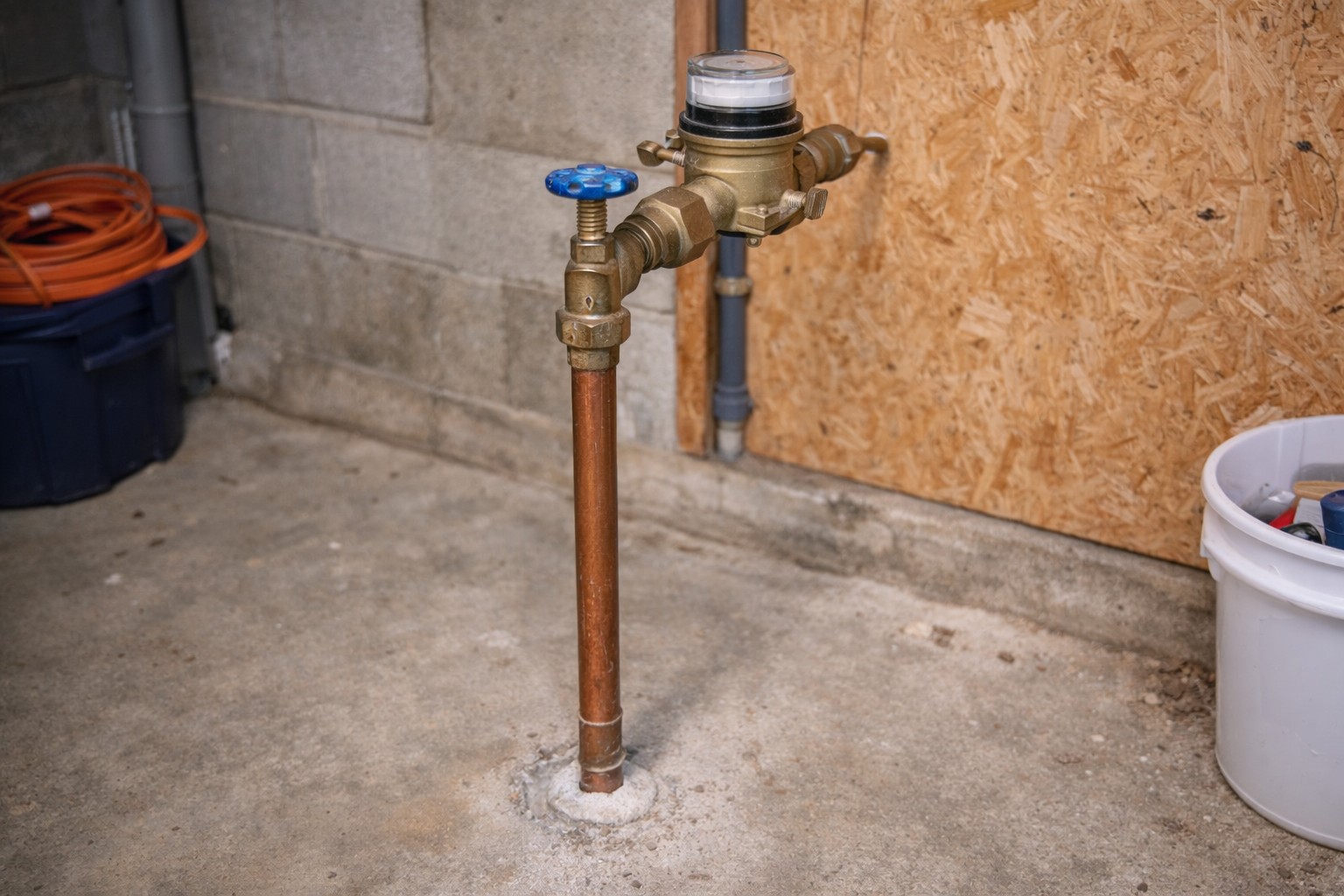
Fit a simple house inlet pressure gauge that includes a max-needle (a needle that holds the highest or lowest reading). Place it at the main shutoff or just after the meter so it records supply pressure. The max-needle helps capture short dips you might otherwise miss.
2. Log times and correlate with likely triggers
Keep a short log for several days noting the exact time the pressure falls and how long it lasts. Compare those times to:
- Irrigation controller schedules and automatic valve cycles.
- Appliance use (hot water heater, dishwasher, washing machine) or heavy simultaneous use.
- Local weather events or storm timing.
- Any known utility maintenance windows.
3. Isolate upstream vs downstream causes
To determine whether the issue is on your side or the utility side:
- Close the main shutoff valve for your property (the valve after the meter) to stop all use from your side. If the pressure still drops while your shutoff is closed, the problem is upstream (utility or main). If the pressure stays steady with your shutoff closed, the problem is downstream (inside your property).
- Ask a neighbor if they see the same drop at the same time — a shared event points upstream.
- Turn off irrigation zones and timed devices temporarily. If the failure disappears, you have a downstream timed system causing it.
4. Check PRV and pump cycling
If your house has a pressure-reducing valve (PRV) or a private well pump, watch their behavior. The installed gauge will show if the PRV is dropping pressure regularly or if a pump controller is cycling at the same time each day. Small, regular drops often point to PRV settings or a tank that needs servicing.
5. Inspect scheduled systems and visible leaks
Look at irrigation controllers, timers, and any automatic valves. Check for visible leaks around irrigation lines, hoses, or the water meter area. Even a slow leak that opens briefly (failed valve or controller) can cause a repeatable pressure dip.
6. Record results and refine the test
Keep the gauge and logs for several cycles. Once you identify a pattern you can either adjust the device schedule, replace a failing valve, or report a confirmed upstream problem to the water utility.
What Not to Do
- Do not assume intermittent loss is a fixture issue—track system-wide behavior first.
- Don’t replace parts like a PRV or pressure tank before you confirm the pattern with a gauge and isolation tests.
- Don’t tamper with the water meter or utility-owned equipment; contact the utility if you suspect they are the source.
When to Call a Professional
- When testing shows the issue is upstream and you see repeated low pressure or sudden no-water events — contact the water utility.
- If you identify PRV failure, pump/tank problems, or persistent leaks you cannot locate or fix safely — call a licensed plumber.
- If you detect signs of a main break, major leak, or contaminated water — call the utility and a pro immediately.
Safety Notes
- Shutting valves is safe, but avoid forcing stuck valves. If a valve won’t operate easily, stop and call a pro.
- Do not break meter seals or tamper with utility-owned equipment.
- Turn off electrical equipment before working in flooded areas and keep tools dry.
- If you smell gas or see a large leak, evacuate and call emergency services and the utility.
Common Homeowner Questions
- Why does it only happen once a day? A scheduled device or repeating cycle (irrigation, PRV, pump timer, or utility work) usually causes a daily event.
- How long should I track it before calling for help? Track for several occurrences (3–5 days) with a gauge and log before calling a pro unless the drop is severe or causes no water.
- Can I fix this myself? You can often find the cause by logging and isolating systems, but replacement of PRVs, pump work, or utility-main issues should be handled by professionals.
Related Articles
If you’re troubleshooting a similar symptom, these guides may help:
For the full directory, see Intermittent Pressure Loss Events.