Quick Answer:
If pressure dropped after curb stop work, the first step is to record and isolate the behavior. Install a gauge with max-needle on the service line, watch how pressure changes when irrigation starts, during storms, or when a PRV cycles, and use simple isolation tests to determine if the problem is upstream (utility/curb stop) or downstream (home equipment or leaks).
Why This Happens
Curb stop work can introduce debris, air, or partial valve seating that changes how the system holds pressure. Work at the curb stop can also affect a pressure reducing valve (PRV) or let mineral grit into the line, causing intermittent blockage or a valve that sticks. City supply changes during storms, irrigation cycles, or automatic PRV adjustments can reveal a weak point introduced by the curb stop work.
Step-by-Step What to Do
1. Put a reliable gauge in place
Install a gauge with max-needle where you can see it easily — typically at the service line after the curb stop or at the first clean-out before any home devices. The max-needle records the highest pressure reached, which helps match events to pressure swings.
2. Establish a simple log
Over 24–48 hours record pressure readings and note times of known triggers: irrigation cycles, heavy rain or storms, and any known PRV activity. Use the max-needle and a quick manual check to capture peak and low readings.
3. Correlate drops to triggers
Actively test common triggers: turn irrigation on and off, note pressure during a heavy rain event if possible, and watch the PRV (if accessible). Correlate each pressure drop to these events to see if the failure lines up with a specific trigger. This step targets the common causes like faulty irrigation valve control or PRV cycling.
4. Isolate upstream vs downstream causes
To isolate upstream vs downstream causes, turn off all indoor shutoffs and close any irrigation valves. If pressure still falls with everything closed, the issue is upstream (curb stop, meter, or utility). If pressure holds with house and irrigation isolated, the problem is downstream inside the property. Repeat the test after briefly opening the curb stop to confirm behavior.
5. Inspect visible components
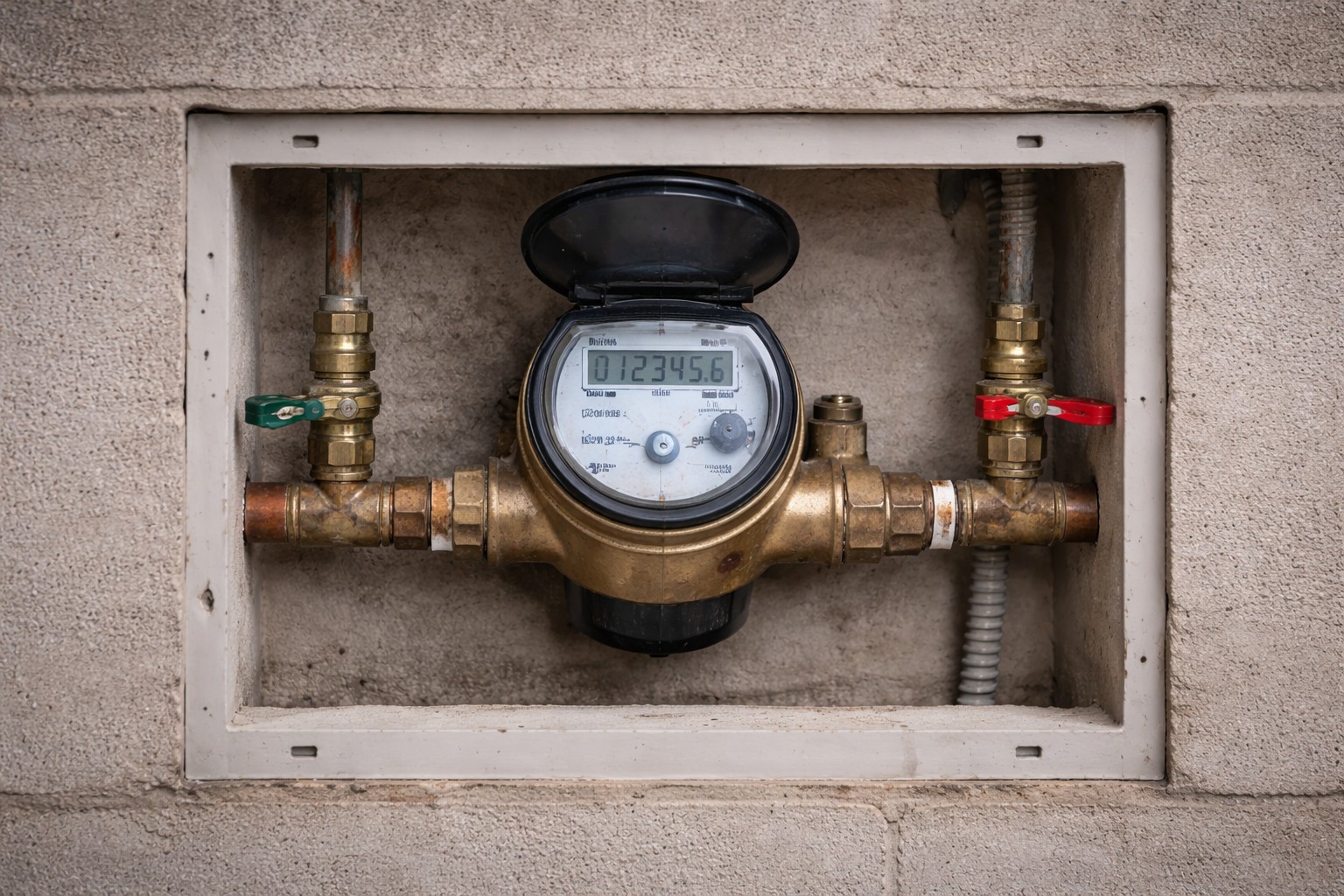
Check the curb stop for proper seating and any signs of leakage. Inspect the PRV, meter fittings, and any visible service-line joints for wet spots or mineral buildup. Do not disassemble sealed utility components — just look for obvious problems you can safely see.
6. Decide next steps
- If the gauge shows drops tied to irrigation: test irrigation valves and control wiring, and watch for short cycling.
- If drops are tied to storms or city cycles: contact the water utility with your logged times and gauge readings.
- If drops occur with everything isolated: a leak or faulty curb stop/valve may need professional service.
What Not to Do
- Do not assume intermittent loss is a fixture issue—track system-wide behavior first.
- Do not repeatedly force the curb stop or try to free up a stuck valve by brute force; that can break the valve or cause a flood.
- Do not remove the meter, service saddle, or any utility-sealed part yourself.
- Do not use random chemical treatments in the service line to “clear” debris; that can harm components and is ineffective for mechanical problems.
For more on related symptoms, see Pressure cuts out randomly and Pressure loss when irrigation starts.
When to Call a Professional
- Persistent or worsening low pressure despite isolation tests.
- Obvious leaks, wet spots, or water pooling near the curb stop or meter.
- Inability to isolate upstream vs downstream cause, or if you suspect the curb stop, meter, or PRV needs repair.
- If digging or excavation is required — call a licensed plumber and utility locators first.
Safety Notes
- Always shut off the main where safe before working on visible fittings. If you’re unsure which valve controls the service, stop and call a pro.
- Call your utility to locate and mark buried lines before digging. Damaging a service line is hazardous and expensive.
- Wear eye protection and gloves when working near valves and fittings in case of sudden water release.
- Don’t try to repair or tamper with utility-owned equipment; contact the utility or a licensed plumber.
Common Homeowner Questions
- Why did pressure drop right after they worked on the curb stop?
Debris, trapped air, or a valve that isn’t fully seated are common immediate causes; gauge logs help confirm this. - Can I fix it myself if the gauge shows pressure holds when isolated?
If pressure holds with the house isolated, the issue is likely in irrigation or an indoor device and you can troubleshoot those systems safely; stop if you’re unsure. - How long should I log pressure before calling someone?
A 24–48 hour log that includes any irrigation runs and any storm events is usually enough to identify patterns for a pro to act on.
Related Articles
If you’re troubleshooting a similar symptom, these guides may help:
For the full directory, see Intermittent Pressure Loss Events.