Quick Answer:
Brief pressure losses that last only a few seconds are usually caused by transient events: a valve or irrigation zone opening, pressure regulator (PRV) cycling, a brief utility main fluctuation, or trapped air moving through the line. Start by installing a gauge with a max-needle and logging when the dips happen. Correlate pressure drops to specific triggers (irrigation, storms, PRV cycles), and isolate upstream vs downstream causes before assuming a single fixture is at fault.
Why This Happens
- Automatic valves and irrigation systems open for short periods and can momentarily drop system pressure.
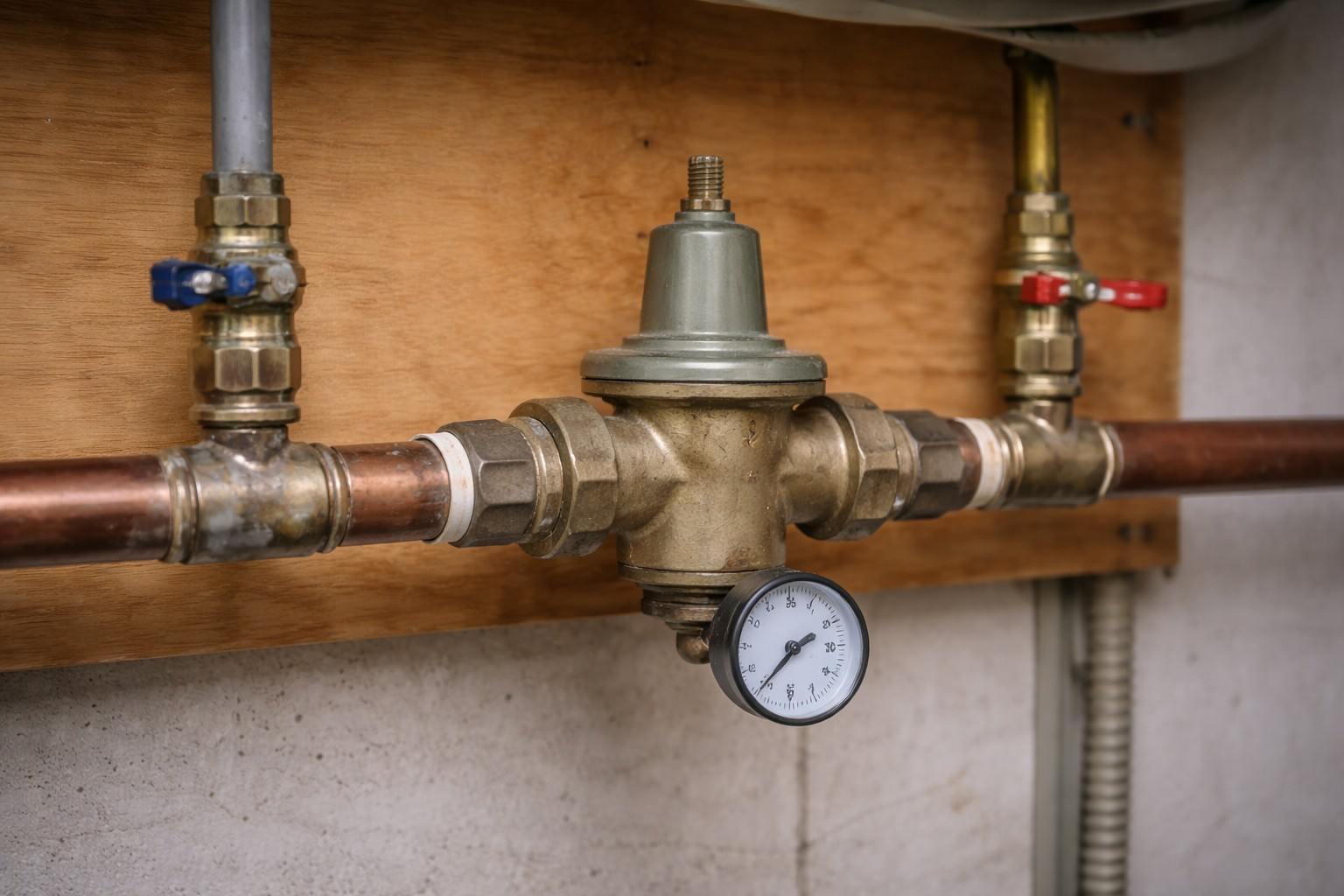
- PRVs that are sticking or worn can snap open/closed briefly while trying to hold a set pressure—this is a short-cycle issue.
- Utility-side events such as brief maintenance, pressure balancing after a fire flow, or a storm-related surge can cause momentary interruptions.
- Air pockets or a rapid pressure wave (“water hammer”) can make pressure look like it disappears for a second before returning.
If the event pattern looks unusual for your house, compare it to other reports or related symptoms. For example, if it only happens once a day, see Pressure failure only once per day. If the dips follow notifications from a shutoff device or water monitor, see Pressure failure after smart shutoff alerts.
Step-by-Step What to Do
1) Install a gauge with a max-needle
- Fit a pressure gauge with a max (or max/min) needle at a convenient test point: an exterior hose bib near the main shutoff, or at the house side of the meter/PRV. The max-needle catches rapid spikes and helps record brief dips.
- Note the normal static pressure and the baseline when nothing is running. A recorded plunge on the gauge at the moment of the event proves it’s a system-wide pressure change, not just a single faucet.
2) Record and correlate events
- Keep a simple log for several days: time, duration of the dip (estimated), weather, and what systems were running (irrigation, dishwasher, well pump, etc.).
- Actively correlate pressure drops to specific triggers (irrigation, storms, PRV cycles). Check irrigation controller runtimes, rain or storm timing, and any smart valve alerts.
- If you have a smart shutoff or leak detector, note its alerts alongside the gauge data—this helps differentiate device-triggered shutoffs from real pressure loss.
3) Isolate upstream vs downstream causes
- Test at two points: at the meter/PRV (upstream) and at a house-side outlet (downstream). If the meter-side gauge shows the same dip, the problem is upstream (utility or main). If only the house-side gauge dips, the issue is inside the property.
- Shut off the irrigation and any large automatic fixtures, then re-check. If the dips stop when the irrigation is off, a zone valve or controller is the likely cause.
- Close the main house shutoff (if safe and legal to do) and observe the meter-side gauge—this tells you if the utility is having brief interruptions independent of your house plumbing.
4) Check PRV behavior and pressure tank/pump cycling
- A failing PRV can snap and create short losses. If you suspect the PRV, note whether the regulator cycles at the same times as the dips. Slightly adjusting the PRV or replacing a worn spring or diaphragm may be needed.
- Well systems: rapid pump short-cycling or an issue with the pressure tank can look like momentary drops. Watch for pump starts that match the dips.
5) Collect evidence for utility or pro
- Keep time-stamped gauge readings, a simple event log, and notes on any correlating activities. This documentation speeds up diagnosis by a plumber or the water utility.
What Not to Do
- Do not assume intermittent loss is a fixture issue—track system-wide behavior first.
- Don’t replace parts randomly (PRV, pump) without isolating where the problem is; you may waste parts and money.
- Don’t attempt to remove or tamper with the water meter or do any work on the utility side—contact the utility if the meter or service line looks involved.
When to Call a Professional
- When you cannot isolate upstream vs downstream causes, or if the meter-side gauge shows dips (utility involvement).
- If you observe repeated PRV failures, rapid pump cycling, or a suspected leak that could cause property damage.
- If electrical equipment (pump controls, smart shutoffs) is acting up in ways you can’t safely diagnose—get a qualified plumber or electrician.
Safety Notes
- Shut off components and depressurize lines before doing any hands-on work. Wear eye protection when opening fittings.
- Do not dig near the meter or service without contacting utility locators first.
- Avoid working on the meter or service line; only the utility or licensed technician should handle those parts.
Common Homeowner Questions
- Why does it only happen for a second? Short events are usually caused by a fast-acting valve, PRV snap, or a transient on the utility main—not a slow leak.
- Will a plumber need to be there when the dip happens? Not always. A gauge with max-needle and accurate logs often lets a pro diagnose the timing remotely; sometimes they will want to observe a repeat event.
- Can I fix it myself? You can do the gauge, logging, and basic isolation tests yourself; repair of PRVs, pumps, or utility-side issues should be left to a licensed pro.
Related Articles
If you’re troubleshooting a similar symptom, these guides may help:
For the full directory, see Intermittent Pressure Loss Events.