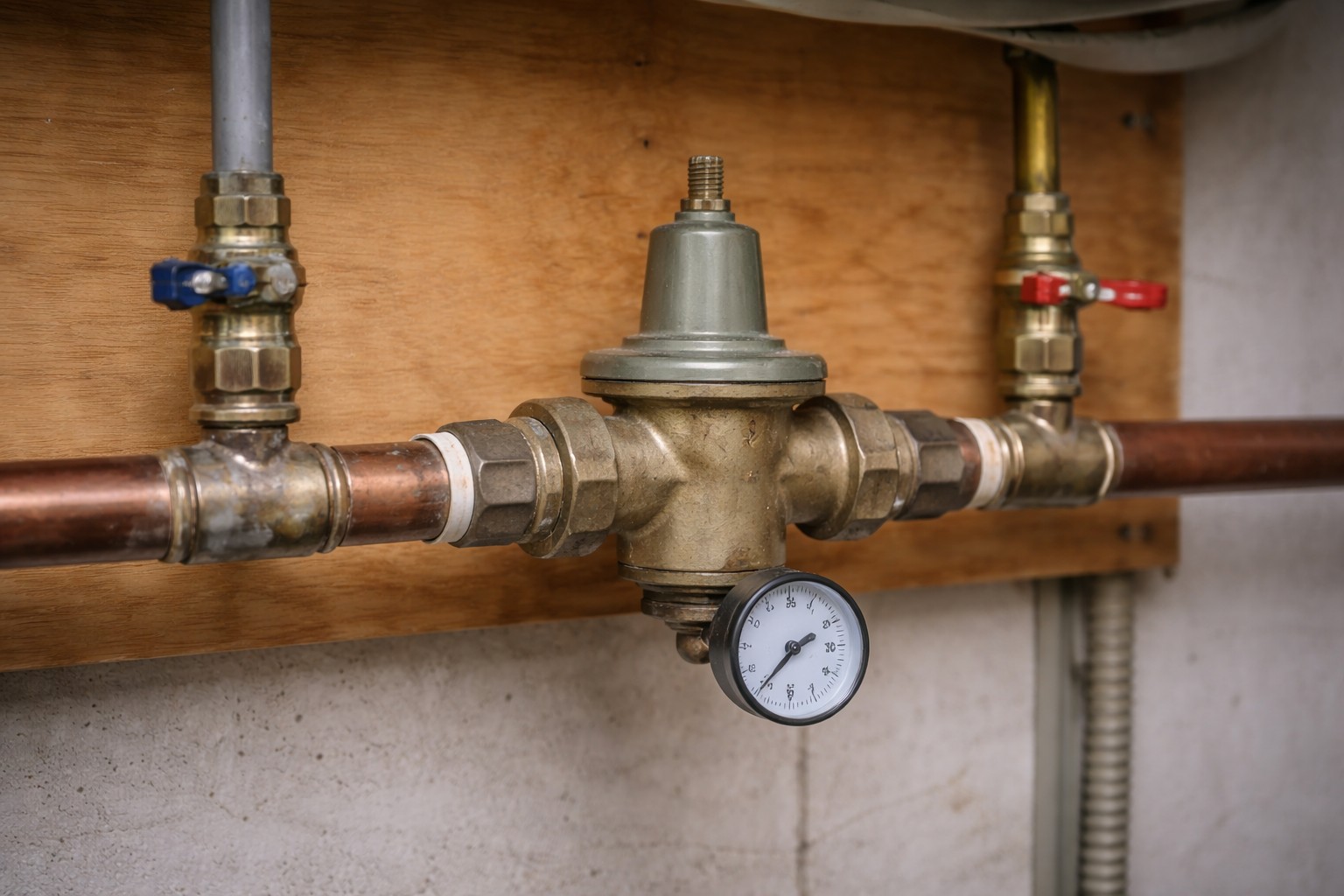
Quick Answer:
Short, repeated pressure cuts caused when a pressure-reducing valve (PRV) cycles are usually the PRV reacting to a transient upstream change—like a brief surge, sediment popping loose, or a timed irrigation/storm event. The immediate homeowner steps are: install a gauge with a max-needle, log when the cuts happen and what else is running outside the house, and isolate whether the issue is upstream of the PRV or downstream.
Why This Happens
- PRVs are spring-and-seat devices that reposition to hold downstream pressure. When they move quickly they can momentarily reduce flow or create short dips while they reseat.
- Upstream events (pump starts, city main pressure swings, municipal work, or debris) can trigger the PRV to respond suddenly.
- Irrigation systems or large irrigation cycles can change supply pressure and cause the PRV to hunt or cycle.
- Sediment or scale can stick the valve until a pressure change frees it; if you track timing you may see patterns such as **Pressure intermittent after sediment events**.
Step-by-Step What to Do
Step 1 — Fit a pressure gauge with a max-needle
- Install a gauge with a max-needle on the downstream side of the PRV. The max-needle records peak pressure so you can see brief spikes even if you miss them by eye.
- If possible, put a second gauge upstream of the PRV to compare upstream and downstream readings during an event.
Step 2 — Record times and possible triggers
- Keep a simple log for several days noting exact times of pressure cuts and what else was running outside the house (irrigation zones, sprinklers, city utility work, storm onset).
- Look for repeating patterns tied to systems such as sprinklers or daily schedules.
Step 3 — Correlate drops to specific triggers
- Compare your log to the gauges. If the upstream gauge stays steady while the downstream dips during a cycle, the PRV is reacting during that trigger.
- Match events to irrigation cycles, storms, municipal outages, or known pump starts. If the behavior lines up with a local event, you can focus troubleshooting there.
Step 4 — Isolate upstream vs downstream causes
- Temporarily shut off the house-side isolation valve (downstream) and monitor the upstream gauge. If upstream still swings, the problem is incoming supply.
- Close the meter or main supply (when safe) and see if the PRV still cycles; if it stops, the issue is upstream. If it continues while the supply is isolated, look for downstream leaks, timed devices, or equipment hunting on the house side.
- If you see a steady time-based failure (same time each day) this clue can point to irrigation or a scheduled device — for example **Pressure failure only once per day**.
What Not to Do
- Do not assume intermittent loss is a fixture issue—track system-wide behavior first.
- Do not repeatedly force or pry the PRV open while the system is pressurized. That can damage the valve and create leaks.
- Do not replace the PRV without confirming the cause; a new PRV will not fix upstream supply swings or timed irrigation-related pressure changes.
When to Call a Professional
- If you cannot isolate the event to upstream supply or a downstream device after basic testing.
- If pressure drops are large enough to interrupt appliances (water heater, boilers) or if you see active leaks when the PRV cycles.
- If gauges show rapid, repeated cycling (hunting) that you cannot dampen by adjusting the PRV or if sediment appears to be repeatedly blocking the seat—these often need a plumber to inspect, clean, or replace the valve and check upstream filtration.
Safety Notes
- Always relieve downstream pressure before removing any valve parts. Turn off isolation valves and open a faucet to drain pressure.
- Wear eye protection when working on pressurized piping—water can spray unexpectedly.
- If you shut off the incoming supply, notify household members and appliances that depend on water (sump pumps, irrigation controllers) so they are not damaged or left unattended.
Common Homeowner Questions
- Can a PRV cause short, harmless dips? Yes—minor, brief dips are common when the PRV reseats; they become a concern when they are frequent or deep.
- Will replacing the PRV always fix it? No—only if the PRV itself is failing. If upstream supply or timed irrigation is the trigger, replacing the valve won’t stop the cuts.
- Should I monitor before calling a pro? Yes—installing gauges and noting patterns often clarifies whether the problem is upstream, PRV-related, or due to a schedule like irrigation.
Related Articles
If you’re troubleshooting a similar symptom, these guides may help:
For the full directory, see Intermittent Pressure Loss Events.