Quick Answer:
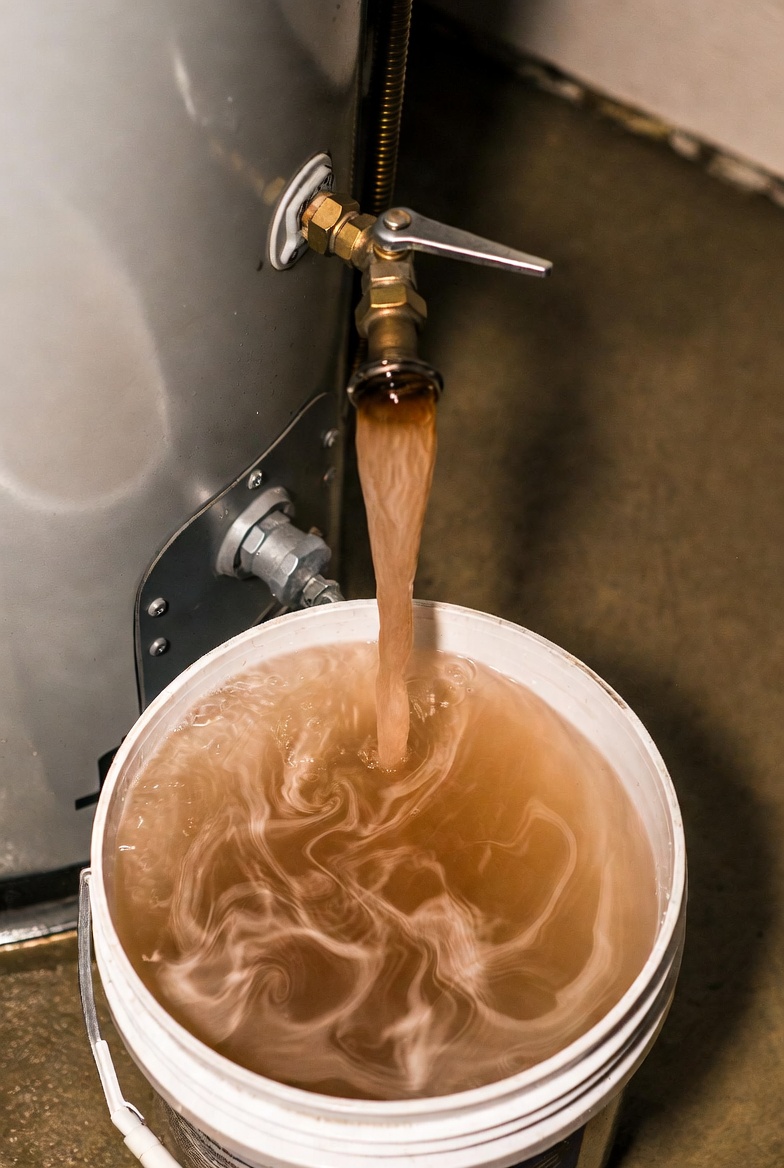
Draining the water heater can stir up sediment and bacteria, making the hot water smell stronger for a short time. Drain several gallons, flush the tank, and retest the odor. If the smell persists after flushing and testing, call a plumber.
Why This Happens
- Sediment that has settled on the bottom of the tank can be disturbed when you open the drain valve. That releases trapped water and odor into the system.
- Bacteria that thrive in warm, low-oxygen water may be settled near the bottom; flushing moves them into the hot water lines temporarily.
- An anode rod reacting with water (especially if it’s corroded) can produce rotten-egg or metallic smells when disturbed.
Step-by-Step What to Do
Step 1 — Check where the smell appears
- Run cold water and hot water separately at the same sink. If only hot water smells, the heater is the likely source.
- Note whether the smell is rotten-egg (sulfur), metallic, or musty — that helps diagnostics.
Step 2 — Drain several gallons and retest odor
- Turn off the water heater power first: switch off the breaker for electric units or set a gas heater to pilot. This prevents element damage and reduces scald risk.
- Attach a hose to the drain valve and direct water to a safe drain area. Open a hot-water faucet inside the house to allow the tank to flow more easily.
- Drain several gallons (not necessarily the whole tank) and then close the valve. Run hot water at a tap to flush lines and check the smell.
- Repeat draining a few more gallons if the odor is still strong. Often a couple of partial flushes clears disturbed sediment and bacteria.
Step 3 — If flushing helps, follow up
- If the smell improves, run the hot tap for a few minutes to clear remaining water in the pipes.
- Consider scheduling a full tank flush and inspection when convenient to remove accumulated sediment.
Step 4 — If odor persists after flushing
- Check the anode rod; a failing rod can cause smells and may need replacement.
- Raise the thermostat slightly (with caution about scalding) or disinfect the tank only if recommended by a professional. For some taste issues, see Hot water tastes bitter.
- If it looks like sediment is confined to hot lines or the heater, read about Sediment only in hot water for related steps and causes.
What Not to Do
- Do not stop heater drains while the odor persists. Stopping flushing midway can leave disturbed material suspended and prolong the smell.
- Do not run the heater without water in the tank or operate electric elements if the tank has been drained enough to expose elements.
- Do not add chemicals to the tank unless a licensed pro recommends and performs the treatment.
When to Call a Professional
- The smell remains after several flushes and basic checks.
- You detect a strong sulfur (rotten-egg) odor that could indicate bacterial growth or a reaction with the anode rod.
- You’re uncomfortable turning off gas or power, working with the drain valve, or replacing parts like the anode rod.
Safety Notes
- Always turn off power to the water heater before doing any draining or repairs: breaker off for electric; set gas to pilot for gas units.
- Hot water can scald. Open faucets slowly and avoid standing where hot water may spray you.
- Wear gloves and eye protection when handling the drain hose or working near the valve.
Common Homeowner Questions
- Why does the smell get worse right after draining?
Flushing stirs up sediment and bacteria that were settled, releasing odors until they’re flushed out. - How long should I flush before the odor goes away?
Often a few partial drains with a couple of minutes of running hot water will clear it; persistent odor after that merits a pro. - Can I fix this myself or do I need a plumber?
If basic flushing helps, you can manage routine flushes yourself; call a plumber for persistent smells, anode rod issues, or full disinfection.
For more related articles, see the Hot-Water-Only Contamination and Odor Problems hub.