Quick Answer:
When water rises in the tub or shower only while the shower is running, it’s usually a partial clog in the shower branch or a venting issue. Stop running the shower to avoid overflow, remove the strainer and hair screen, try a shallow snake, and test whether the problem appears after a few minutes of flow. If the steps below don’t clear it quickly, call a plumber—this can be a sign of a deeper blockage or a vent/main-line problem.
Why This Happens
Common causes:
- Hair and soap build-up in the shower drain or P-trap restricts flow at higher water volumes.
- A clogged branch that serves only the shower (other fixtures stay OK until flow exceeds the restriction).
- Vent problems or a partially blocked main sewer line can cause slow drainage and gurgling as air struggles to escape or enter the system.
- Sometimes a nearby toilet or another fixture affects the shower if they share a drain branch—flushing can change pressure and make the tub rise.
If the pattern is intermittent or sudden, see Drain Drains Fine Then Suddenly Stops. If you hear gurgling or bubbling when water runs, check this symptom against Drain Makes a Loud Glugging Sound at Night.
Step-by-Step What to Do
1. Stop using the shower and prevent overflow
Turn off the water and remove any standing water if you can with a bucket or cup. Avoid running other fixtures until you know if the drain is clearing.
2. Remove the strainer and hair screen
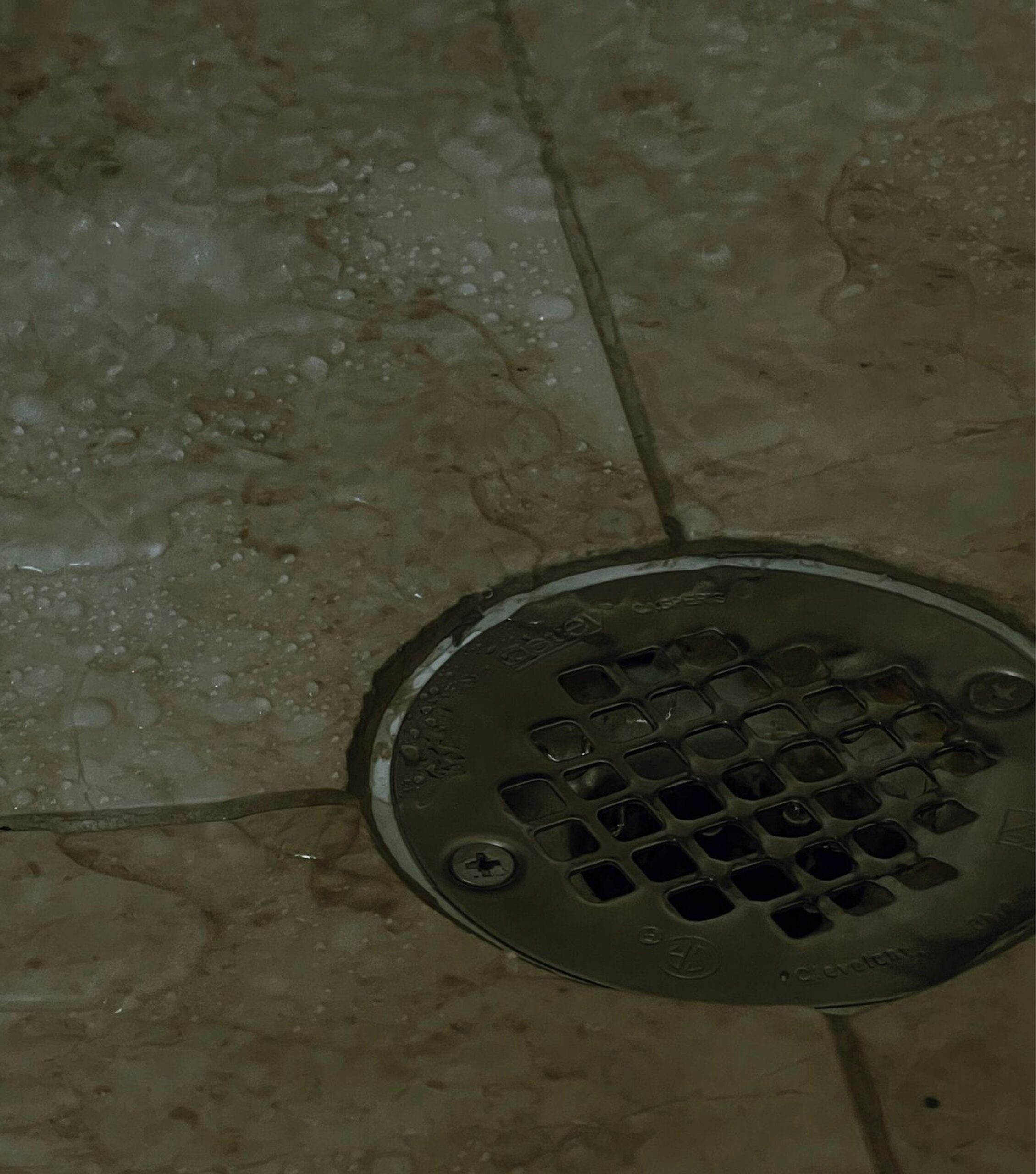
- Lift out the drain strainer or hair screen and clear visible hair and gunk by hand (use gloves).
- This often restores reasonable flow if the clog is at the top of the drain.
3. Try a shallow snake
- Use a 3–6 foot manual shower/snakes (drain auger) and feed it down the drain to break up hair and soap scum near the trap.
- Retract slowly while turning to bring debris up. Run water briefly to see if flow improves.
4. Watch for timing — does the backup start after a few minutes?
- Run the shower at a normal rate and see whether the rising occurs immediately or only after a minute or two. If it takes a few minutes, the flow may be slowly overwhelming a partial clog farther down.
- If the blockage appears only after minutes of use, it’s more likely in the branch or main line rather than the top of the trap.
5. Test the overflow path
- Pour water into the tub overflow opening (or fill to the overflow level) to check whether water escapes through the overflow as expected. If overflow fills too, that shows a deeper drain or main-line restriction.
- Don’t forcefully pour large volumes that might worsen the backup; small controlled tests are enough to observe behavior.
6. Verify venting symptoms and check nearby fixtures
- Listen for gurgling noises when you run the shower—this indicates air trying to move through a blocked vent or clogged line.
- While someone runs the shower, flush the nearby toilet. If the toilet’s response changes the tub behaviour, the fixtures share a problem branch or the main line is compromised.
What Not to Do
- Do not plunge aggressively if the drain has a pop-up/overflow without sealing the overflow—this can force water and waste into places it shouldn’t and make things worse.
- Don’t use boiling water on PVC if you’re not sure the pipe material or the joint condition—boiling water can soften or warp plastic pipes.
- Avoid pouring large amounts of chemical drain cleaner; these rarely clear hair clogs and can damage pipes or create hazardous fumes.
When to Call a Professional
- Multiple fixtures back up, or the problem returns quickly after you clear it.
- There’s a sewage smell, sewage backing up elsewhere, or slow drains throughout the house.
- Gurgling noises or toilet behavior while using the shower indicate venting or main-line trouble—call a plumber who can inspect with a camera and clear the line safely.
Safety Notes
- Wear gloves and eye protection when removing hair or using tools.
- If you use mechanical tools, follow manufacturer safety instructions and avoid electric tools near standing water.
- Ventilate the room if you’ve used any chemicals; avoid mixing drain chemicals with other household cleaners.
- If sewage is present, stop work and call a pro—contaminated water is a health hazard.
Common Homeowner Questions
- Why does the tub only back up when I run the shower? A partial clog or venting issue lets low flows pass but can’t handle continuous higher flow from the shower.
- Can I fix this myself? Often you can by removing the strainer, clearing hair, and using a shallow snake; persistent or repeated clogs need a pro.
- Will chemical drain cleaners solve it? Not usually for hair and soap clogs, and they can damage pipes or be unsafe; mechanical removal is safer and more effective.