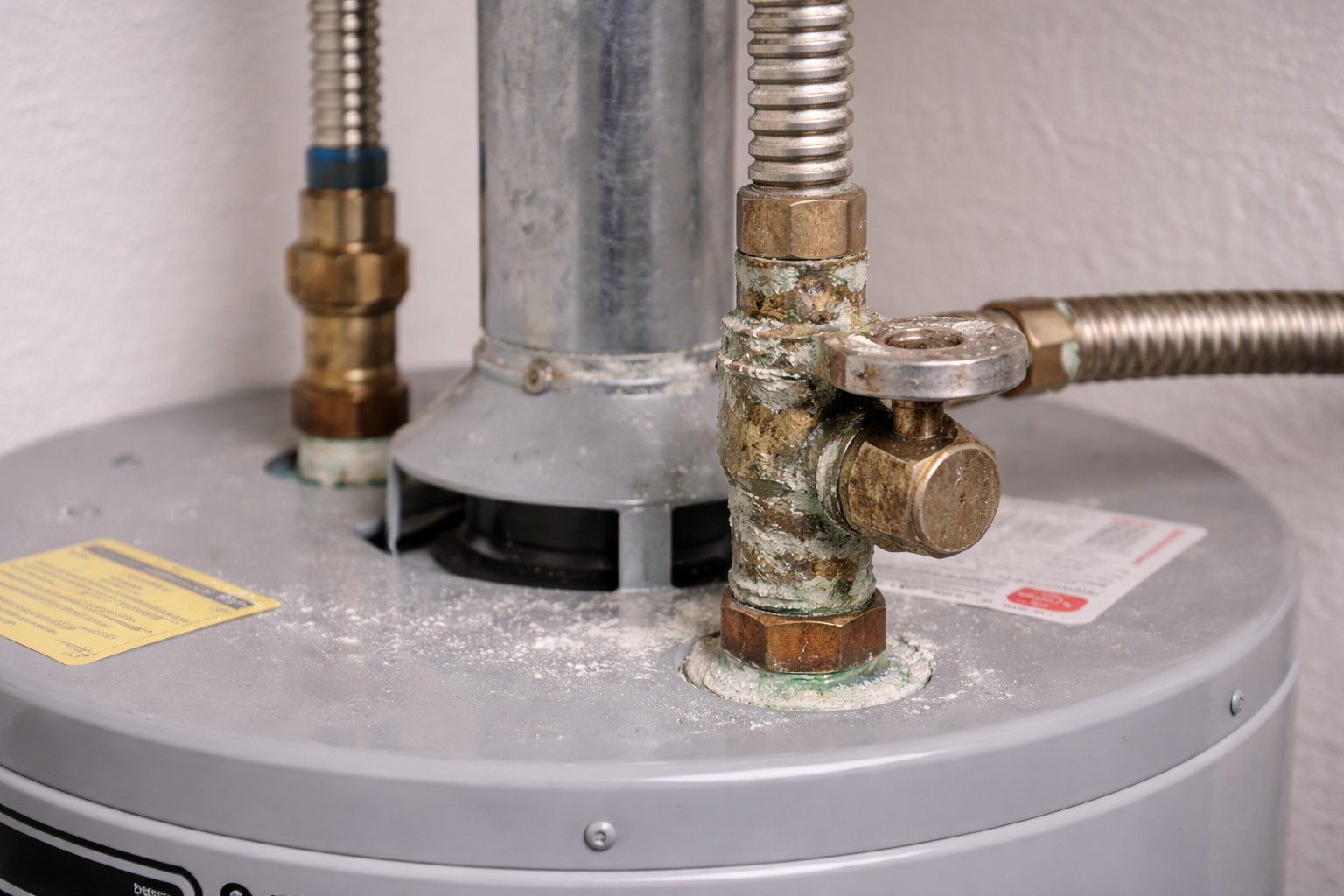
Quick Answer:
Momentary pressure surges when the water heater starts are usually caused by thermal expansion, a check valve or PRV (pressure‑reducing valve) trapping water, or a pump/circulation device kicking on. Install a pressure gauge, time the surge with the heater cycle, and isolate PRV/backflow devices to find the source. Short-term fixes include adding or recharging an expansion tank or replacing a worn check valve; persistent or high‑pressure events need professional attention.
Why This Happens
- Thermal expansion: cold water heats and expands, increasing system pressure inside a closed system.
- One‑way valves and PRVs: a stuck check valve, backflow preventer, or a PRV can trap expansion pressure and produce a brief spike.
- Pumps and controllers: recirculation pumps or electronic controls can start suddenly and create pressure transients or water hammer.
- Appliance interactions: some fixtures — especially toilets and washing machines — react strongly to quick pressure changes, making the problem obvious there first.
Step-by-Step What to Do
1) Time the surge
- Watch when the surge happens: just as the burner or element comes on, when it cycles off, or when a timer/re-circulation pump runs.
- Note duration and frequency: a millisecond spike is different from a repeating pulse that lasts seconds.
2) Install a pressure gauge
- Install a simple test gauge at the main cold-water inlet or on the water heater inlet. A temporary screw-on gauge on a hose bib is usually fine.
- Log readings during idle and during the heater cycle so you can compare baseline vs. spike pressure.
- If you see rapid jumps, that documentation helps diagnose the cause or show a pro the problem.
3) Isolate PRV and backflow devices
- Identify any PRV, check valve, or backflow preventer on the incoming supply.
- Temporarily isolate or bypass those devices (where code and property setup allow) to see if spikes stop. Restore devices immediately after testing if isolation violates local code.
- This tells you whether trapped pressure upstream is the culprit.
4) Check the expansion tank and pressure relief
- Tap the expansion tank: a hollow sound usually means it has air; a solid sound often means it’s waterlogged.
- Verify the tank pre‑charge (air pressure) matches your system’s static pressure or recharge it per manufacturer instructions.
- Inspect the temperature and pressure (T&P) relief valve for leaks or signs of repeated discharge.
5) Observe fixtures and appliances
- Run the heater a few cycles and watch appliances. A loud toilet refill or a washer/ice maker misbehaving points to downstream impacts — see Toilet refill slams after pressure surge for an example symptom to track.
- Check for loose fittings, old supply hoses, or failing appliance valves that amplify surges.
6) Record and compare
- Use the gauge readings and timing notes to compare surges against the heater’s on/off events.
- If your gauge shows repeated spikes, that’s meaningful evidence — see Pressure gauge shows sudden jumps as a symptom to document.
7) Mitigate temporarily
- If surges are damaging fixtures, add water hammer arrestors near affected fixtures and consider a larger or recharged expansion tank.
- Replace worn check valves or PRVs if tests point to them. If unsure, stop and call a pro rather than making permanent changes to gas/electric hookups.
What Not to Do
- Do not ignore surges—they cause fixture and appliance failure.
- Do not tamper with gas or electric connections on the water heater unless you are qualified.
- Do not remove safety devices (T&P valve, pressure relief) as a test method — those protect you from dangerous overpressure.
- Do not leave temporary bypasses or isolation in place long term if they defeat required backflow protection or code-mandated devices.
When to Call a Professional
- Repeated high-pressure spikes that you can’t isolate or fix with an expansion tank or simple valve replacement.
- Visible leaks, bulging pipes, dripping T&P valve, or any sign of a compromised water heater tank.
- Concerns about code compliance when isolating or bypassing PRVs/backflow preventers — these often must be handled by a licensed plumber.
- If the problem involves gas hookups, electrical components, or you’re not comfortable with the required tests.
Safety Notes
- Turn power (electric) or gas (pilot/main) to the water heater off before working on valves or fittings that could spray hot water.
- Relieve system pressure before removing gauges or loosening fittings—open a nearby cold tap slowly to vent pressure.
- Never block or cap the T&P relief valve outlet. If the valve is discharging, that is a sign of excessive pressure or temperature and needs prompt attention.
Common Homeowner Questions
- Why did the noise start only after a new water heater? New heaters can change system pressure dynamics; a previously marginal expansion tank or valve may now show the issue. Short answer: new equipment can reveal existing weaknesses.
- Can I fix it by myself? You can perform initial checks: install a gauge, time the event, and test an expansion tank. Stop and call a pro for valve replacements, gas/electrical work, or if pressure stays high.
- Is a one-off spike dangerous? A single tiny spike is less concerning than repeated or high spikes. Repeated surges can damage fixtures and should be addressed.
Related Articles
If you’re troubleshooting a similar symptom, these guides may help:
For the full directory, see Pressure Spikes & Sudden Surges.