Quick Answer:
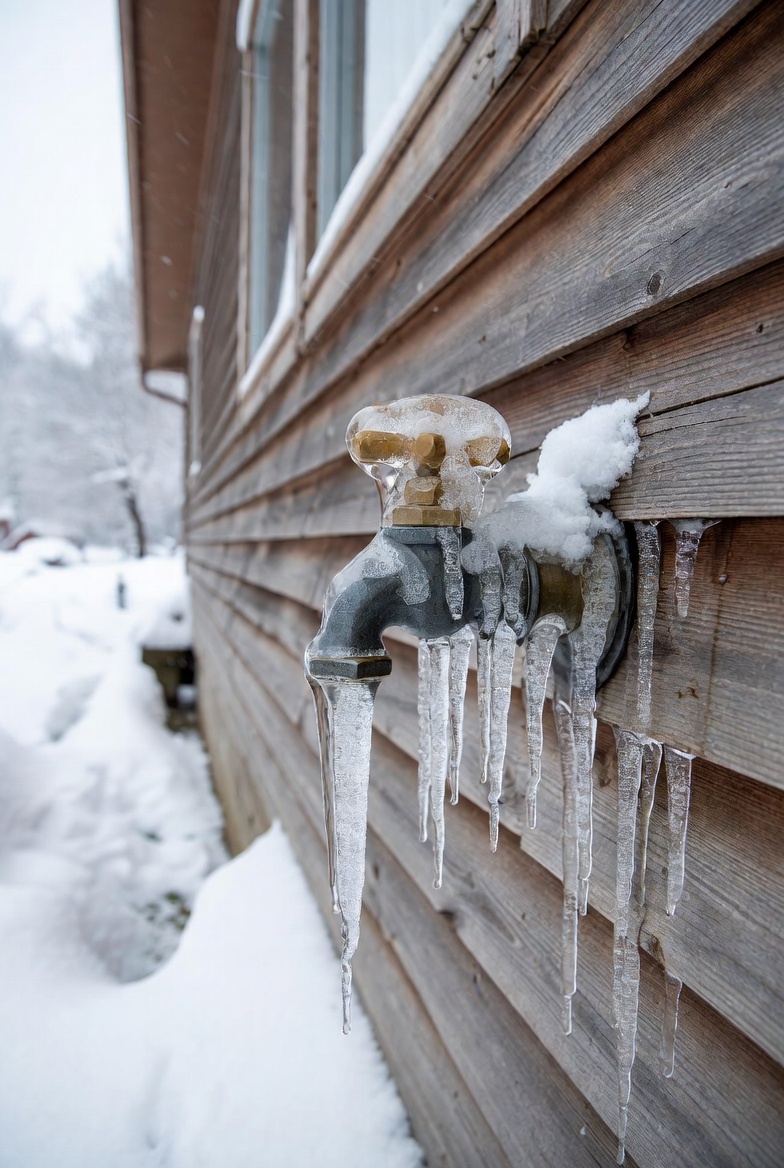
Intermittent loss of water in very cold weather usually means a short section of the supply is freezing when temperatures drop. Start by checking exposed pipes and the hose bib for poor insulation and cold air paths. If you need immediate protection, open the inside isolation valve just enough for a slow trickle, and wrap the spigot and nearby piping with insulated covers. For recurring issues, read guidance on No water after winter and No water only at backyard spigot.
Why This Happens
Water in a short stretch of pipe can freeze when that stretch is colder than the rest of the system. Pipes routed through unheated wall cavities, gaps around the spigot penetration, or exposed runs on the outside of the house are most vulnerable. The freeze may be intermittent because daytime temperatures, sunlight, or a brief increase in flow can thaw the ice and restore water briefly.
Step-by-Step What to Do
1. Inspect exposed sections for inadequate insulation
Look at the spigot, the supply stub-out, and any visible piping outside or in the basement/crawlspace. Pay attention to thin, torn, or missing insulation and to the connection where the pipe enters the wall.
2. Check for air leaks at wall penetrations
Cold drafts through gaps around the spigot or pipe allow very low temperatures into the cavity. From inside the house or basement:
- Feel for drafts around the spigot penetration.
- Seal gaps with low-expansion foam or caulk appropriate for the gap size.
3. Trace the supply routing for areas prone to cold drafts
Follow the pipe from the spigot inward: it may run through an exterior wall, a rim joist, or along the outside of a foundation. Identifying the cold section helps you target insulation and sealing.
4. Wrap the bib and nearby piping with insulated covers
Use a commercial insulated spigot cover and pipe wrap or foam insulation on the nearby piping. Make sure covers are rated for outdoor use and are snug but not compressing the pipe in a way that traps water.
5. Open the inside isolation valve slightly to allow a small trickle
If freezing is likely during a short cold snap, open the upstream isolation valve slightly so a slow, steady drip flows from the spigot. That moving water is less likely to freeze. Keep the hose disconnected so water drains away. Do not run a full flow — aim for a thin, steady stream or drip.
What Not to Do
- Avoid using heat lamps or high-wattage devices near siding or the spigot; they are fire hazards and can damage siding and trim.
- Do not leave open flames, torches, or portable space heaters against the house to thaw pipes.
- Do not repeatedly ignore a freezing problem — call a pro when freezing repeats despite insulation or if you find frozen bulged piping inside walls.
When to Call a Professional
Call a plumber if:
- The line freezes repeatedly even after you add insulation and seal drafts.
- You see bulging or cracked pipe material inside a wall or after thawing, or you suspect a burst.
- You can’t locate the supply routing or the valve you need to adjust.
Safety Notes
- Using a small trickle to prevent freezing is common, but avoid leaving large flows running unattended to prevent waste and flooding risks.
- Never use open flame or high-heat devices near siding or insulation; these can start fires or cause structural damage.
- If a pipe bursts, shut off the main water supply quickly and call a professional to limit water damage.
Common Homeowner Questions
-
Q: Will a slow drip always prevent freezing?
A: A slow drip often prevents freezing in short exposed runs, but it’s not a permanent fix for poorly insulated or repeatedly cold areas. -
Q: Can I just wrap the outside spigot and ignore the wall?
A: Wrapping helps, but you must also seal drafts and insulate the pipe route; otherwise cold air will find the weakest spot. -
Q: Is finding bulged pipe inside a wall an emergency?
A: Yes — bulged pipe indicates ice pressure or damage. Shut off water and call a professional promptly.
More in this topic
For more related fixes and similar symptoms, see No Water at Exterior Faucets.