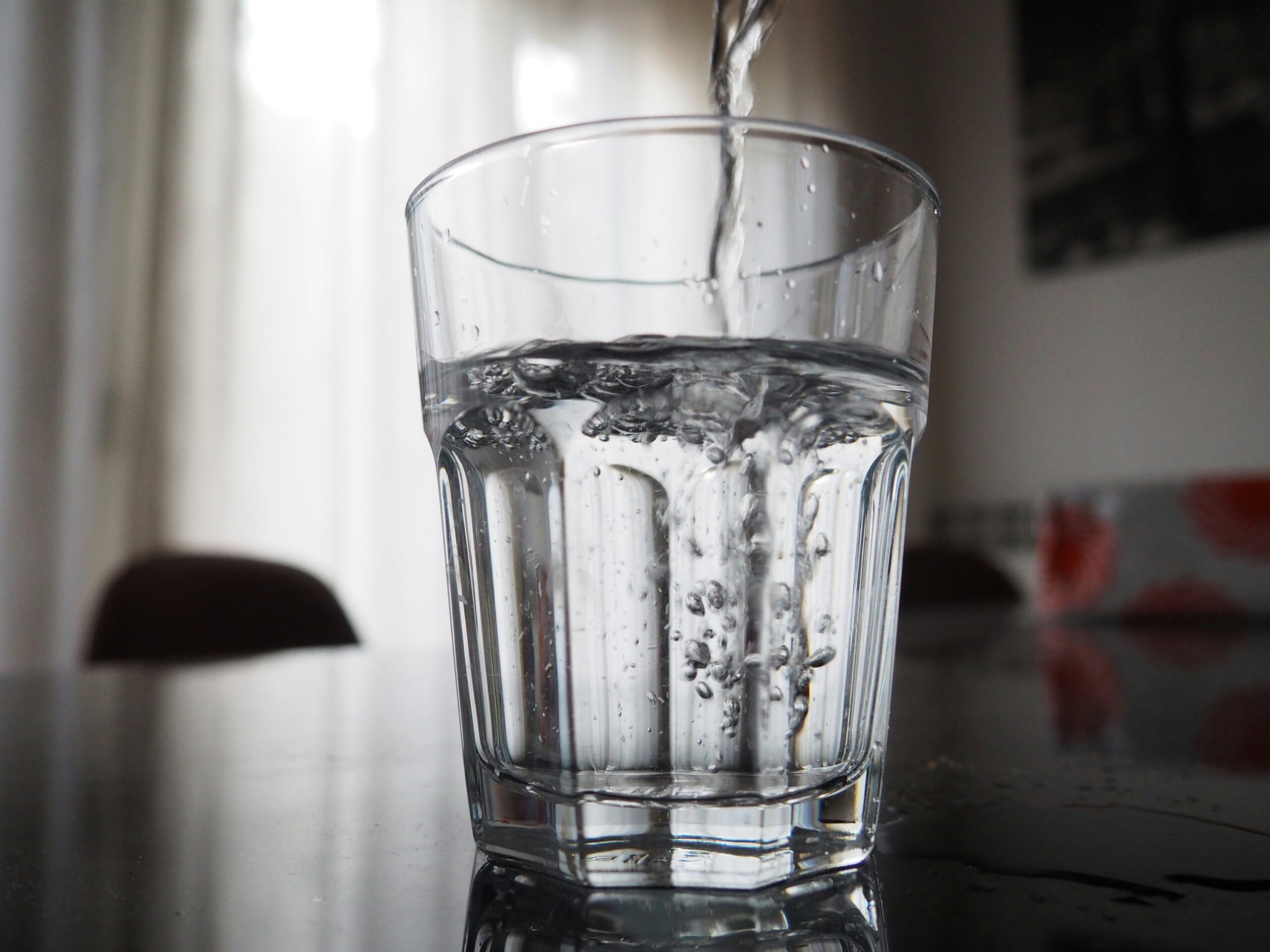
A milky glass that clears quickly can show rising air bubbles. The useful record is how the appearance changed, rather than a claim that a one-minute glass has excluded contamination.
Water use before investigation
For a new, unexplained water-quality change: do not deliberately taste the water. Use bottled water or another known-safe supply for drinking, food preparation, teeth brushing and ice while you contact the supplier. Follow the actual local notice for other uses. Boiling does not make chemically contaminated water safe, and clear appearance or a fading odor does not certify safety.
The photograph is an illustration; it does not record clearing over time or identify the contents of your water.
For the complementary question: Milky Water in Glass but Clears Quickly: Observation and Lab Questions — Separate an existing visual observation from the specific questions and collection instructions needed for laboratory evidence.
Record the existing conditions
- The existing glass and ordinary outlet/setting, including vessel or cleaner history.
- Whether bubbles rose and disappeared, or material remained or settled.
- Any actual notice or completed work, without producing more hot or cold comparison glasses.
What this can establish
Air appearance can be ordinary and harmless when identified by the provider. Bottom-up clearing does not analyze dissolved contaminants or exclude a coexisting problem. A hot-only, multi-fixture or floor pattern does not uniquely map the source or prove heater condition.
A practical next step
- For familiar explained air conditions, use the actual supplier’s ordinary-use advice; testing is not mandatory for every bubble.
- For a new unexplained change, report existing observations and obtain appropriate use and collection instructions before flushing.
- Do not taste water, handle residue, collect hottest water or use an unknown outside faucet to classify the change.
- Separate a discussion photo/glass observation from a laboratory sample. Required bottle, site, preservation and timing depend on the analyte and question.
- If it followed a heater refill or pipe work, obtain the completed service/commissioning record. A clear glass does not prove those tasks were completed.
Ask before sampling or flushing
Ask the actual supplier or a state-certified drinking-water laboratory which questions, locations, bottles and collection/handling conditions fit the event. Do this before collecting, flushing, removing screens or changing treatment: some investigations need an undisturbed first draw. A photo, stored drinking glass or accumulated residue may help describe a concern but is not automatically a valid laboratory water sample.
Any appropriate restoration must follow the actual supplier, installer or product directions, with sound fully assembled plumbing, the specified outlet and sequence, safe temperature, a drain able to receive the discharge and continuous attendance. Stop for leakage, backup or another hazard. Do not substitute a universal short flush, longer purge or clear appearance for those requirements.
Is clear, odorless water always suitable to drink?
Those sensory features do not certify every substance or lift a notice. Use the actual source/use advice rather than deliberately tasting, boiling unknown water or waiting for a sensory endpoint.
Related guides
- Particles after a heater refill
- White buildup after pipe replacement
- Bubbles versus retained material
Topic directory: White Particles, Cloudy Water, or “Milky” Water.