Quick Answer:
If your house has low flow and pressure but individual fixture screens (aerators, shower heads) are clean, test at an outdoor hose bib near where the service enters the house. If that hose bib also shows low pressure/flow, the restriction is likely on the meter or curb-side strainer. Record simple flow or pressure readings and contact your water utility to request a meter-side inspection.
Why This Happens
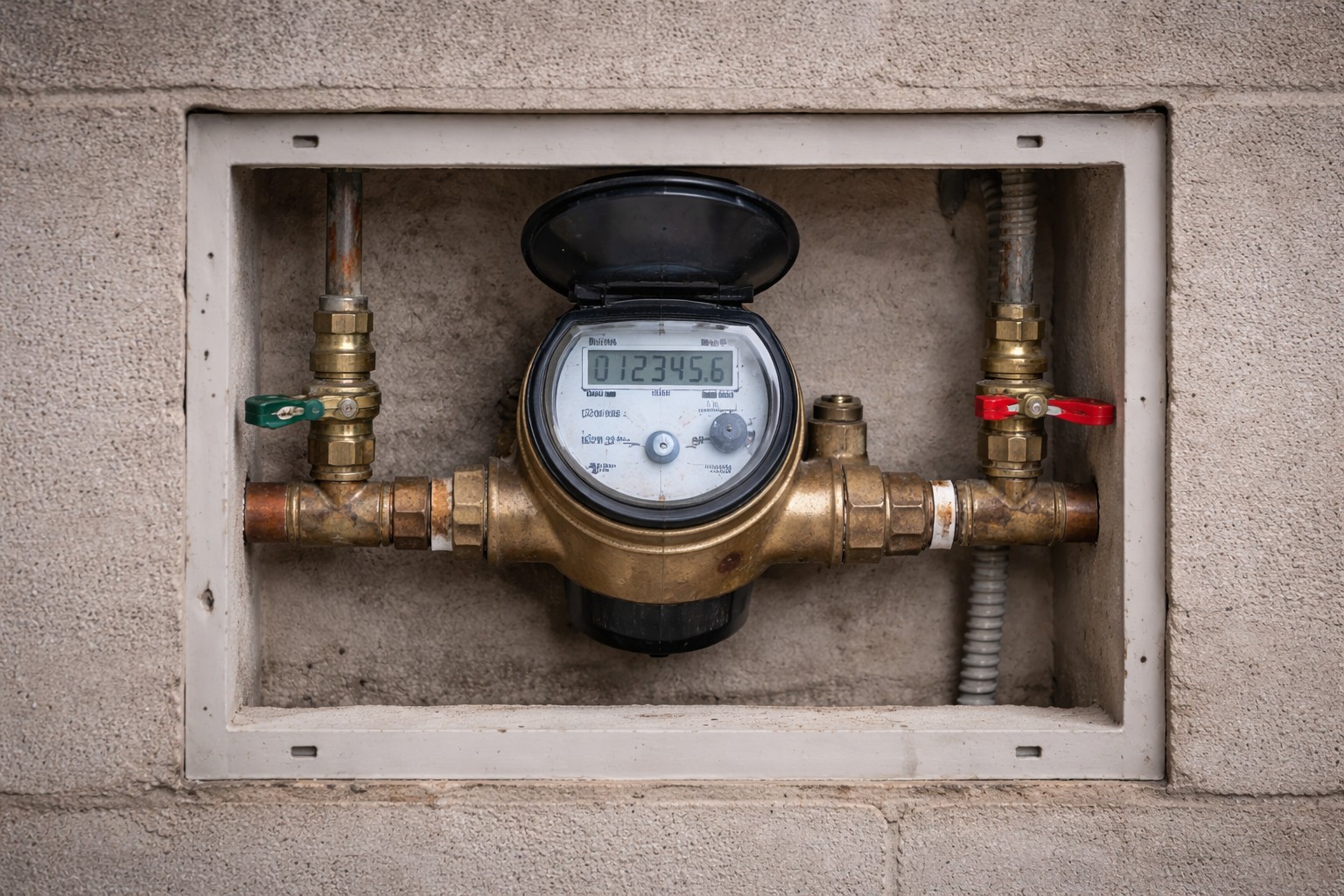
Small particles, sand, corrosion flakes or mineral sediment can collect on the inlet screen or y‑strainer at the meter or curb stop. That screen is meant to catch debris before it reaches your plumbing, but if it becomes clogged the whole house will see reduced flow and pressure even though individual fixtures look clean. Problems from nearby work or a recent repair can show up as particles downstream; see Particles in water after pipe replacement for related issues. In other cases, sediment can affect valve or float operation in fixtures — for example, causing a slow toilet fill — which is covered in Sediment causing toilet fill failure.
Step-by-Step What to Do
1. Confirm fixtures are really clean
- Remove aerators from faucets and check for debris. Rinse them and run the tap briefly.
- Run showers and other outlets with screens removed or cleaned to make sure they flow normally when cleared.
- If only one fixture is still weak after cleaning, the problem may be local to that branch, not the meter.
2. Test at a hose bib near the service entrance
- Locate an outdoor bib close to where the water line enters the house (not on the far side of the property).
- Use a simple bucket-and-timer test: fill a 5‑gallon bucket and time how long it takes. That gives you a rough gallons-per-minute (GPM) number.
- If you have a pressure gauge that screws onto a hose fitting, record the static and running pressure readings.
3. Compare readings and document them
- If the hose bib near the entry has normal pressure/flow but interior fixtures do not, the issue is inside the house plumbing.
- If the hose bib shows the same low pressure/flow as the rest of the house, the restriction is upstream of that point — likely at the meter or curb stop screen.
- Write down times, the bucket fill time (GPM), and any pressure readings. Take photos of the meter face and any gauges or the hose bib if practical. These notes help the utility diagnose faster.
4. Contact your water utility for a meter-side inspection
- Call the utility and give them your documented readings and photos. Ask them to inspect the meter inlet screen, y‑strainer, and curb stop.
- The utility has access to the meter and curb box and can safely clear or replace screens if needed. Do not try to open or remove the meter yourself.
What Not to Do
- Don’t replace the pressure-reducing valve (PRV) or do major plumbing work before confirming there isn’t a meter-side restriction — measure at the entry first.
- Don’t attempt to remove, loosen, or tamper with the meter, curb box, or curb stop. That can be illegal, unsafe, and may cause leaks or contamination.
- Don’t assume a single clogged aerator proves the meter is the problem; confirm with the hose bib test and documentation.
When to Call a Professional
Call your water utility first if the entry hose bib shows low flow or pressure. They can inspect and service the meter or curb-side screen. Call a licensed plumber if:
- The hose bib near entry reads normal but multiple fixtures inside still have low flow (indicates internal plumbing restriction).
- You find leaks, unusual noises, or suspect a failed PRV after the meter has been cleared.
Safety Notes
- Do not dig around the curb box or try to operate the curb stop yourself.
- Do not attempt to disassemble the meter. The utility must handle meter-side work.
- If you must shut water off at the main inside valve to prevent damage, do so carefully and keep utility contact details handy before shutting off service to the house.
Common Homeowner Questions
- How can I tell if the meter screen is clogged?
If the hose bib at the service entry shows the same low flow/pressure as the house after you’ve cleaned fixture screens, that suggests a meter-side clog. - Can I clear the meter screen myself?
No — contact your water utility. They are responsible for meter access and safe cleaning or replacement. - What should I record for the utility?
Note bucket fill times (GPM), any pressure gauge readings, times of the test, and take photos of the meter and hose bib; these help the utility diagnose the issue.