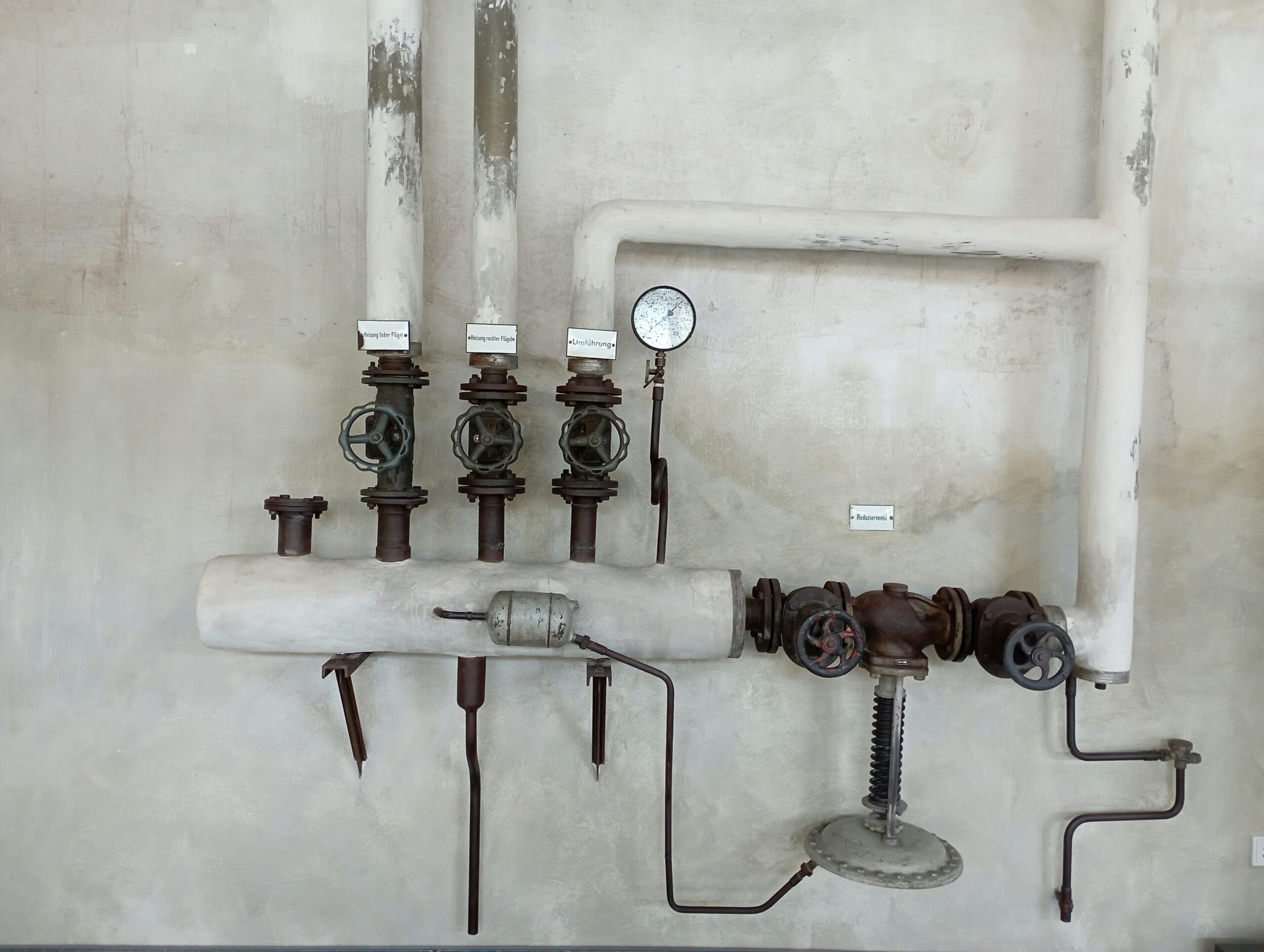
Cold weather plus a stuck main needs a freeze assessment, not repeated handle movement while warming it. The frozen location, condition and independent containment matter because thawing can reveal a split pipe or valve.
If fuel gas is suspected, leave the building or affected area immediately. Do not operate valves, switches, plugs, appliances or phones there. Call the gas emergency service from a safe location well away, and wait for responders’ clearance.
Safety and immediate control
Keep away from wet electrical equipment. Do not touch wet appliances, plugs or switches, or enter water to reach a breaker. When no gas leak is suspected, power may be isolated only from a safely accessible dry location; otherwise call an electrician or emergency help. Wet equipment needs qualified assessment before it is used again.
For active leakage, use only a separate identified, safely accessible owner-operated control under its known method, without force, or request prompt supplier/plumber assistance. A curb key, reachable meter box or property boundary does not establish permission to operate supplier equipment. Follow the actual supplier rules; Seattle’s different customer and crew controls are an example, not a universal ownership map.
Record the original observation
- Known cold exposure and whether no-flow, reduced flow, visible ice or physical handle binding was first observed.
- Actual accessible section versus a concealed, buried or supplier-owned assembly.
- Any visible damage, water near electricity and a known independent upstream response.
What the evidence establishes
A stiff handle alone does not prove ice inside the valve. The American Red Cross gives guidance for an accessible household frozen pipe, including keeping its affected faucet open and avoiding flame. That does not authorize heating an unknown main, utility equipment or concealed damaged pipe.
What to do next
- For a failed/unknown main, concealed freeze, visible crack or no safe independent containment, obtain supplier/plumber help before local thawing.
- Keep clear of wet electrical equipment. Do not plug in a dryer, heater or cable near water, warm a wall blindly, use a torch or try the valve periodically to see whether it has freed.
- Where competent assessment confirms an accessible household frozen section appropriate for its thaw procedure, the affected outlet must provide the intended controlled release with an accepting drain and attendance. A random open faucet may not serve the frozen section.
- Plan independent upstream control and prompt response to thaw-revealed leakage. The frozen main itself is not a reliable emergency control, and a bucket cannot contain a pressurized rupture.
- After assessment and repair, address the actual cold exposure and product compatibility. Insulation slows heat loss; heat cable needs the actual listed product, pipe/application and electrical instructions. Neither repairs freeze damage.
Before opening the pressure boundary
A main shutoff cannot isolate its own upstream side. Closing its handle or opening a downstream faucet leaves its inlet connected to supply. Before opening a bonnet, replacing packing, cutting pipe or loosening a connection, arrange separate effective upstream isolation for every relevant feed, controlled pressure release and verification. If water continues or isolation cannot be established, stop and leave the assembly intact; obtain supplier or qualified plumbing help.
Before any internal service or fitting removal, identify and isolate every supply that can pressurize the section, release trapped pressure through the appropriate controlled outlet and verify depressurization. Account for hot water and possible alternate feeds. Lowering a PRV setting, reducing flow or wearing gloves does not make a pressurized assembly safe to open. If isolation cannot be established, leave it assembled and obtain qualified help.
Keep independent isolation effective while any pressure-retaining part or connection is open. Fully secure compatible rated parts before controlled restoration under the actual product and installation procedure. Any required flushing needs a relevant secured discharge path and an accepting drain; never reopen supply into an exposed pipe or removed assembly aimed at a bucket. Verify leakage and the required shutoff function before relying on the repair.
Is warmth and a moving handle proof the valve survived?
No. Actual leakage, integrity and intended isolation need assessment after thawing. Do not restore reliance on a suspect main merely because the handle moves.
Related guides
- Main shutoff won’t reopen after being closed
- Main shutoff buried behind finished wall
- Main water shutoff valve won’t turn
- Main Shutoff Valve Failures