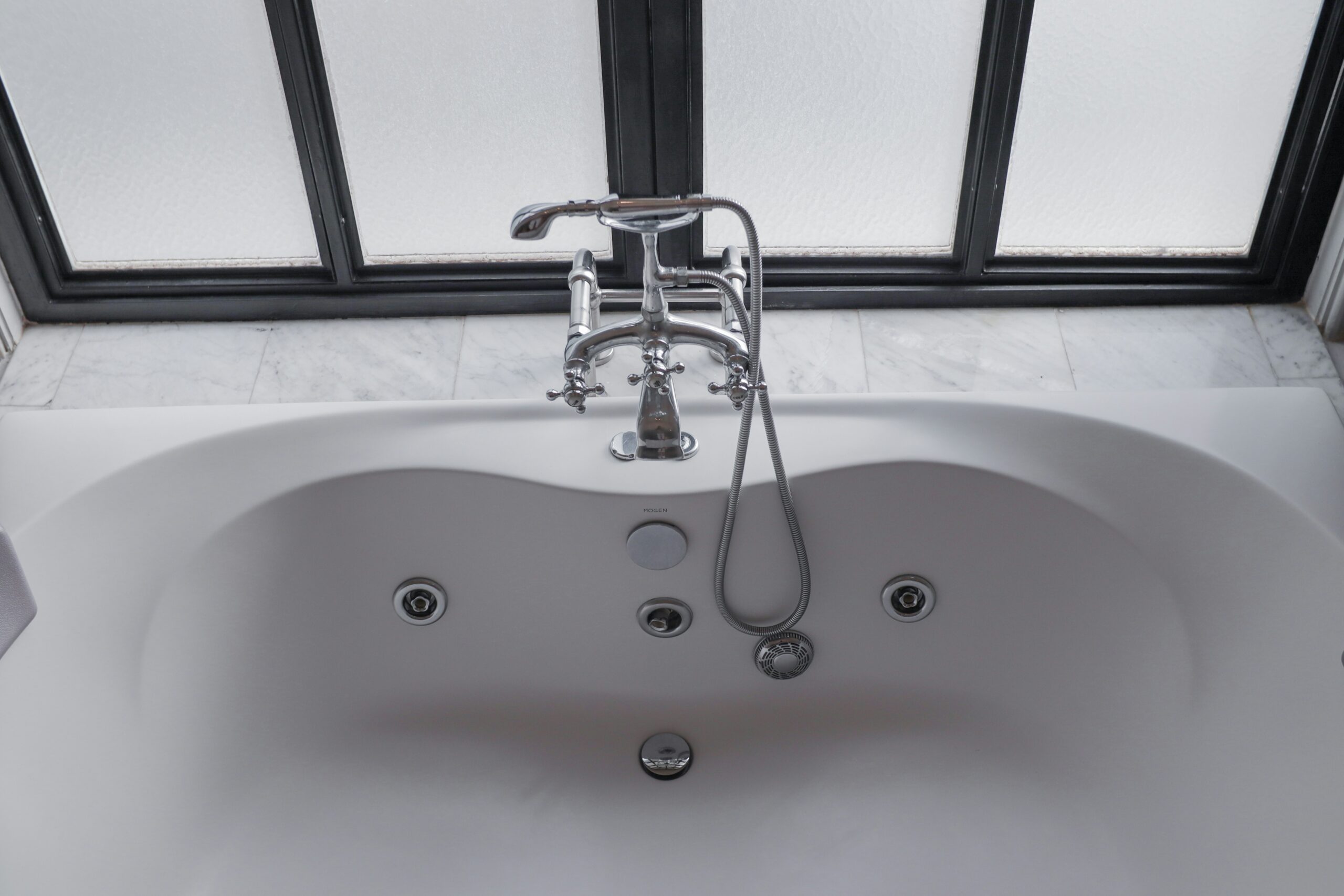
Quick Answer:
If only the upstairs shower has noticeably weak flow while downstairs fixtures are normal, start by comparing pressure at upstairs and downstairs fixtures, check for elevation-related loss, and look for partially closed branch valves that feed the upstairs run. Often the cause is a localized valve, cartridge, or blockage — not the house elevation. Follow a simple sequence of checks before calling a plumber.
Why This Happens
Water pressure can differ between floors for a few common reasons:
- Elevation: water pressure drops slightly with height, but a normal system should still deliver usable flow upstairs.
- Branch piping or partially closed valves: a valve feeding the upstairs branch may be partly shut after recent work or maintenance.
- Local restrictions: shower cartridges, old showerheads, in-line filters, or debris in the branch can reduce flow at that fixture only.
- Main system issues: a failing pressure-reducing valve (PRV) or a clogged supply line near the upstairs branch can also cause problems, though these often affect multiple fixtures.
Step-by-Step What to Do
1. Compare upstairs vs downstairs pressure
Check flow at a downstairs shower or a sink while someone runs the upstairs shower. For a simple test, use a 1‑ or 2‑liter container and time how long it takes to fill from each faucet. If you want a more exact check, use a handheld pressure gauge on an outdoor hose bib or the supply of a sink. Record both readings or times for comparison.
2. Note the elevation difference
Understand that some drop is normal: expect a small reduction in pressure on higher floors. However, if upstairs flow is much weaker than downstairs (for example, trickling vs normal spray), elevation alone is unlikely to be the only cause.
3. Inspect branch and shutoff valves
Locate the supply valves that serve the upstairs bathroom—there may be a local shutoff near the bathroom, at the fixture, or at a branch in the basement or crawlspace. Check and fully open any partially closed valves. Valves can look open but still be turned partway; gently turn them fully open and recheck flow.
4. Check the showerhead and valve cartridge
Remove the showerhead and run the shower briefly to see if flow improves. If flow is better with the head removed, clean or replace the head. If not, the mixing valve cartridge inside the wall can be restricted or failing—this often needs a replacement cartridge or professional help.
5. Look for filters or recent changes
If you recently added an in-line filter or replaced parts, try temporarily removing or bypassing them to test flow. If the restriction appeared right after a change, that points to the new component. See advice for situations like Shower pressure weak after installing filter and Low pressure after replacing showerhead.
6. Check the main supply and PRV
If multiple upstairs taps are weak, check the main shutoff and any pressure-reducing valve. A stuck or failing PRV can lower pressure to the whole upper floor. If you suspect the PRV, consider a professional inspection.
What Not to Do
- Don’t assume elevation alone explains very weak pressure.
- Partially closed valves are common after work.
- Don’t force valves past their stop or use excessive wrenching; that can break fittings.
- Avoid removing tankless or water-heater connections without knowing how to isolate the heater; that can introduce air and cause other issues.
When to Call a Professional
- Problems persist after you’ve compared fixtures, opened branch valves, and checked the showerhead/cartridge.
- You find evidence of corrosion, leaking supply lines, or a failing PRV.
- If the shutoffs are inaccessible, stuck, or you’re not comfortable disassembling the valve or cartridge.
- Multiple fixtures on the same floor are affected or the issue is intermittent and hard to reproduce.
Safety Notes
- Turn off the correct water shutoff before removing fixtures or cartridges. If you’re unsure which valve controls a line, shut off the main water first.
- Relieve pressure by opening a nearby faucet before disassembly to avoid sprays of hot water.
- Avoid electrical contact near wet areas. If work requires access behind wall panels, be cautious of wiring and always cut power when appropriate.
- If you smell gas or see signs of major leaks, evacuate and call the appropriate emergency services.
Common Homeowner Questions
- Why does the upstairs shower feel weaker than the sink?
Shower valves, cartridges, and the head restrict flow more than a sink aerator; test with the head removed to compare. - Can I fix a partially closed valve myself?
Yes, if it’s accessible and turns freely—open it fully without forcing. If it’s stiff or leaks, call a plumber. - Is elevation ever the real cause?
Only if the supply pressure is already low; elevation causes a modest drop but not a near-complete loss of flow.